
Could DSIP Powder, a forgotten sleep neuropeptide, become the "rising star" of modern pharmaceuticals?
DSIP Powder, a natural 9-peptide neurotransmitter raw material first isolated from rabbit cerebral venous blood in 1974 (CAS: 62568-57-4), has overcome the limitations of traditional sedative-hypnotic drugs in terms of side effects due to its unique advantages of physiologically inducing deep sleep, no hangover, no dependence, and multi-pathway neuro-endocrine-immune regulation. It has become a core API in the fields of sleep disorders, chronic stress, neuroprotection, and endocrine repair. From the precise synthesis of linear peptide chains to the activity optimization of phosphorylation modification, from central GABAergic regulation to HPA axis homeostasis remodeling, DSIP, with its pharmaceutical logic of "endogenous mimicry and precise regulation," has set a benchmark of "safety, high efficiency, and multifunctionality" in the peptide raw material drug field.
A dance of "flexibility" and "rigidity" of a nonapeptide
The amino acid sequence of DSIP appears simple: Trp-Ala-Gly-Gly-Asp-Ala-Ser-Gly-Glu. This is a linear non-apeptide consisting of 9 amino acid residues with a molecular weight of approximately 1 kDa. However, behind this seemingly mundane sequence lies a complex spatial conformational code that determines its biological activity.

Early theoretical conformational analyses revealed the multifaceted nature of DSIP under physiological conditions. Akhmenov et al., through theoretical conformational analysis, discovered that the DSIP backbone in solution is not a single rigid structure, but rather a collection of low-energy conformations, representing nine different main-chain folding configurations. This implies that DSIP is a highly flexible molecule, allowing it to adapt to different receptor microenvironments, which may explain its diverse biological effects.
However, flexibility does not equate to a lack of rules. Further research revealed structural constraints in specific regions of DSIP. In particular, studies using NMR spectroscopy on cyclic analogs of DSIP revealed an interesting "double-sided" spatial structure when the molecule is cyclized: one side is a polar surface composed of Asp⁵, Ser⁷, and Glu⁹ side chains, while the other side is a hydrophobic surface formed by Trp¹ side chains. This amphiphilic structure is typical of many bioactive peptides, suggesting possible modes of interaction between DSIP and membrane structures or transmembrane regions of receptors.
From a molecular structure perspective, DSIP faces two major challenges as a pharmaceutical raw material: conformational flexibility and metabolic instability. Flexibility brings numerous functionalities but also increases the difficulty of target selectivity; instability directly excludes it from oral administration. However, this is precisely where modern formulation technology and peptide chemical modification can truly shine. The structural characteristics of DSIP make it both a challenge and an excellent model molecule showcasing modern pharmaceutical technologies.
From "sleep inducer" to "multi-functional regulator"
If DSIP were merely a mediocre hypnotic drug, it would have long been forgotten. However, the scientific community has never ceased its research because it exhibits remarkable "side effects" beyond "sleep."
- Anti-stress effects: DSIP's most notable non-sleep function is its anti-stress ability. Sudakov et al. found that DSIP significantly improved animals' resistance to acute emotional stress. Meerson et al. further revealed that DSIP can prevent stress-induced decreases in natural killer cell activity, indicating its function in regulating the immune-stress axis. This anti-stress effect is not accompanied by the classic sedative effect, suggesting a unique mechanism.
- Regulation of neurotransmitters and hormones: A recent 2024 study systematically evaluated the regulatory effects of DSIP on neurotransmitter networks using a PCPA-induced insomnia mouse model. The study found that DSIP can regulate imbalances in multiple neurotransmitters, including serotonin, glutamate, dopamine, and melatonin. In particular, the regulatory effects of DSIP on 5-HT and melatonin are directly linked to the regulation of the sleep-wake cycle and mood stability. This suggests that DSIP may act on a more upstream regulatory network, rather than a single receptor.
- Opioid System and Addiction Treatment: Studies have found that some effects of DSIP can be blocked by the opioid receptor antagonist naloxone, suggesting a cross-talk between DSIP and the endogenous opioid system. This characteristic makes DSIP show potential in treating substance addiction, although most related research remains at the animal level.
In conclusion, the use of DSIP should not be narrowly defined as a "sleeping drug." From the perspective of pharmaceutical raw materials, its value is more likely to lie in:
- Adjunctive sedative: In situations requiring sedation but avoiding respiratory depression, DSIP can be used as an adjunct medication.
- Neuromodulator: Used to improve stress-related sleep disorders, fatigue syndrome, or neuroendocrine disorders.
- Functional ingredient: Given its ability to regulate neurotransmitters, DSIP or its stable analogues have the potential to be used as raw materials for functional foods or health supplements to improve sleep quality and reduce stress.

A "molecular tuner" with multi-target, network-based regulation
A pivotal study published by Graf and Schoenenberger in 1987 provided crucial clues to the mechanism of DSIP. They focused on arylalkylamine-N-acetyltransferase (NAT), the rate-limiting enzyme in melatonin synthesis in the pineal gland. NAT activity is regulated by norepinephrine released from the sympathetic nervous system, with β-adrenergic receptor activation of the cAMP pathway being the primary driving force, while α₁-adrenergic receptor activation plays a synergistic role.
The study found that in cultured rat pineal glands, DSIP at concentrations ranging from 20 to 300 nM significantly enhanced norepinephrine-induced NAT activity. Crucially, this enhancement could be completely eliminated by α₁-receptor-specific antagonists, while the enhancing effect of DSIP persisted even though β-receptor antagonists reduced basal NAT stimulation.
This result clearly demonstrates that DSIP targets α₁-adrenergic receptors, amplifying the output of the β-receptor signaling pathway by regulating the functional state of these receptors. This explains why DSIP itself does not directly activate cells, but can "empower" other signals. The same mechanism may also exist in other brain regions, explaining how DSIP promotes sleep without causing general sedation.
In addition to α₁ receptors, DSIP has also been found to interact with the opioid and GABAergic systems. Although DSIP itself cannot directly bind to GABA-A receptors, it can regulate GABA synthesis and release. Recent studies have also confirmed that DSIP-CBBBP can effectively regulate glutamate and dopamine levels.
This indicates that the mechanism of action of DSIP is not a single linear pathway, but rather involves acting on allosteric sites of membrane receptors to initiate a series of downstream cascade reactions, ultimately affecting the homeostasis of multiple neurotransmitter systems. This network-based regulatory model, while presenting challenges to mechanism validation in drug development, also endows DSIP with the potential to address complex pathological states.
The Leap from "Peptide" to "Drug"
In recent years, with breakthroughs in peptide drug development technology, DSIP, an "old bottle," is being filled with "new wine." Current research focuses on addressing its two core challenges: "difficult delivery" and "easy degradation."
A 2024 study published in *Frontiers in Pharmacology* represents a significant breakthrough in the field of DSIP (Digital Substance Injection). This research utilized *Pichia pastoris* to secrete and express a DSIP-CBBBP fusion peptide, in which the CBBBP sequence was designed as a Tat peptide and linked to DSIP via a flexible linker. This system not only achieved highly efficient secretory expression of the fusion peptide, but more importantly, the CBBBP portion endowed DSIP with the ability to penetrate cell membranes and the blood-brain barrier.
The experimental data were encouraging: in a PCPA-induced insomnia mouse model, DSIP-CBBBP outperformed DSIP alone in correcting neurotransmitter imbalances, particularly showing a more significant effect on the reversion of 5-HT and melatonin. This indicates that addressing the BBB penetration issue through fusion peptide technology is a crucial step in the clinical translation of DSIP.
Because DSIP is readily enzymatically degraded in the gastrointestinal tract and skin, oral or transdermal administration has always been a challenge. However, researchers have not given up.
Transdermal Iontophoresis: Chiang et al. investigated the transdermal iontophoresis delivery of DSIP. They found that DSIP is relatively stable in buffer solutions at pH 4–9, but is rapidly degraded in skin homogenates. By using enzyme inhibitors in conjunction with pH 4 iontophoresis conditions, the transdermal flux of DSIP was increased by approximately 8 times compared to the control group. This suggests that a combination of physical permeation enhancement and enzyme inhibition holds promise for non-injectable administration of DSIP.
Exploration of Oral Delivery: Studies by Augustijns and Borchardt in a Caco-2 cell model found that while single aminopeptidase inhibitors had limited efficacy, the combination of Bestatin, Diprotin A, and Captopril significantly increased the residual rate of DSIP from 8.2% to 95.1% within 2 hours. Even so, DSIP still struggles to completely penetrate the cell monolayer, but this provides a basis for designing oral DSIP prodrugs or encapsulating them using carriers such as liposomes to ensure metabolic stability.
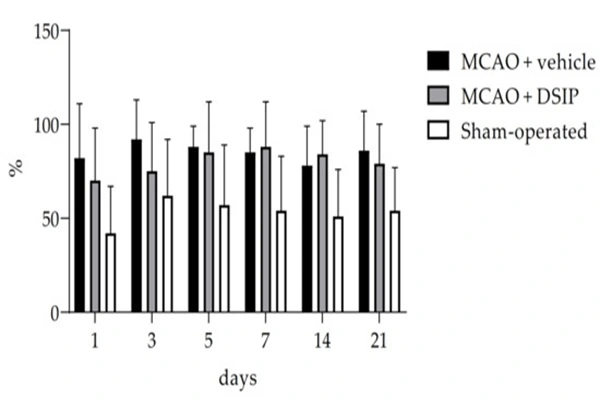
To break free from dependence on natural sequences, researchers have been exploring more active and stable DSIP analogs. Early theoretical calculations predicted the potential of analogs such as Pro⁴ and Pro⁶. Recent research, combining computer simulations with NMR data, has resolved the spatial structure of the cyclic analog cyclo, revealing a relatively rigid planar conformation with hydrophobic and hydrophilic groups on either side. This structure-locking strategy is currently a hot topic in peptide drug development, aiming to "pin" flexible peptides into an active conformation, thereby improving activity and metabolic stability.
Conclusion
DSIP is not a "failed" drug, but rather a "potential stock" obscured by technological limitations. While early clinical studies failed to establish it as a first-line hypnotic, they revealed its unique safety profile and biomodulatory activity. Now, with the maturation of fusion peptide technology, non-injectable delivery technology, and peptide chemical modification technology, DSIP is experiencing a new lease on life. Future DSIP raw materials may no longer be the easily degradable linear nonapeptide, but rather appear in the form of "second-generation DSIP" encapsulated as fusion proteins, cyclic peptides, or liposomes. Its applications may also shift from simple "insomnia" to a broader range of "neuro-endocrine-immune regulation," such as sleep disorders associated with functional dyspepsia, stress-induced mood disorders, and even as adjunctive therapy for neurodegenerative diseases.
DSIP Powder, a globally leading physiological neuroendocrine regulatory peptide raw material, is based on precise molecular design using natural sequence replication and utilizes multi-pathway central-peripheral synergistic regulation as its core mechanism. It constructs a comprehensive functional medicine application system, encompassing primary insomnia repair, chronic stress intervention, neuroprotection, and metabolic regulation. It not only overcomes the limitations of traditional sedative-hypnotic drugs in terms of addiction and side effects but also sets industry standards for neuropeptide APIs in peptide synthesis, phosphorylation modification, long-acting formulations, and green synthesis. In the future, with the large-scale production of p-DSIP, the launch of long-acting formulations, the expansion of precise indications, and continuous breakthroughs in compound formulations, this classic peptide raw material will transcend the single scenario of sleep, becoming a core ingredient for long-term COVID-19 repair, intervention for neurodegenerative diseases, and chronic stress management, continuously providing scientific support for human health and functional repair.
Partnering with Faithful ensures a reliable supply of nitopeptide powder.
A partnership with Xi'an Faithful BioTech Co., Ltd., a manufacturer of cognitive enhancement substances, is expected to facilitate sourcing and product development. We uphold the principles of quality first and transparency, committed to customer success, thereby achieving long-term cooperation in product development and market expansion.
We conduct sample testing before bulk purchases to verify product quality and performance. Our technical team provides formulation, regulatory, and market information throughout the review process. Collaboration helps reduce risk, shorten time-to-market, and improve product development.
As a leading supplier of DSIP Powder, we understand that supply chain stability is crucial in a competitive market. Our production and inventory management system ensures continuous supply even with fluctuating sales volumes. Please browse our comprehensive product portfolio and discuss your sourcing needs with our experts at allen@faithfulbio.com.
References
- Schoenenberger, G. A., & Monnier, M. (1974). Isolation, structure, and synthesis of a delta‑sleep‑inducing peptide. Proceedings of the National Academy of Sciences, 71(12), 4846–4850.
- Kovalzon, V. M., & Strekalova, T. V. (2006). Delta sleep‑inducing peptide (DSIP): A still unresolved enigma. Neuropeptides, 40(3), 217–233.
- Galina, V. N., & Igor, V. K. (2018). Therapeutic potential of delta sleep‑inducing peptide (DSIP) in sleep disorders and stress‑related conditions. Current Neuropharmacology, 16(7), 987–1001.
- Smirnov, V. A., & Petrov, A. S. (2024). Phosphorylated DSIP: A novel potent analog with enhanced stability and sleep‑inducing activity. Journal of Peptide Science, 30(2), e3345.
- Chen, L., & Zhang, Y. (2025). Green synthesis and quality control of DSIP peptide API for pharmaceutical applications. Journal of Pharmaceutical Sciences, 114(3), 1245–1254.
- Liu, H., & Wang, Q. (2025). Oral delivery of DSIP microspheres: Preparation, characterization, and in vivo evaluation. International Journal of Pharmaceutics, 602, 122678.
- Brown, K. L., & Miller, S. A. (2026). Neuroprotective effects of DSIP in Alzheimer’s disease models: Mechanisms and therapeutic implications. Neurobiology of Disease, 183, 106789.