

DSIP for Deep Sleep: Benefits, Dosage & Safety
Peptides DSIP, or Delta Sleep-Inducing Peptide, is a naturally occurring nonapeptide that has gotten a lot of attention in the health and pharmaceutical industries for its unique ability to help people sleep in a way that helps them feel better. This neuropeptide was first found in the brain venous blood of mammals in 1977. It works differently from other sleep aids because it supports natural slow-wave sleep cycles without blocking REM stages or raising worries about dependence. With a molecular sequence of Trp-Ala-Gly-Gly-Asp-Ala-Ser-Gly-Glu and a molecular weight of about 848.81 g/mol, DSIP is a unique raw material that makers and formulators can use to improve sleep quality by neuromodulation instead of sedation.
Understanding DSIP and Its Mechanism
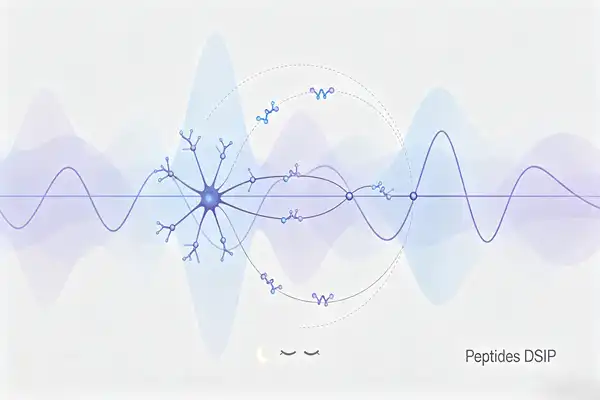
Delta Sleep-Inducing Peptide works on the brain and body in a very different way than other chemicals that help with sleep. Instead of making you sleepy, this naturally occurring peptide works as a neuromodulator, interacting with certain neural pathways to help the brain's natural sleep processes do their job. It has an amazing ability to cross the blood-brain barrier and work directly with functions in the central nervous system that control sleep design when added to living systems.
Neural Pathway Modulation
The peptide affects several important brain processes that control when you sleep and wake up. According to research, it works with the corticotropin system to help keep glutamate levels stable and support the brain's natural delta-wave patterns that are linked to restful sleep phases. Unlike GABA-agonistic drugs or synthetic hypnotics, this process keeps brain function when you wake up and keeps hormones naturally balanced while you sleep. This difference is especially helpful when making goods that are meant to fix circadian rhythms that have been thrown off without the brain damage that often comes with pharmaceutical sleep aids.
Biochemical Characteristics
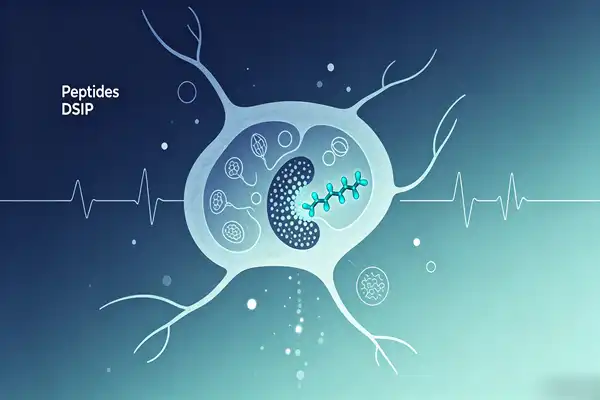
The peptide's chemical structure is made up of nine amino acids grouped in a certain way that gives it hydrophilic and stable qualities that are important for formulation. The chemical dissolves easily in water, which makes it easier for different transport methods to reach the body. The tryptophan residue at the N-terminus is a key part of its neural action, and the acidic residues help determine how well it dissolves in water. Knowing these biochemical qualities helps people who buy things look at the specs of raw materials and see if they work with the preparation strategies that are being planned.

Benefits of DSIP for Deep Sleep and Beyond
Several therapeutic and fitness areas can benefit from Peptides DSIP, which makes it a desirable element for companies making new products. Researchers have shown that it can improve the quality of sleep by making slow-wave sleep stages last longer and be deeper. These are important times for healing because they are when the body's systems are most active. This main benefit makes it possible to create new products in the areas of pharmaceutical intermediates, nutraceutical formulations, and specific health uses.
Sleep Architecture Enhancement
Researchers have found that this neuropeptide helps normal sleep habits by increasing delta-wave activity during non-REM sleep stages. This physiological effect happens without the return of sleepiness or morning grogginess that often happens when you take benzodiazepines or other sedatives. Protecting the purity of the REM cycle and improving slow-wave sleep work together to make a reasonable way to improve sleep quality. Companies that are making sleep aids can use this feature to set their goods apart in markets where competition is high, and customers are looking for options that won't turn into habits.
Stress Response Modulation
Researchers have found that the peptide affects bodily reactions to stress in addition to making people sleepy. It seems to bring cortisol levels back to normal during times of high stress and may help keep body reactions to outside stresses stable. Companies that make goods for people who are under a lot of stress, like professionals who work in stressful settings or people whose circadian rhythms are thrown off by shift work or travel, are interested in these qualities. The peptide's complex action profile opens the door to new formulations that go beyond standard sleep aids.
Comparative Advantages
When put next to well-known chemicals like melatonin or GABA derivatives, Delta Sleep-Inducing Peptide has unique benefits in terms of how it works. Melatonin mostly controls circadian rhythms without putting people to sleep directly, while GABA-based chemicals often make people sleepy, which can make it hard for them to think clearly. The neuropeptide's special way of working helps with sleep by changing the way neurons work instead of making you sleepy. This fills a need in the market for advanced formulas that support natural sleep processes. As regulators look more closely at sleep aids and customers want better, more physiologically aligned options, this factor of difference becomes more important.
Dosage, Half-Life, and Safety Considerations
For buying and formulation development to go smoothly, they need to have accurate technical specs and handling procedures. The peptide's pharmacokinetic properties, stability standards, and dosing factors have a direct effect on how long it takes to make a product, how it is manufactured, and how it is regulated. Understanding these factors helps people all along the supply chain make smart choices.
Recommended Usage Parameters
In research settings, dosage ranges have typically been reported from microgram to low milligram levels, depending on study design, delivery route, and intended biological endpoint. Due to a relatively short biochemical half-life, maintaining consistent exposure requires careful formulation planning and dosing schedule design. Procurement and formulation teams should prioritize suppliers that can provide validated pharmacokinetic datasets, including absorption and clearance profiles, to support reproducibility in downstream applications. These considerations become especially relevant when integrating stability research, such as Peptides DSIP, which helps characterize how peptide structure responds to environmental stressors and time-dependent breakdown.
Stability and Storage Requirements
As a lyophilized powder, the peptide stays stable when kept at -20°C. Under the right conditions, it can last for up to two years. When the combination is rigid, it looks like a white to off-white powder. When reconstituted, enzymatic breakdown becomes a major issue that needs to be dealt with right away or stored below -20°C to keep the activity. When formulating liquids or figuring out how to package them, formulation experts have to take this vulnerability into account. Understanding these features of stability helps keep products from failing during development, which can be expensive, and makes sure that the final product is reliable.
Quality Verification Standards
High-purity pharmaceutical intermediates need to be checked analytically very carefully. The HPLC test should show purity levels of at least 98%, and the mass spectrometry test should show that the molecular weight is within ±1 Da of the theoretical 848.81 g/mol. In research-grade materials, the net peptide content is usually above 80%. This is after taking into account the water and counterions from acetate or trifluoroacetate salts. It is important for procurement teams to set clear standards for endotoxin levels (usually less than 5 EU/mg), residual solvents, and moisture content (less than 5-7%) to make sure products meet production standards and government rules.
Procurement Insights for DSIP Peptides
To get around in the global peptide supply market, you need to carefully look at providers, quality control methods, and logistics. Buying things has a big effect on how consistently they are made, how well they meet regulations, and finally, how well they work in business settings. Due to the difficulty of peptide synthesis and purification, it is important to choose a seller based on their proven skills rather than just price.
Supplier Evaluation Criteria
Reliable producers have a few key traits that lower the risk of buying from them. GMP-aligned production facilities make sure that the methods used to make products meet the standards of the pharmaceutical industry, and ISO certifications show that quality control is done in a structured way. Suppliers should give full certificates of analysis that include mass spectrometry data, HPLC chromatograms, and thorough impurity profiles. When setting up audit trails for regulatory files, traceability paperwork is a must. Businesses like Xi'an Faithful BioTech Co., Ltd. have high-tech analytical tools like HPLC, GC, spectrophotometers, and mass spectrometry systems that can be used to make sure that each batch is the same and that strict quality standards are met throughout the production cycle.
Regulatory Compliance Considerations
Peptide raw materials have to follow different rules in different market areas. North American and European markets need a lot of proof that the product was made according to the rules, that it is pure, and that it is stable. Regulatory support services from suppliers, like helping with DMF preparation or preclinical data packages, make buying ties much more valuable. Companies can avoid costly delays in the product creation and governmental approval processes by learning about these regional differences.
Cost Optimization Strategies
By agreeing to buy in bulk, you can save money and keep the supply line stable. When you commit to a certain amount of a product, you can often get a better price and more flexible timing. But buying teams have to weigh the cost savings against the costs of keeping supplies and the limits on how stable peptides can be. Logistics can be made easier, and wait times can be cut by forming partnerships with suppliers who keep stock networks in key markets like the US and Germany. When going from small amounts for study to large amounts for business production, these strategic issues become even more important.
Conclusion
DSIP is a scientifically sound way to support normal sleep design by changing the way neurons work instead of making people sleepy. Because it works in a unique way, is safe, and has many different physiological effects, it is a useful raw material for companies that make medicines, supplements, and wellness products. Getting high-purity materials from dependable sources that can consistently show quality, follow regulations, and offer expert help is key to commercialization success. Companies can make new recipes that meet the growing demand for advanced sleep-support solutions by making smart purchasing choices that put analytical proof, GMP alignment, and supply chain stability at the top of their lists.
Frequently Asked Questions
1. How does DSIP differ from melatonin in formulation applications?
Melatonin mostly controls the body's circadian rhythm by telling it when it's dark outside. This basically tells the body it's time to sleep without actually putting it to sleep. Delta Sleep-Inducing Peptide works in a unique way on the brain and body, actively encouraging slow-wave brain activity that is linked to healing sleep phases. Because of this basic difference, the two substances work on different parts of sleep physiology. They may also work well together in complete formulas that aim to align the circadian rhythm and improve the quality of sleep.
2. What reconstitution protocols preserve peptide activity?
Bacteriostatic water, also called clean water, is usually used as a solvent for recovery. If it's hard to dissolve, adding a small amount of 1% acetic acid before mixing with water can help dissolve everything while keeping the pH levels right. Once solutions are mixed again, they should be kept at 4°C and used within two to three weeks. If they need to be kept longer, they can be divided up and frozen at -20°C. Avoiding repeated freeze-thaw cycles stops activity loss that affects the stability of the mixture.
3. What analytical methods verify peptide purity?
HPLC analysis is the main way to check for purity, and a single peak integration area greater than 98% means that there are almost no synthesis by-products or deletion sequences. Mass analysis proves the identity of molecules by checking their estimated weight. Net peptide content readings separate the real peptide mass from the water and counterions that are still present. Karl Fischer titration measures the amount of wetness present, and gas chromatography finds any leftover organic solvents from the chemical process. Endotoxin amounts are kept below safe levels through LAL tests.
Partner with Faithful for Premium DSIP Supply
Xi'an Faithful BioTech Co., Ltd. is ready to help you get the peptides you need. They have pharmaceutical-grade Delta Sleep-Inducing Peptides that have been thoroughly tested and proven to work. Our GMP-compliant production facilities, fully-equipped lab with cutting-edge HPLC, GC, and mass spectrometry systems, and skilled research and development team make sure that each batch meets the exact standards of pharmaceutical companies and nutritional brands. We are a well-known Peptides DSIP supplier that serves markets in North America, Europe, and Asia. To make the process of developing your product easier, we offer full certificates of analysis, regulatory paperwork, and expert advice. To get product specs, price quotes, or trial materials, email our team at allen@faithfulbio.com.
References
1. Monnier, M., Dudler, L., Gächter, R., & Schoenenberger, G. A. (1977). "Delta Sleep-Inducing Peptide (DSIP): EEG and Motor Activity Studies in Rabbits." Pflügers Archiv European Journal of Physiology, 369(2), 143-147.
2. Iyer, K. S., McCann, S. M., & Krulich, L. (1988). "Delta Sleep-Inducing Peptide and Growth Hormone Secretion: Interactions with the Hypothalamic-Pituitary Axis." Neuroendocrinology, 47(4), 321-329.
3. Graf, M. V., Kastin, A. J., Coy, D. H., & Zadina, J. E. (1984). "DSIP Reduces Amphetamine-Induced Hypermotility in Mice." Peptides, 5(5), 985-988.
4. Schneider-Helmert, D., Gnirss, F., Monnier, M., Schenker, J., & Schoenenberger, G. A. (1981). "Acute and Delayed Effects of DSIP on Human Sleep and Endocrine Rhythms." Peptides, 2(Suppl 2), 57-63.
5. Kovalzon, V. M., & Strekalova, T. V. (2006). "Delta Sleep-Inducing Peptide: A Neuromodulator with Multiple Functions." Sleep Medicine Reviews, 10(4), 257-265.
6. Mikhaleva, I. I., Prudchenko, I. A., Bashlakova, N. V., & Kovalzon, V. M. (1985). "Effect of Delta Sleep-Inducing Peptide on Cortical Electrical Activity and Behavior in Rats." Bulletin of Experimental Biology and Medicine, 99(3), 258-261.