

What are the functions of Opicapone?
In the long-term management of Parkinson's disease, levodopa remains the most effective drug for improving motor symptoms. However, as the disease progresses, its peripheral metabolism gradually becomes a bottleneck restricting its efficacy. When levodopa is used in combination with peripheral dopa decarboxylase inhibitors, the metabolic pathway is forced to shift to the catechol-O-methyltransferase (COMT) pathway, resulting in more than 90% of levodopa being degraded in the periphery, with less than 10% actually entering the brain. Opicapone is a third-generation COMT inhibitor designed to address this dilemma. It reduces the peripheral metabolism of levodopa and improves its bioavailability by long-acting and selectively inhibiting peripheral COMT activity, thereby providing more stable motor symptom control for Parkinson's disease patients.
🧬 Selective molecularly stable configuration of o-diphenol amide
Opicapone has the complete molecular formula C₁₅H₁₃ClN₄O₄. Its molecular backbone is covalently assembled from three functional modules: a chlorinated substituted ortho-diphenol aromatic ring, a triazole heterocycle, and an amide aliphatic side chain. The molecule is chiral and lacks chiral carbon. The entire synthesis process precisely controls the content of phenolic hydroxyl oxidation byproducts, eliminating oxidized quinone impurities that interfere with enzyme viability assays. Similar COMT inhibitors lacking the ortho-diphenol dihydroxyl structure cannot form a chelate coordination with magnesium ions at the enzyme's active site, resulting in significantly reduced binding affinity, rapid in vivo metabolism and elimination, requiring multiple daily doses, and a very short effective duration. Opicapone's bisphenol hydroxyl group can form a stable five-membered chelate ring with magnesium ions at the COMT protein's active site. The amide side chain increases molecular polarity, significantly reduces lipid solubility, and limits the molecule's penetration of the blood-brain barrier. Even after 30 months of storage at 2-8°C in a light-protected, sealed, and dry environment, no phenolic hydroxyl oxidation or heterocycle ring-opening degradation occurs.
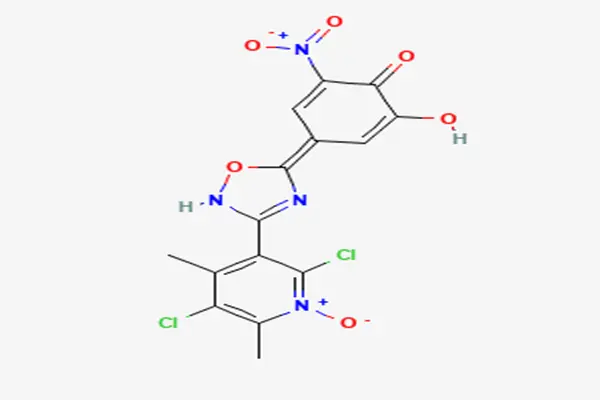
During continuous co-incubation with multiple generations of hepatocytes and dopamine neurons, and in long-term plasma metabolism simulation experiments, the molecular integrity showed no significant decline. The chloro-o-diphenol aromatic ring is the core functional region embedded in the COMT enzyme catalytic pocket. Two sets of hydroxyl groups within the ring form multiple hydrogen bonds and metal chelate sites, precisely occupying the substrate-binding region and competitively blocking the binding of levodopa and 3-O-methyldopa to the enzyme. Removing any phenolic hydroxyl group results in the molecule losing its magnesium ion coordination ability, producing only a weak and transient enzyme inhibitory effect, unsuitable for long-acting in vitro enzyme activity screening systems. The intact chloro-o-diphenol-triazole conjugated backbone is the core support for Opipapone's long-acting peripheral COMT inhibitory activity.
The terminal polar amide group synergistically regulates the molecule's lipid-water partitioning properties. The polar amide structure enhances water solubility, preventing crystallization, aggregation, and stratification during gradient dilution in gastric juice simulation solutions and hepatocyte culture media. The chloro-aromatic ring moderately improves the molecule's fit to the COMT hydrophobic pocket without excessively increasing lipid solubility, thus preventing large-scale entry across the blood-brain barrier into the central nervous system. Highly lipid-soluble COMT molecules easily penetrate brain tissue and disrupt central dopamine homeostasis. Strongly polar, aromatic-free derivatives struggle to adhere to the hydrophobic catalytic cavity of enzymes. Opicapone, however, balances peripheral tissue retention with enzyme-protein binding, making it suitable for high-throughput COMT enzyme activity screening and large-scale simultaneous dopamine cell culture.
The entire molecule lacks broad-spectrum, non-specific oxidase binding capacity, specifically recognizing peripheral tissue COMT enzyme proteins. It exhibits no significant inhibitory effect on enzymes related to central dopamine synthesis and degradation, precisely distinguishing between peripheral dopamine metabolic pathways and the central neurotransmitter regulatory system, significantly reducing interference from irrelevant pathways in in vitro observation systems. Once the phenolic hydroxyl group oxidizes to form quinone impurities or the triazole heterocycle undergoes hydrolytic breakage, the chelating affinity between the molecule and the COMT enzyme drops sharply, and the levodopa degradation blocking effect diminishes simultaneously.
⚙️ Mechanism of action of peripherally selective COMT long-acting inhibition
Under normal physiological metabolic conditions, after oral levodopa is absorbed into the bloodstream via the intestines, the widely distributed COMT enzymes in peripheral tissues rapidly catalyze the hydroxymethylation of levodopa, generating inactive 3-O-methyldopa. Only a small amount of the drug reaches the brain and is converted into dopamine to maintain normal motor nerve signal transmission. The peripheral dopamine precursor degradation process is stable and orderly, with no exogenous small molecules interfering with the enzyme's catalytic efficiency.
When a person is diagnosed with Parkinson's disease, a large number of dopamine neurons in the brain undergo apoptosis. Long-term levodopa supplementation is necessary to restore central dopamine levels. The continuous and rapid degradation of the drug by peripheral COMT enzymes causes drastic fluctuations in plasma effective drug concentration, frequently leading to complications such as decreased efficacy and motor fluctuations. Traditional short-acting COMT inhibitors are highly lipid-soluble and can cross the blood-brain barrier, interfering with central dopamine metabolism and inducing adverse reactions such as hallucinations and sleep disturbances. Inhibitor raw materials with insufficient purity can introduce phenol oxidation impurities, causing oxidative stress damage to hepatocytes, resulting in deviations in all in vitro metabolic observation data. Conventional COMT-targeting molecules often suffer from the dual drawbacks of central penetration and short duration of action, failing to achieve long-term, safe peripheral metabolic regulation.
Opicapone, relying on its low lipid-water partition coefficient, remains in peripheral tissues such as the intestine, liver, and skeletal muscle, achieving long-term competitive enzyme inhibition through its ortho-diphenol metal chelate structure. Its first key action involves chelating the magnesium ion at the active site of the COMT enzyme, firmly occupying the substrate-binding cavity, completely blocking the methylation reaction of levodopa, significantly reducing the formation of inactive peripheral metabolites, steadily increasing the plasma circulating concentration of levodopa, and prolonging the effective window for drug delivery to the brain. Its second key action is tissue-selective retention; the polar side chain of the amide restricts the molecule's transport across the blood-brain barrier, resulting in extremely low drug concentrations in brain tissue, without interfering with the central dopamine synthesis and degradation balance, thus avoiding central nervous system-related side effects.
Opicapone specifically blocks the peripheral COMT-mediated catechol methylation pathway without indiscriminately interfering with central dopaminergic neurotransmission. This broad-spectrum aromatic phenolic molecule simultaneously inhibits multiple central oxidative metabolic enzymes. The observation system is contaminated with a large number of irrelevant interference signals such as abnormal neuronal activity and neurotransmitter disorders. The target and tissue selectivity of opicapone are clearly stratified, and the relevant experimental system can lock onto the single variable of "peripheral levodopa degradation blockade", which greatly improves the accuracy of pharmacological observation conclusions related to Parkinson's metabolism.
🧫 Research and Synthesis Applications of Multi-component Anti-Parkinson's Disease
Opicapone is a standard control material for observing the peripherally selective COMT enzyme catalytic mechanism, primarily used in the construction of in vitro enzyme activity binding models in primary hepatocytes and dopamine neurons. The peripheral degradation of levodopa relies entirely on COMT enzyme catalysis. Leveraging the core characteristics of opicapone—low central penetration and long-term chelation inhibition—a hepatocyte incubation system free from oxidative interference was formulated. This allowed for the quantification of enzyme inhibition IC50 and the chromatographic detection of dopamine metabolites, establishing a standardized evaluation system for COMT-targeted active substances. This also enabled comparative analysis of the binding inhibition efficiency and tissue selectivity of various phenolic heterocyclic derivatives on enzyme proteins.
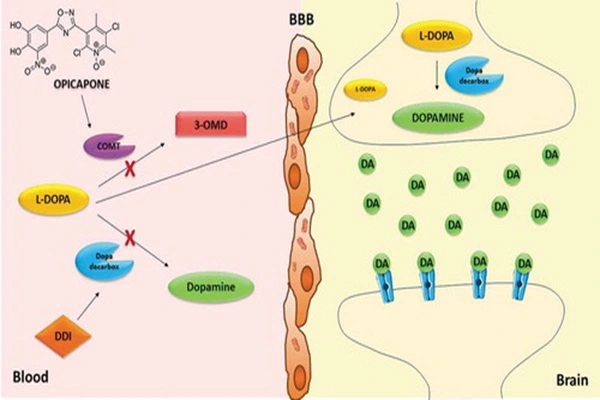
Opicapone is widely used for pharmacological observation of long-acting oral combination formulations for Parkinson's syndrome and is suitable for long-term continuous administration metabolic animal models in mice and rats. In a pathological model of dopamine neuron injury, peripheral COMT enzymes excessively degrade levodopa. Opicapone can stably and long-actingly block the drug inactivation pathway, steadily increasing dopamine supply in the brain. This study elucidates metabolic compensation patterns after long-term combination therapy, screens for long-acting anti-Parkinson's active substances without central nervous system side effects, and improves the COMT target lead molecule screening platform.
Opicapone has irreplaceable value in the synthesis of intermediates for levodopa combination drug products, serving as the core for constructing next-generation once-daily long-acting oral Parkinson's formulations. Currently marketed short-acting COMT inhibitors require multiple daily doses and pose a risk of central nervous system penetration. Opicapone, as a chlorophenol-triazole starting building block, can optimize peripheral retention time and enzyme binding affinity through site-specific modifications of the amide side chain and aromatic ring halogen substitution. This allows for exploration of multi-step synthesis of long-acting, low-frequency oral tablets, expanding the development direction of safe, peripherally selective, small-molecule anti-Parkinson's drugs.
Globally, the development of novel COMT-targeting lead molecules and long-acting dopamine-stabilized formulations uniformly uses Opicapone as the efficacy reference benchmark. Various phenolic ring-modified derivatives, liver-targeted modified prodrugs, and highly peripherally selective specific enzyme inhibitors require cross-sectional comparisons of core indicators such as COMT enzyme binding inhibition efficiency, blood-brain barrier penetration coefficient, and hepatocyte non-specific oxidative toxicity. Stable and consistent long-acting chelating inhibitory activity, extremely low central permeability defects, and highly reproducible hepatocyte and animal metabolic data make it a universal control standard for high-throughput screening of COMT enzymes, analysis of the efficacy and efficacy of chlorophenol heterocyclic skeletons, and iterative optimization of molecular structures.
🔬 Iterative optimization direction of chlorophenol triazole molecules
Site-specific modification of opicapone molecules using aromatic cyclohalogens and side-chain amides is currently the mainstream approach for molecule optimization, with modification sites concentrated on chlorinated aromatic rings and terminal amide polar side chain regions. The original opicapone molecule is uniformly distributed throughout peripheral tissues, with limited enrichment concentrations in target tissues such as the liver and intestines, requiring moderate molar concentrations to exert an inhibitory effect. By branching hepatocyte-targeting lipophilic groups and intestinal epithelial affinity fragments onto the aromatic ring side chains, the modified derivative can be directionally enriched in liver tissues with high COMT expression, blocking levodopa degradation at lower doses and reducing excess drug exposure in peripheral healthy tissues such as muscles and kidneys, making it suitable for the development of low-dose, long-acting oral intervention formulations.
Hepatic metabolic microenvironment responsive modification is a popular optimization route, addressing the issue of minor renal metabolic interference caused by the indiscriminate distribution of small molecules throughout peripheral tissues. The research team has incorporated a highly active esterase-cleavable masking group into the amide side chain to construct a liver-targeted activation prodrug. The modified prodrug exhibits no COMT enzyme binding activity in blood and kidney tissues, thus not interfering with systemic catecholamine metabolism. Only after entering hepatocytes does the masking group hydrolyze and detach, releasing the active Opicapone nucleus, precisely inhibiting hepatic COMT enzyme activity. This further enhances the tissue specificity of molecular action, aligning with the trend in the development of long-acting anti-Parkinson's drug raw materials with low hepatic and renal burden.

The splicing of multifunctional hybrid molecules broadens the boundaries of pharmacological action, overcoming the limitation of single COMT enzyme inhibition, which only stabilizes levodopa blood concentrations. Advanced Parkinson's disease is often accompanied by multiple problems such as neuronal oxidative damage and motor-related inflammation; simply blocking peripheral drug degradation cannot repair damaged dopamine cells. Researchers covalently spliced the core framework of Opicapone (chlorophenol triazole) with antioxidant and neuroprotective active fragments to create a multi-functional fusion small molecule. This molecule simultaneously achieves a triple effect: long-lasting inhibition of COMT enzyme, scavenging of reactive oxygen species in hepatocytes, and mitigating oxidative damage to dopamine neurons. This breakthrough overcomes the functional limitations of single-target enzyme inhibitor raw materials and provides a novel approach for designing compound Parkinson's motor repair lead molecules.
The substitution of triazole heterocyclic nitrogen atoms finely modulates COMT enzyme binding and central penetration bias, adapting to the personalized needs of different new drug development scenarios. The original Opicapone provides balanced inhibition of COMT enzymes in the liver and skeletal muscle, making it suitable for the development of general long-acting Parkinson's combination formulations. By changing the substituent groups on the triazole ring nitrogen atoms, highly liver-selective long-acting inhibitors and extremely low blood-brain penetration safe derivatives can be prepared. The highly liver-selective derivatives are suitable for observation of low renal burden with simple levodopa enhancement, while the extremely low-penetration derivatives are suitable for formulation screening in elderly sensitive populations, enabling precise subtyping studies of peripheral dopamine metabolism regulation.
Conclusion
Opicapone is a representative molecule of third-generation peripherally selective COMT inhibitors. Its pyridine N-oxide-oxadiazole hybrid backbone endows it with long-acting, reversible COMT inhibitory activity and peripheral selectivity. By reducing the peripheral metabolism of levodopa, opicapone provides a convenient once-daily dosing regimen for managing motor fluctuations in Parkinson's disease patients. Recent clinical evidence from 2025 expands its application window from "existing end-of-dose fluctuations" to "early stages without motor complications," suggesting that early intervention may lead to more durable improvements in motor symptoms.
Xi'an Faithful BioTech Co., Ltd. combines advanced manufacturing technology with a comprehensive quality assurance system to provide high-quality Opicapone that meets international pharmaceutical standards. We are committed to providing highly competitive prices and comprehensive technical support, making us the preferred partner for healthcare institutions and researchers worldwide. Please contact us Click email: allen@faithfulbio.com Or WhatsApp: +86 13137770562.
References
- Therapeutic Target Database. (n.d.). Details of the Active Pharmaceutical Ingredient (API): Opicapone (D01302).
- IUPHAR/BPS Guide to Pharmacology. (n.d.). Opicapone (Ligand ID: 8988).
- European Journal of Neurology. (2025). Opicapone as adjunct to levodopa in treated Parkinson's disease without motor complications: A randomized clinical trial. 32(1), e16420.
- Bidepharm. (n.d.). Opicapone (CAS 923287-50-7) Product Specification.
- Therapeutic Target Database. (n.d.). Details of the Drug Formulation (DFM): Opicapone 50 mg capsule (F23846).
- DDInter 2.0. (n.d.). Opicapone Drug Information (DDInter1343).
- Movement Disorders Clinical Practice. (2025). Opicapone in Parkinson's Disease on Levodopa-Carbidopa Intestinal Gel Treatment: A Pilot, Randomized Study. 12(11), 2034-2042.