

How Ataluren API can repair abnormal gene translation processes
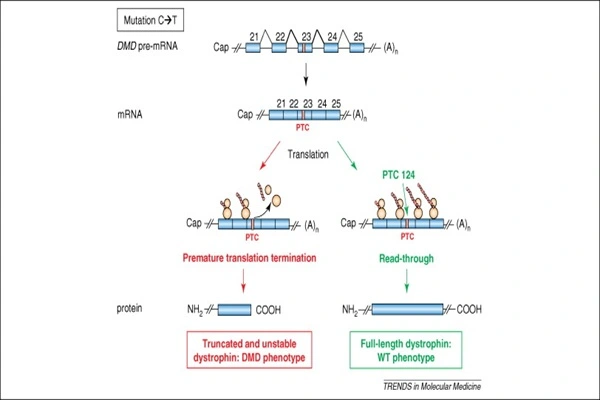
Ataluren API is a structurally unique oxadiazole small molecule drug whose mechanism of action does not rely on gene editing or the addition of exogenous proteins. Instead, it modulates the recognition of stop codons on mRNA by ribosomes, enabling ribosomes to "skip" prematurely appearing stop codons and thus restore the expression of full-length functional proteins. This mechanism gives it unique therapeutic potential in rare genetic diseases such as Duchenne muscular dystrophy caused by nonsense mutations.
🧪 Flat aromatic structure fits the ribosome cavity
Ataluren API possesses a polycyclic aromatic, flattened molecular backbone. Benzene rings and heterocycles interlock to form a planar overall configuration. This two-dimensional, expansive spatial form allows for smooth embedding within the catalytic cavities between the large and small subunits of eukaryotic ribosomes. Ribosomes are responsible for reading messenger RNA codons and tandemly synthesizing amino acids into proteins. Their internal active channels are elongated, flattened, hydrophobic microenvironments, making it difficult for globular, three-dimensional macromolecules to remain stably attached. Ataluren API's planar aromatic structure, however, can adhere to the inner walls of these channels through large-area hydrophobic interactions, occupying the regulatory sites of the ribosome for extended periods and continuously influencing the codon recognition process. Once the aromatic rings are bent or the side chains are oxidized, disrupting the planar configuration, the binding affinity to the ribosome pocket drops drastically, completely losing its basic translational correction capabilities. An intact, undegraded molecular structure is a prerequisite for ensuring stable drug efficacy.
The weakly polar amide group on the molecular side chain does not alter the overall lipid solubility, allowing Ataluren API to achieve moderate penetration efficiency in the cell membrane phospholipid bilayer. This allows it to smoothly enter the cytoplasm to contact free ribosomes without indiscriminately penetrating the nuclear membrane and interfering with DNA replication and gene transcription. Many nucleic acid-targeting small molecules easily enter the cell nucleus and bind to chromatin, causing non-specific gene expression perturbations. However, the lipid-water partition coefficient of this substance is naturally defined, with its action boundary strictly locked within the cytoplasmic translation system. The nuclear membrane barrier can prevent most molecules from entering the genetic material storage region, structurally avoiding potential cell damage caused by off-target effects and improving the purity of in vitro cell assay results.
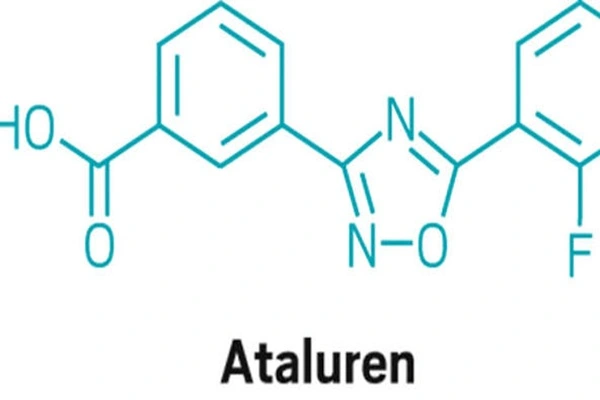
The molecular chemical properties are very stable under room temperature and neutral water conditions. It does not undergo degradation reactions such as hydrolysis, ring opening, or intramolecular cyclization. After preparation of cell culture stock solutions, it can maintain its activity for several days in a light-protected environment in a constant temperature incubator. The aromatic conjugated system exhibits a certain tolerance to oxidative stress; trace amounts of reactive oxygen species in the culture medium cannot damage the core framework, and no efficacy decay deviation occurs between parallel cell groups after multiple dosings. For long-acting culture models requiring prolonged induction of defective protein expression and continuous monitoring of correction effects, the physicochemical stability significantly reduces the operational costs of frequent drug changes and minimizes the impact of human error on experimental data.
The flattened configuration results in weak binding forces, allowing the adsorption of Ataluren API to ribosomes to be in a reversible dynamic equilibrium. As the intracellular drug concentration gradually decreases with cell metabolism, the molecule automatically detaches from the ribosome cavity, and the ribosome immediately resumes its normal codon recognition rules, without permanently rewriting the inherent operating logic of the translation machine. This reversible regulatory mode closely matches the dynamic laws of cellular physiological metabolism. In experiments such as gradient concentration efficacy testing and observation of protein expression decline after drug withdrawal, it can accurately simulate the real physiological changes after the gradual metabolism and clearance of drugs in vivo, facilitating the complete plotting of dose-response and action-effect curves.
⚙️ Regulation of ribosome readthrough truncation messenger RNA
When a gene undergoes a nonsense mutation, the codon originally encoding an amino acid is transformed into one of three types of stop codons: TAA, TAG, or TGA. When the ribosome reaches the mutation site, it directly interrupts peptide chain elongation, releasing a short, incomplete protein. These incomplete polypeptides cannot fold to form a physiologically active three-dimensional structure and are quickly degraded and cleared by intracellular proteasomes, ultimately leading to the complete loss of the target functional protein and causing physiological defects in the corresponding tissues and organs. After the Ataluren API is embedded in the interunit space of the ribosomal subunits, it fine-tunes the conformational sensitivity of the ribosomal A site, weakening the ribosomal's sensitivity to the mutated stop codon. This prompts the translation complex to continue moving downstream to the codon, skipping the erroneous breakpoint and continuing the tandem sequence of subsequent amino acids.
During the readthrough correction process, the ribosome does not precisely insert the original amino acid corresponding to the mutation site. Instead, it randomly incorporates a few amino acid residues with similar properties. The final synthesized full-length protein will have small amino acid substitutions at a single site, but the overall intact polypeptide backbone can complete the correct spatial folding to form a mature protein with basic biological activity. Compared to truncated fragments that completely lack function, full-length proteins with single-point minor mutations can be transported normally to target locations such as the cell membrane and organelles to perform physiological tasks, sufficient to compensate for functional gaps caused by gene defects. This is the core characteristic that distinguishes translational readthrough correction from gene editing repair; it relies on the integrity of protein structure to restore physiological function, rather than completely restoring the original wild-type gene sequence.
The triggering of ribosome readthrough is clearly mutation-dependent. For wild-type messenger RNA without nonsense mutations, Ataluren API produces almost no readthrough interference. The tens of thousands of structural proteins, enzymes, and transporters required for routine cellular life activities continue to be synthesized normally according to their original rhythm. Many translation-regulating small molecules broadly increase the readthrough probability of all stop codons, causing widespread abnormal modifications to the whole-cell proteome, significantly increasing cytotoxicity and experimental background noise. Ataluren API's selective targeting capability can precisely lock onto mutated transcripts, unaffected by wild-type translation, allowing the defective protein repair effect to be quantified separately, greatly improving the accuracy of in vitro drug efficacy screening.
The corrected full-length protein undergoes the standard folding and modification process of the endoplasmic reticulum and Golgi apparatus, following the same quality control degradation system as endogenously synthesized proteins. It will not be rapidly degraded by the body as an abnormal exogenous protein. Truncated proteins, lacking key folding domains, are easily degraded by ubiquitination markers, while the fully read-through polypeptide chain possesses a complete folding structure and degradation recognition sites. Its half-life is close to that of wild-type functional proteins, allowing for stable accumulation within cells and sustained physiological function. In experiments such as fluorescently labeled protein quantification and immunoblotting protein expression detection, the difference in expression abundance of the full-length protein before and after drug administration can be clearly and intuitively compared.
🔬 Differentiate mutation types to reduce abnormal cellular stress
Ataluren API acts only on the post-transcriptional and post-translational stages, without touching the double-stranded DNA genetic material in the cell nucleus. This eliminates the potential risks associated with gene editing technologies, such as off-target insertion into the genome, chromosomal breaks, and activation of proto-oncogenes. Gene editors require delivery vectors to enter the cell nucleus to cut recombinant DNA, which can easily cause random shearing damage at non-target sites. In contrast, this substance remains within the cytoplasmic ribosome system, maintaining the integrity of the cell's genome sequence. Even with long-term continuous administration to cell models, it does not induce gene mutation accumulation or genomic instability, demonstrating an extremely high safety threshold in long-term passaged cell toxicity assessments.
The perturbation to the overall cellular translational machinery is very limited, without significantly disrupting the overall cellular proteome synthesis balance. It only slightly improves the reading efficiency of mutant transcripts, with the vast majority of messenger RNA still synthesized according to natural translation rules. Intracellular proteasomes, endoplasmic reticulum chaperone proteins, and oxidative stress pathways are not overactivated by drug intervention, and do not induce chain reactions of cellular stress such as unfolded protein responses, reactive oxygen species bursts, and decreased mitochondrial function. Defective cells cultured in vitro can have their protein repair effects observed under near-natural homeostasis, eliminating the masking effect of cellular stress compensation on the test results.
The cross-species ribosome structure has limited conservation. Ataluren API exhibits high adaptability to mammalian eukaryotic ribosomes but almost no binding ability to prokaryotic microbial ribosomes, and will not interfere with the growth and metabolism of bacteria, fungi, and other microorganisms in in vitro co-culture systems. When constructing a composite pathological model of co-infection between host cells and intracellular microorganisms, the addition of this substance only corrects defective proteins in mammalian cells and does not alter the protein translation process of the microorganisms themselves. This allows for independent study of the impact of host gene defects on pathogen resistance, broadening the scope of single-gene defective cell model construction.
The metabolic breakdown products are biologically inactive. After a small amount enters the lysosomes, they are broken down into inert small molecular fragments by hydrolytic enzymes, and will not accumulate in organelles to form crystals or toxic deposits. Repeated administration of the drug to multiple cell passages does not cause the accumulation of intracellular metabolic waste that damages subcellular structures such as lysosomes and peroxisomes. Cell proliferation rate, clonogenic ability, and chromosome karyotype can all be maintained in a normal state. It is suitable for long-term stability observation experiments that can last for dozens of generations to verify the genetic stability of cells under continuous drug action.
📌 Research on Precisely Corrected and Adapted Rare Disease Models
Ataluren API can serve as a standard positive control reagent for nonsense mutation in vitro cell models, verifying whether novel candidate small molecules possess similar ribosomal readability. By setting standardized high-purity batches of Ataluren API as the control group and comparing the level of full-length protein expression induced by the test compound, it is possible to quickly determine whether the target of the new molecule lies in the ribosomal translation stage. This significantly simplifies the early target validation process for lead drugs targeting nonsense mutations and improves the efficiency of early-stage screening for rare disease drugs.
A cell phenotype library with gradient correction intensity can be constructed based on this substance. According to the differences in readability caused by different dosage concentrations, it simulates the cell physiological phenotypes corresponding to different degrees of protein function recovery. Some single-gene genetic diseases exhibit dose-dependent phenotypes; the higher the level of protein expression recovery, the milder the cellular pathological damage. By progressively increasing the dosage of Ataluren API, the gradual changes in cell viability, differentiation capacity, and apoptosis levels can be observed. This allows for the precise determination of the minimum expression threshold required for the defective protein to achieve clinical benefit, providing in vitro data support for subsequent oral dosing design.
In three-dimensional culture systems of organoids, Ataluren API can penetrate multiple cell barriers to reach inner target cells and exert translational correction effects. Two-dimensional monolayer adherent cells cannot simulate the dense cell arrangement of human tissue, while organoid spheroids possess a three-dimensional structure encapsulated by the extracellular matrix. The moderate lipid solubility of Ataluren API allows it to slowly penetrate into the core region of the spheroid, completing readthrough repair of deep-seated defective cells. This more realistically replicates the drug penetration and efficacy process within human lesions, improving the accuracy of in vitro models in predicting in vivo drug efficacy.
It exhibits excellent compatibility and can be used in combination with auxiliary reagents such as antioxidants, endoplasmic reticulum protectants, and proteasome inhibitors to build a multi-pathway synergistic repair system. Full-length proteins generated during readthrough sometimes exhibit low folding efficiency; combining them with protein folding stabilizers can further increase the final yield of mature, active proteins. Using Ataluren API as a core correction tool, the interactions of the entire repair chain—"translation-readthrough—protein folding—stability enhancement"—can be systematically analyzed, providing a deep understanding of the synergistic logic of multi-level intervention in nonsense mutation genetic diseases.
The Ataluren API residues in the waste culture medium can be gradually degraded by microorganisms in natural aquatic environments. The aromatic skeleton is converted into simple carboxylic acid molecules through oxidation and ring opening, and will not accumulate in soil and water for a long time. Conventional biochemical treatment of laboratory waste liquid can complete the harmless disposal. While carrying out a large number of cell experiments, it minimizes the environmental burden caused by the use of scientific research consumables, taking into account both scientific research value and eco-friendliness.
Conclusion
Ataluren API is a small molecule oxadiazole derivative that restores the expression of nonsense mutant gene proteins through a ribosomal readthrough mechanism. In the treatment of nmDMD, it restores the expression of dystrophin by "skipping" premature stop codons, and is a representative molecule based on translational regulation in rare disease drugs.
Xi'an Faithful BioTech Co., Ltd. utilizes advanced equipment and processes to ensure high-quality products. Our Ataluren API meets international pharmaceutical standards. Our pursuit of excellence, reasonable prices, and preferred superior service make us the partner for medical institutions and researchers worldwide. If you require Ataluren API research or production,Please contact us Click email: allen@faithfulbio.com Or WhatsApp: +86 13137770562.
References
DrugBank. (n.d.). Ataluren (DB05016).
PTC Therapeutics. (2014). Translarna (ataluren) Summary of Product Characteristics. European Medicines Agency.
Welch, E. M., et al. (2007). PTC124 targets genetic disorders caused by nonsense mutations. Nature, 447(7140), 87-91.
McDonald, C. M., et al. (2017). Ataluren in patients with nonsense mutation Duchenne muscular dystrophy. Neurology, 89(8), 808-815.
(2025). One-pot synthesis of 1,2,4-oxadiazole derivatives. Journal of Organic Chemistry.
Scottish Medicines Consortium. (2026). Ataluren (Translarna) for nmDMD. SMC Advice.
Bushby, K., et al. (2014). Ataluren treatment of patients with nonsense mutation dystrophinopathy. Muscle & Nerve, 50(4), 477-487.