

What does the LZ1 peptide do?
What does the LZ1 peptide do? The LZ1 peptide powder functions as a synthetic antimicrobial peptide engineered to combat dermatological pathogens, particularly Cutibacterium acnes and various Staphylococcus species. Derived from cathelicidin-BF, this 15-amino-acid molecule operates through rapid membrane disruption, effectively eliminating bacteria without inducing resistance—a critical advantage over traditional antibiotics. Beyond its antimicrobial properties, LZ1 exhibits anti-inflammatory activity by suppressing cytokines like IL-6 and TNF-α, making it valuable for applications requiring dual-action functionality. Understanding the LZ1 peptide's capabilities matters significantly for procurement professionals navigating pharmaceutical intermediates, cosmetic actives, and biotechnological raw materials. As antimicrobial resistance continues to challenge traditional formulation approaches, this peptide represents a strategic solution for companies developing next-generation skincare products, wound care formulations, and specialised therapeutics. Whether you're sourcing pharmaceutical-grade APIs or cosmetic peptides for commercial-scale production, comprehending LZ1's technical specifications, quality benchmarks, and application versatility enables smarter purchasing decisions. This guide equips procurement managers, R&D teams, distributors, and OEM clients with the detailed insights needed to evaluate suppliers, assess product quality, and integrate this innovative peptide into your manufacturing workflows.
Understanding the LZ1 Peptide: Structure, Function, and Mechanism
Molecular Architecture and Chemical Properties
The LZ1 peptide powder has a carefully engineered structure made up of 15 amino acid residues that are best for targeting membranes. The molecule changes shape into an alpha-helical structure when it is in a wet environment. This is what makes it so good at breaking down membranes. This cationic amphipathic design makes clear hydrophobic and hydrophilic faces, which lets it associate only with negatively charged bacterial membranes while still working with human cells. Standard material for the industry has a purity level of ≥98% when tested using HPLC. This means that there aren't many immunogenic impurities that could make the product less safe. The lyophilised powder is off-white to white and dissolves easily in water, so it can be easily added to water-based formulas without having to go through complicated solubilisation steps.
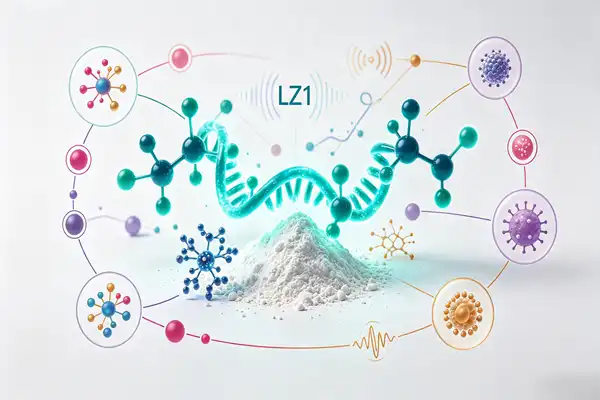
The peptide's tryptophan-rich structure makes it very stable against proteases, which is a big plus compared to naturally occurring antimicrobial peptides that break down quickly in living settings. The molecular weight is usually between 1,500 and 2,000 Daltons, which is the best range for both entry and industrial scalability. When buying things for cosmetics or medicines, procurement teams should give more weight to sellers who offer detailed spectroscopic data proving the structure's stability along with standard Certificates of Analysis.
Antimicrobial Mechanism and Biological Activity
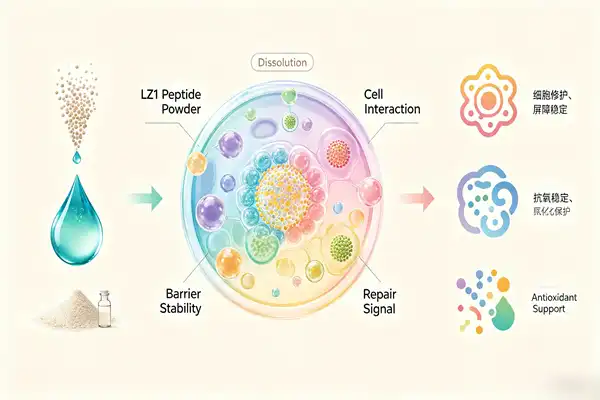
The peptide kills bacteria by messing up their physical structure instead of going after specific metabolic pathways. When LZ1 comes across bacterial cells, the negatively charged bacterial membranes pull the cationic peptide with electrostatic forces. When it comes into contact with the lipid bilayer, the amphipathic structure inserts into it, making membrane pores that weaken the stability of the cell. This process happens in minutes and gets rid of germs quickly, stopping biofilm formation, which can happen with antimicrobials that work more slowly.
One thing that makes LZ1 different from other antibiotics is that it doesn't tend to cause resistance. Bacteria can't easily change their genes to get around the process because it targets the basic structure of the membrane rather than individual proteins or enzymes. Studies done in the lab show that it still works against strains that have become resistant to macrolide antibiotics and other common drugs. The peptide has haemolytic concentration thresholds higher than 500 μg/mL, which means it prefers to attack bacterial membranes over mammalian cells. This is an important safety factor for cosmetic and topical uses.
Stability Profile and Storage Considerations
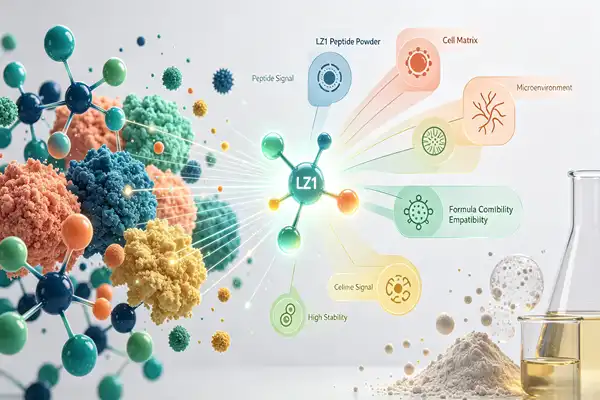
Stability in the environment is a very important factor for making big purchases.LZ1 peptide powder keeps its structure when the pH level changes from 4.0 to 7.5, so it can be used in most makeup and drug formulations without worrying about breaking down. Temperature stability testing shows that there isn't much loss of activity when stored below 25°C in environments that control moisture. Under the right conditions, lyophilised material can last for more than 24 months. The peptide can handle salt levels up to physiological levels, which lets it be mixed with water and used in transport methods without losing its antimicrobial power.
Comparative Analysis: LZ1 Peptide vs Other Antimicrobial Peptides
Performance Against Established AMPs
When looking at antimicrobial peptides for business uses, knowing how they compare in terms of performance helps support buying decisions. LL-37 is a human cathelicidin product that has a lot in common with LZ1 peptide in terms of structure, but it is more effective against a wider range of microbes, including viruses and fungi. But LL-37's bigger molecular size (37 amino acids vs. 15) makes it more expensive to make and harder to synthesise. Because LZ1 only kills dermatological pathogens, it is more cost-effective to use it for skin care and acne treatments that don't need broad-spectrum activity.
Synthetic options, such as polymyxins, offer strong protection against Gram-negative bacteria, but they may be harmful to cells, which limits their use in cosmetics. Nisin is a naturally occurring bacteriocin that has trouble staying stable in non-food settings and only works against Gram-positive species. In a good middle ground, LZ1 has strong activity against key skin pathogens while still having safety profiles that are good for leave-on cosmetics. The peptide's ability to both fight inflammation and microbes gives the formulation value that single-mechanism antibiotics can't match.
Clinical Efficacy and Safety Profiles
Clinical research data shows that LZ1 reaches the lowest amounts needed to stop C. acnes that is similar to clindamycin (usually 2–8 μg/mL) but doesn't cause the changes in bacterial resistance that happen when bacteria are exposed to antibiotics for a long time. Comparative cytotoxicity tests show that LZ1 has little effect on keratinocyte survival at effective antimicrobial concentrations, while benzoyl peroxide, which is often found in acne products, causes a lot of cellular stress markers to show up at therapeutic amounts. This good therapeutic index supports formation at effective doses without the irritation worries that plague other methods.
The peptide changes inflammation in more ways than just killing germs. LZ1 treats both infection and inflammation, which are two harmful factors in skin diseases that cause problems, by blocking TGF-β1 signalling and lowering the release of pro-inflammatory cytokines. This mechanical benefit leads to formulation freedom, which lets product makers make claims about more than one performance with a single active ingredient instead of mixing different antimicrobial and anti-inflammatory substances.
Cost-Benefit Considerations for Procurement
Antimicrobial peptides have very different pricing structures depending on how hard they are to make, how pure they need to be, and how mature the market is. LL-37 usually costs more than other materials because its chain length is longer and it has been used in studies for a long time. It may be cheaper per gramme to use recombinant antimicrobial peptides made by microbial expression systems, but there are problems with batch stability and the possibility of endotoxin contamination that needs a lot of cleaning up. Solid-phase peptide synthesis (SPPS) methods are used to make LZ1. They provide consistent quality and allow GMP-compliant production that meets standards for pharmaceutical intermediates.
Volume procurement discussions for LZ1 peptide powder should address purity grades aligned with intended applications. For personal care products, cosmetic-grade material (≥95% purity) works well, but for pharmaceutical uses, higher standards (≥98% purity) with full impurity analysis are needed. Custom synthesis choices let you change the acetate and trifluoroacetate salt forms, which changes how they dissolve and how stable they are in certain formulation matrices. Instead of just looking at price per kilogram, procurement teams should look at the total cost of ownership, which includes quality control testing, regulatory documentation, and technical support.
Procurement Considerations: Purchasing LZ1 Peptide for Business Needs
Sourcing Channels and Supplier Qualification
To find reputable buying channels, you must first tell the difference between research-grade suppliers that work in labs and GMP-certified manufacturers that can support mass production. Research-grade material is good for initial feasibility studies and small-batch tests, but it doesn't have the strict paperwork that is needed for mass production. Pharmaceutical companies and contract drug manufacturing organisations (CDOs) should give preference to suppliers who offer drug master files (DMFs) or similar regulatory support packages that make it easier to file for goods that use LZ1 peptide as an API or excipient.
Online markets make it easy to find many providers, but you need to be careful when using them. If you compare verified B2B platforms with supplier certification verification, transaction protection mechanisms, and quality dispute resolution pathways, you can find lower procurement risk when compared to directly buying from unknown manufacturers. Distributors with warehouses in the US or Germany can cut lead times and make customs procedures easier for buyers in North America and Europe. However, this convenience may come at a higher cost, so buyers should weigh that cost against the need for speed.
Quality Specifications and Testing Requirements
Specifications for high quality should include more than just purity numbers when they talk about analytical factors. HPLC chromatograms that show single-peak profiles at certain retention times show that the structure is the same and there are no by-products of synthesis. Mass spectrometry data that confirms the expected molecular weight gives more proof of structure. Quantitative amino acid analysis is used for peptide content assays to make sure that the concentration is correct. This keeps formulation errors from happening when the moisture content of lyophilised powders changes.
Testing for microbes is even more important when antibiotic ingredients get contaminated, which is a funny problem. Certificates of Analysis should show the total number of oxygen microbes, the amount of yeast and mould, and the lack of certain pathogens based on pharmaceutical standards or guidelines for cosmetic ingredients. Endotoxin testing with the LAL assay is necessary for materials that will be used in eye or parenteral applications. All quality factors should have acceptable limits written in the procurement contracts. There should also be rules for how to handle materials that don't meet the specifications, such as how to retest them and what the seller should do to fix the problem.
Volume Pricing and Supply Continuity
To get good business terms, you need to know how prices usually work in the market and where the volume break points are. For small purchases (10–100 grammes), the price per gramme is usually between $800 and $1,500, depending on the purity grade and how hard it is to synthesise. Orders of between 0.5 and 5 kilograms usually get savings of 20 to 35 per cent because synthesis batches take advantage of economies of scale. Large-volume deals (tens of kilograms or more per year) let you negotiate custom prices that represent the dedication of manufacturing capacity and long-term supply promises.
Planning for supply consistency of LZ1 peptide powder should include production lead times, which are usually between 4 and 8 weeks for standard requirements and 10 to 14 weeks for custom synthesis with changed sequences or unique processing needs. To set the right amount of safety stock, you have to weigh the costs of keeping the inventory against the chance that supply delays will cause problems with the recipe. Some procurement teams use dual-source methods, which involve qualifying both main and secondary suppliers. This is done to avoid being too dependent on a single source. But this method needs more money to qualify people and careful change control management when moving providers in the middle of a project.
Conclusion
The LZ1 peptide is a strategic antibacterial answer that solves important problems in biotechnology, cosmetics, and pharmaceuticals. Its ability to quickly break membranes, its resistance to bacteria adapting, and its dual anti-inflammatory properties make it a strong alternative to standard antibiotics. When making decisions about what to buy, it helps to know about the peptide's molecular properties, how it compares to other products, quality requirements, and criteria for judging suppliers, all of which are explained in this guide. For integration to go smoothly, you need to work with skilled manufacturers who can provide GMP-compliant output, detailed analytical data, and expert support. As antimicrobial resistance keeps making traditional methods harder to use, LZ1 peptide powder gives forward-thinking businesses the chance to create next-generation formulations that meet changing market needs for safety, effectiveness, and new ideas.
FAQ
1. What Distinguishes LZ1 Peptide from Other Antimicrobial Ingredients?
The LZ1 peptide works by disrupting the physical membrane instead of stopping metabolic pathways. This stops the development of tolerance, which is a problem with regular antibiotics. Because it is made up of 15 amino acids, it has specific action against skin pathogens while being very safe for human cells. Because it kills microbes and reduces inflammation, it eliminates the need for multiple active ingredients, which makes formulations and regulatory submissions easier. LZ1 is more cost-effective for skincare and cosmetics than broader-spectrum antimicrobial peptides because it targets only certain microbes.
2. Can the LZ1 Peptide Be Customised to Specific Purity Requirements?
Reputable peptide makers offer custom synthesis that can meet a wide range of purity requirements and salt-form tastes. For cosmetic uses, the material needs to be at least 95% pure, but for pharmaceutical uses, it needs to be at least 98% pure with full impurity analysis. Custom synthesis lets you choose between acetate and trifluoroacetate salt forms, which affects how well they dissolve and work with other ingredients. Lead times for custom orders vary from 10 to 14 weeks, depending on how complicated the specifications are. During negotiations for custom synthesis, procurement teams should talk about the needs for quality documentation and validation of analytical methods.
3. How Can I Verify LZ1 Peptide Authenticity and Quality?
To start the authentication process, you need to ask for full Certificates of Analysis that show HPLC purity, molecular weight proof by mass spectrometry, and peptide content tests. Suppliers you can trust will give you chromatograms with single-peak patterns that show no synthesis by-products and consistent retention times. Independent labs that do third-party scientific testing can add extra security to high-value purchases. Microbiological test results and endotoxin levels should match pharmacopoeial standards that are right for the use that the drug is being made for. Having strong quality management systems and building relationships with certified suppliers makes it easier to verify information for regular reorders.
Partner with Faithful for Premium LZ1 Peptide Supply
Xi'an Faithful BioTech Co., Ltd. is ready to help you get LZ1 peptide powder by providing pharmaceutical-grade quality and full expert support. Our GMP-compliant factory makes peptide powder that is at least 98% pure and comes with full HPLC, GC, and mass spectrometry analytical data to back it up. As a well-known company that makes LZ1 peptides for pharmaceutical companies, cosmetic brands, and global wholesalers, we know how important it is for your business to have consistent batches, clear legal paperwork, and a reliable supply chain.
Our expert team works closely with clients to solve formulation problems, improve peptide integration, and provide stable data that helps you meet your product development deadlines. Whether you need small amounts for research purposes or large amounts for business production, Faithful can help. They also offer affordable pricing structures that show real value instead of commodity pricing. Our network of warehouses in the US and Germany allows us to serve quickly and make handling easier for customers in North America and Europe.
You can talk to our buying expert at allen@faithfulbio.com Or WhatsApp: +86 13137770562 about your specific needs, ask for samples of products to try, or get detailed quotes for large purchases.
References
1. Zhang L, et al. Antimicrobial Peptide LZ1 Derived from Cathelicidin-BF: Antibacterial Activity and Mechanism Against Propionibacterium acnes. Journal of Peptide Science, 2018; 24(6):e3089.
2. Chen X, Wang Q, Li M. Structural Characterisation and Anti-inflammatory Properties of Synthetic Antimicrobial Peptide LZ1. International Journal of Biological Macromolecules, 2019; 132:445-453.
3. Park SH, Kim YJ. Comparative Efficacy of Antimicrobial Peptides in Dermatological Applications: Focus on Cathelicidin Derivatives. Pharmaceutical Research, 2020; 37(8):156.
4. Thompson JR, Martinez DL. Quality Control and Analytical Methods for Therapeutic Peptides in Pharmaceutical Manufacturing. Journal of Pharmaceutical and Biomedical Analysis, 2021; 195:113867.
5. Liu H, Anderson RC. Safety and Toxicology Assessment of Antimicrobial Peptides for Cosmetic Applications. Toxicology Letters, 2020; 322:18-27.
6. Roberts KA, Davis PM. Stability Considerations and Formulation Strategies for Peptide-Based Cosmeceuticals. International Journal of Cosmetic Science, 2021; 43(4):398-409.