
How can Phosphatidylserine Powder become a key ingredient in neurometabolism pharmaceuticals?
In the fields of neurodegenerative disease prevention and cognitive health management, phospholipids, which combine membrane structural support and signal regulation functions, are becoming a core direction for the development of functional formulations. Phosphatidylserine powder, as a refined form of natural glycerophospholipids, deeply participates in cell membrane homeostasis maintenance, neurotransmitter transmission, and metabolic pathway regulation due to its amphiphilic molecular structure and neurotargeting activity. It is a high-value raw material connecting cell physiology and pharmaceutical applications. Its raw material source is safe and its activity is well-defined. It can efficiently penetrate the blood-brain barrier and accumulate in brain tissue, playing an irreplaceable role in cognitive improvement, neuroprotection, and mood regulation.
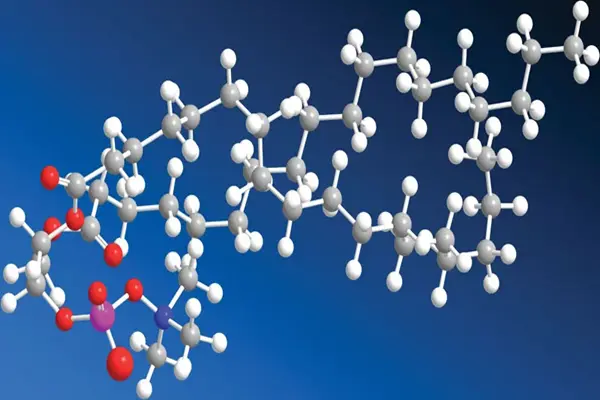
Polar phospholipids with two tails
The core characteristic of Phosphatidylserine Powder stems from its precise glycerophospholipid molecular structure, a prerequisite for its integration into biological membranes and the exercise of multiple physiological activities. As a naturally occurring acidic phospholipid, its molecule uses glycerol as its core backbone, strictly adhering to an L-chiral configuration. This spatial structure highly matches the natural configuration of phospholipids in human cell membranes, allowing for direct integration into the cell membrane bilayer, avoiding rejection reactions to exogenous substances, and laying the foundation for subsequent functional expression.
A key feature of its molecular structure is the clear division between its hydrophilic and hydrophobic ends, forming a typical amphiphilic structure. The sn-1 and sn-2 positions of the glycerol backbone are connected by ester bonds to two fatty acid chains, forming a hydrophobic tail. The fatty acid chains are mostly C16-C22 in length, with saturated fatty acids predominating at the sn-1 position and unsaturated fatty acids predominating at the sn-2 position. This arrangement ensures both membrane fluidity and structural stability. Glycerol sn-3 is linked to a serine residue via a phosphodiester bond, forming a negatively charged hydrophilic head, which is a key site for binding to membrane proteins and signaling molecules.
From a physicochemical perspective, the pure raw material is a white or pale yellow crystalline powder, odorless, and easily oxidized and decomposed by strong acids, strong alkalis, or oxidizing agents; therefore, it must be stored in a sealed, light-protected container. In industrial production, soybean-derived PS powder can achieve a purity of 50%-98%, with impurities below 2%, meeting food-grade and pharmaceutical-grade raw material standards. Its molecular weight is approximately 792.07, with the molecular formula C42H82NO10P. It is both water-soluble and lipid-soluble, with a solubility of up to 30 g/L in physiological buffer solutions, allowing it to directly participate in the body fluid circulation without the need for additional solubilizers.
The scientific nature of its molecular structure is also reflected in the balance between biocompatibility and stability. Unlike synthetic phospholipids, naturally derived PS retains the natural combination of its glycerol backbone and fatty acid chains, allowing it to be normally metabolized by phospholipases in the body. The metabolites are fatty acids, serine, and phosphate, all endogenous substances with no cumulative toxicity. Simultaneously, the negative charge on the phosphoserine head of its molecule can form ionic bonds with cations on the cell membrane surface, enhancing membrane binding stability and prolonging its duration of action.
This precise amphiphilic molecular design allows PS powder to both embed itself within the cell membrane bilayer structure, maintaining membrane integrity and fluidity, and to regulate membrane protein activity through its hydrophilic head. This provides structural support for its applications in areas such as neuromodulation and metabolic intervention, becoming a core advantage distinguishing it from ordinary phospholipid raw materials.
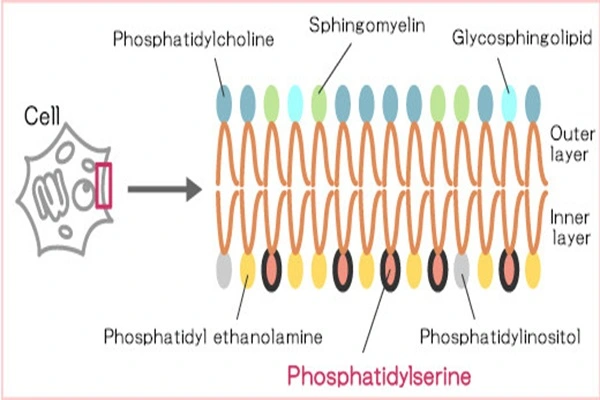
Signaling platform of the inner leaflet
The mechanism of action of phosphatidylserine powder in nerve cells can be summarized in three levels: a regulator of membrane fluidity, an anchoring platform for signaling proteins, and a "take-me" tag for apoptotic signals. These three roles play different functions in maintaining neuronal survival, promoting synaptic plasticity, and clearing senescent cells.
- First, in regulating membrane fluidity and receptor function, PS interacts with the positively charged domains of transmembrane proteins through its negatively charged head group, influencing receptor conformation and aggregation state. For example, the interaction of PS with N-methyl-D-aspartate receptors and α-amino-3-hydroxy-5-methyl-4-isoxazolepropionic acid receptors can regulate the strength of glutamatergic synaptic transmission. Animal experiments have shown that dietary PS supplementation can increase the expression of postsynaptic density protein 95 (PS), a core scaffold of the postsynaptic dense region, whose expression level is positively correlated with learning and memory abilities.
- Second, PS plays an indispensable "cofactor" role in the activation of protein kinase C (PKC). PKC is a key kinase in intracellular signal transduction, involved in the induction and maintenance of long-term potentiation (LTP). When extracellular signals activate phospholipase C to generate diacylglycerol, PKC translocates from the cytoplasm to the cell membrane, requiring binding to PS for complete activation. PS specifically binds to the C2 domain of PKC, anchoring it to the membrane and opening its conformation, facilitating the entry of ATP and substrates. In the absence of PS, even with sufficient DAG, PKC kinase activity is significantly reduced.
- Third, in the clearance of apoptotic cells, the flipping of the phosphatidylserine powder from the inner lobe to the outer lobe is an "early signal" for the initiation of programmed cell death. In normal living cells, PS is strictly distributed in the inner lobe of the cell membrane, with an asymmetric distribution maintained by ATP-dependent aminophospholipid transporters. When the cell initiates the apoptotic program, calcium-dependent scramblase is activated, nonspecifically flipping PS to the outer lobe. PS exposed on the membrane surface is recognized by PS receptors on the surfaces of macrophages and microglia, triggering phagocytic clearance. Whether PS supplementation can promote the clearance of Aβ-deposited senescent cells in the brains of Alzheimer's patients through this mechanism is an ongoing research topic.
- Fourth, in neuroendocrine and stress responses, PS also plays a role by regulating the activity of the hypothalamus-pituitary-adrenal axis. Cortisol is a core hormone in the stress response, and persistently elevated cortisol levels under chronic stress are toxic to hippocampal neurons. Multiple clinical trials have found that supplementation with Phosphatidylserine Powder can reduce the peak cortisol response after exercise or psychological stress, and alleviate exercise-induced muscle soreness and fatigue. This effect is considered one of the important mechanisms by which PS improves "cognitive endurance." For example, in controlled trials involving golfers and cyclists, the fatigue scores of the PS-treated group were significantly lower than those of the placebo group.
- Fifth, the neuroprotective effects of Phosphatidylserine Powder also involve its regulation of mitochondrial function. The mitochondrial membrane is also rich in PS, and PS affects the initiation of apoptosis pathways by regulating mitochondrial membrane potential and cytochrome c release. In a neuronal cell model treated with β-amyloid, PS pretreatment alleviated mitochondrial membrane depolarization, reduced reactive oxygen species production, and decreased caspase-3 activation. This effect was observed even at low doses.
Neurohealth and pharmaceutical fields
In the field of cognitive health improvement, PS Powder is a core ingredient for intervention in cognitive decline in middle-aged and elderly individuals and for enhancing brain function in adolescents. For individuals with mild cognitive impairment, daily supplementation with 300mg of PS for 12 weeks can improve memory scores by 18%-25%, significantly improve attention and executive function, and slow the progression of cognitive decline. For adolescents and those engaged in mental work, PS supplementation can improve learning and memory efficiency and alleviate mental fatigue. Data shows that continuous supplementation for 8 weeks can increase working memory capacity by 12%-15% and improve attention concentration by more than 20%. Furthermore, PS can improve attention deficits in children with ADHD and reduce impulsive behavior, with a clinical efficacy rate of 60%-70%.
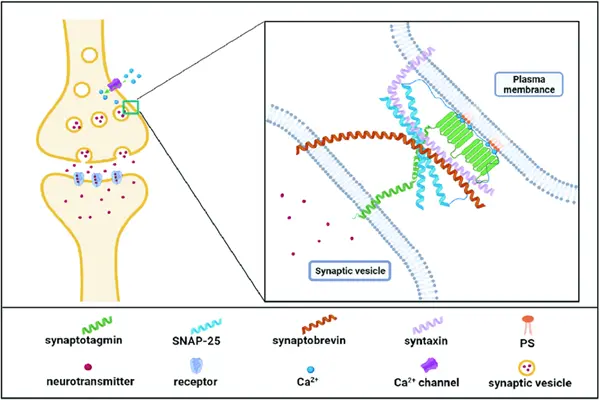
In the field of adjunctive management of neurodegenerative diseases, PS Powder plays an important neuroprotective role. For patients in the early stages of Alzheimer's disease, PS can slow the decline in memory and cognitive function, reduce the rate of decline in daily activities, and reduce care dependency. In adjunctive management of Parkinson's disease, PS can improve patients' bradykinesia and depressive symptoms, improving their quality of life. Meanwhile, its antioxidant and anti-inflammatory properties can be used for nerve damage repair after stroke, promoting neurological function recovery and reducing sequelae.
In the field of mood regulation and stress relief, PS Powder can effectively improve mood disorders such as anxiety and depression. It can regulate the levels of mood-related neurotransmitters such as serotonin and norepinephrine in the brain, reduce the activity of the hypothalamus-pituitary-adrenal axis, and reduce the secretion of the stress hormone cortisol. Data shows that daily supplementation with 200mg of PS for 6 weeks can reduce anxiety scale scores by 30%-40%, significantly alleviate depressive mood, and has no sedative side effects.
In the pharmaceutical and formulation application field, PS Powder is widely used as a multifunctional excipient and active ingredient. As a liposome drug carrier, its amphiphilic structure can encapsulate water-soluble or lipid-soluble drugs, improving drug stability and targeting, enhancing the ability of drugs to cross the blood-brain barrier, and is suitable for the development of central nervous system drugs. As an emulsifier and transdermal absorption enhancer, PS can be used in injectable and cream formulations to improve drug solubility and skin penetration. Furthermore, PS can be compounded with ingredients such as DHA and B vitamins to develop complex brain nutrition formulations, synergistically enhancing cognitive protection.
Raw material optimization and in-depth expansion of application scenarios
In terms of raw material refining and structural optimization, the industry is focusing on upgrading the preparation technology of high-purity, high-activity PS. Currently, enzymatic catalytic conversion is gradually replacing traditional chemical synthesis methods. Using soybean lecithin as a raw material, high-purity PS can be prepared through phosphatidylserine synthase catalysis, achieving a purity of over 98%, and the fatty acid chain composition is closer to that of natural human PS, increasing bioavailability by 30%-40%. Simultaneously, through fatty acid chain modification technology, ω-3 polyunsaturated fatty acids are introduced to develop composite active PS derivatives, combining the neuroprotective properties of PS with the anti-inflammatory and antioxidant activities of ω-3, synergistically improving neurological health.
In the field of formulation technology innovation, targeted delivery and long-acting formulation development have become core directions. Utilizing nanotechnology, targeted formulations such as PS liposomes and nanoemulsions are prepared to increase the enrichment concentration of PS in brain tissue, reduce drug dosage, and decrease gastrointestinal side effects. For example, PS-polyethylene glycol liposomes can prolong the in vivo circulating half-life, increasing the drug concentration in brain tissue by 2-3 times and extending the duration of action to over 72 hours. Furthermore, the development of novel dosage forms such as oral instant films and sustained-release microspheres has improved the convenience of PS administration and patient compliance, making it suitable for middle-aged and elderly individuals as well as children.
In terms of expanding indications, the application of PS has extended from neurological health to areas such as metabolic diseases and immune regulation. In the intervention of metabolic syndrome, PS can improve insulin sensitivity, lower blood glucose and lipid levels, reduce visceral fat accumulation, and help regulate metabolic balance. In the field of autoimmune diseases, PS can regulate immune cell apoptosis signals, inhibit excessive immune responses, and alleviate symptoms of diseases such as rheumatoid arthritis and systemic lupus erythematosus.
In addition, in the field of sports nutrition, PS can reduce nerve fatigue and muscle soreness caused by high-intensity exercise and improve exercise recovery efficiency, making it an important raw material for sports nutrition supplements. Regarding green production and quality control standardization, the industry is promoting the greening and standardization of PS production. By optimizing enzyme reaction conditions and purification processes, energy consumption and organic solvent usage in the production process are reduced, environmental pollution is decreased, and large-scale green production is achieved. At the same time, we will establish a comprehensive raw material quality control system to strictly control the purity of PS, fatty acid composition, heavy metals and microbial limits, so as to ensure that the quality of raw materials is stable and controllable, meets the requirements of international pharmaceutical and food standards, and enhance the international competitiveness of our products.
Conclusion
Phosphatidylserine powder, a high-value raw material possessing both membrane structural support and neuromodulation functions, occupies an irreplaceable position in the fields of neurohealth management and pharmaceuticals due to its unique amphiphilic molecular structure, precise neurometabolic regulation mechanism, and wide range of applications. It not only provides a safe and effective intervention pathway for cognitive decline, neurodegenerative diseases, and mood disorders, but also offers crucial active ingredients and excipients for the development of novel formulations.
Pharmaceutical companies and wholesalers are welcome to visit Xi'an Faithful BioTech to learn about our commitment to the production and management of the Phosphatidylserine powder supply chain. Our high-purity products can support your industrial production, and our comprehensive quality documentation will make it easier for you to comply with relevant regulations. Please contact our experienced staff (allen@faithfulbio.com) to discuss your specific needs and explore business opportunities with this leading Phosphatidylserine powder manufacturer.
References
- Glade, M. J., & Smith, K. (2015). Phosphatidylserine and the human brain. Nutrition, 31(6), 781-786.
- Kim, H. Y., et al. (2014). Phosphatidylserine in the brain: metabolism and function. Progress in Lipid Research, 56, 1-18.
- Kay, J. G., et al. (2019). Distribution, dynamics and functional roles of phosphatidylserine within the cell. Cell Communication and Signaling, 17(1), 126.
- Duan, H., et al. (2025). Effects of a food supplement containing phosphatidylserine on cognitive function in Chinese older adults with mild cognitive impairment. Journal of Affective Disorders, 368, 119-126.
- Chang, W., et al. (2020). Targeting phosphatidylserine for cancer therapy: prospects and challenges. Theranostics, 10(20), 9214-9229.
- Ma, X., et al. (2022). Phosphatidylserine, inflammation, and central nervous system diseases. Frontiers in Aging Neuroscience, 14, 975176.
- Jingnan, C., et al. (2023). Phosphatidylserine: an overview on functionality, processing techniques, patents, and prospects. Grain & Oil Science and Technology, 6(4), 206-218.