

How does Bromocresol Green Free Acid achieve pH-responsive colorimetric identification?
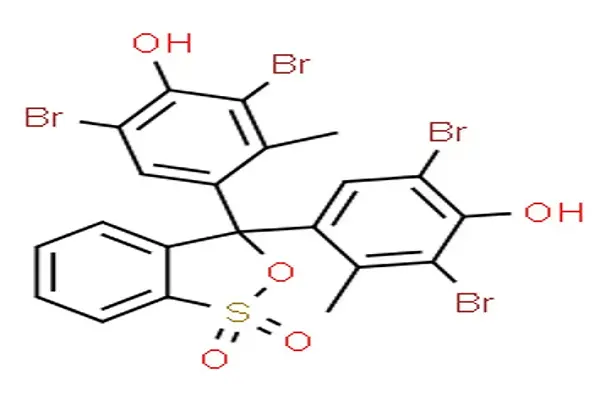
Bromocresol Green Free Acid is a sulfonyl phthalate triarylmethane weakly acidic dye raw material. In its free acid form, it does not undergo sodium salt formation treatment and appears as a light brown powder. Its molecular skeleton contains bromo-substituted phenolic hydroxyl groups and cyclic sulfonyl lactone structures, giving it the ability to undergo reversible proton binding and dissociation. Bromocresol Green Free Acid has low water solubility but is more readily soluble in polar organic solvents such as ethanol. It undergoes proton gain and loss under different hydrogen ion concentrations, accompanied by molecular conjugation system reconstruction, resulting in a visually perceptible color change. The color change range is concentrated between pH 3.8 and pH 5.4; it appears yellow in acidic environments, turns bluish-blue in alkaline environments, and exhibits a mixed green hue in intermediate transition environments. Bromocresol Green Free Acid differs significantly from the commonly used bromocresol green sodium salt. The sodium salt form has excellent water solubility, while the free acid form retains the original structure of the lactone ring. It is suitable for organic phase systems, sol-gel embedding, organic phase color development, and other scenarios. High-purity batch control of colored impurities, decomposition fragments, and debromination byproducts ensures stable color change range and uniform molar absorptivity, making it suitable for various scientific research scenarios such as chemical titration, biochemical colorimetric detection, thin-layer chromatography color development, and microbial culture system observation.
🧩 The skeletal groups determine the proton response physicochemical properties
Bromocresol Green Free Acid, in its complete molecule, belongs to the sulfonyl phthalein dye class. Its core is a triarylmethane core structure, with three aromatic benzene rings connected by a central carbon atom. Two benzene rings have bromine and methyl substituents introduced, respectively. One side of the benzene ring and sulfonyl group close to form a cyclic sulfonyl lactone ring. This cyclic structure is a hallmark of free acid morphology. After salt formation, the lactone ring undergoes ring-opening, altering the molecular spatial configuration. Under solid powder storage conditions, Bromocresol Green Free Acid primarily exists in a closed lactone ring configuration. The conjugated π electron system of the entire molecule is limited, corresponding to the light brown appearance of the solid. In a light-protected, dry, room-temperature environment, the closed ring structure can be maintained for a long time, and spontaneous ring-opening decomposition is not easily observed. Once exposed to a solvent environment, the hydrogen ion concentration changes, and proton transfer occurs in the phenolic hydroxyl group and the sulfonyl lactone ring, directly driving the switching between closed and open ring configurations. This structural switching is the fundamental source of the color change, not simply a color change due to dye dissolution.
Bromocresol Green Free Acid, as a typical weak acid, releases hydrogen ions from its phenolic hydroxyl group. The dissociation process follows a weak acid dissociation equilibrium, with a pKa value maintained between 4.8 and 4.9, which corresponds to the midpoint of the colorimetric range. When the hydrogen ion concentration is high, i.e., under strongly acidic conditions with a pH below 3.8, the molecule maintains a protonated closed ring state, resulting in a short conjugated system and concentrated absorption in the short-wavelength region, producing a bright yellow solution. As the ambient pH gradually increases, protons begin to dissociate from the phenolic hydroxyl group, causing the cyclic sulfonyl lactone ring to open. This significantly expands the electron delocalization range within the molecule, and the larger conjugated system shifts the dye absorption spectrum towards longer wavelengths, causing the solution color to change towards blue-green and deep blue. When the pH is between 3.8 and 5.4, both protonated and deprotonated molecules coexist. The yellow and blue components overlap, resulting in a visible green transition. Each pH value corresponds to a fixed proportion of the two molecular configurations, and also a specific set of spectral absorption signals.
The solvent environment significantly affects the dissociation equilibrium and color performance of Bromocresol Green Free Acid. The free acid form has poor solubility in pure water. If the solid is directly added to pure water, most of the powder cannot dissociate and disperse, remaining suspended in the liquid, failing to fully exhibit the pH color change effect. This is the most obvious difference between the free acid and sodium salt versions. Polar organic solvents such as ethanol and methanol can dissolve Bromocresol Green Free Acid well. In alcoholic solvents, the closed-ring lactone structure can remain stable. Gradually adding acid or alkali to an alcoholic solution still allows for the observation of a complete color change process. Therefore, Bromocresol Green Free Acid is often chosen directly for organic phase titration systems instead of the water-soluble sodium salt. When the mixing ratio of water and organic solvent in the system changes, the dielectric constant of the solvent changes accordingly, slightly shifting the actual color-changing range of the dye. For the same dye, the pH at which color reversal occurs will slightly shift between a pure water system and a system with a high ethanol content. When performing precise titrations, the solvent ratio must remain consistent throughout the process to minimize deviations in the test results.
Impurities can directly interfere with the color-changing properties of Bromocresol Green Free Acid. During the synthesis process, debromination byproducts are easily generated. After bromine atoms are removed from the benzene ring, the molecular electron cloud distribution changes, causing shifts in the dye's pKa, absorption wavelength, and color-changing range. Furthermore, some raw materials may contain trace amounts of sodium salt. Even if the product is labeled as free acid, the presence of trace amounts of sodium salt increases the solubility of the raw material in water and alters the closed-ring-opening equilibrium, causing the color-changing starting point to occur earlier, the color-changing transition range to widen, and the color transition to become blurred, failing to achieve a sharp and clear color transition. Furthermore, colored fragments formed by oxidation and decomposition during long-term storage can interfere with background color, resulting in a turbid gray tint to the solution regardless of acidic or alkaline conditions. This leads to baseline elevation during spectrophotometric detection and increased error in absorbance readings. High-purity Bromocresol Green Free Acid undergoes recrystallization purification to remove debrominated derivatives, salt residues, and oxidative degradation impurities, ensuring a sufficiently high proportion of closed-ring lactone structures. This results in clear and sharp color change boundaries and high repeatability of absorbance readings under the same pH conditions, making it suitable for quantitative colorimetric applications.
Bromocresol Green Free Acid exhibits a distinct isoabsorption point at approximately 515 nm. At this wavelength, the molar absorptivity of both the protonated yellow and deprotonated blue forms is completely equal. Regardless of the proportion of the two molecular forms coexisting, the absorbance at 515 nm remains constant. This spectral characteristic can be used to determine whether the dye system contains only two reversibly convertible configurations. If chemical decomposition occurs, generating a third absorbing component, the isoabsorption point will disappear. Researchers often use this characteristic to conduct kinetic observations. They select 515 nm as the reference wavelength to eliminate interference from fluctuations in the dye concentration itself, and choose 440 nm to represent the protonated component and 615 nm to represent the deprotonated component. The difference in absorbance between the two wavelengths can accurately calculate the proportion of the two molecular configurations without needing to consider the actual total concentration of Bromocresol Green Free Acid. This spectroscopic method is widely used in the observation of acid-base equilibrium in solutions and the analysis of dye response behavior inside embedded materials.
⚖️ Proton Exchange Drives Color and Spectral Signal Conversion
The exchange between hydrogen ions and Bromocresol Green Free Acid is a reversible, non-covalent proton exchange. Irreversible chemical bond breakage does not occur. As the ambient pH decreases, the deprotonated molecule can recapture hydrogen ions, returning to its closed-ring lactone configuration. The color simultaneously changes from blue back to yellow. This cycle can repeat multiple times, and the dye's color-changing ability will not be lost as long as oxidative degradation does not occur. However, this reversible cycle has its limits. Prolonged exposure to a strongly alkaline environment may cause permanent hydrolysis and breakage of the cyclic sulfonyl lactone structure, damaging the molecular skeleton. Even if the pH is subsequently lowered, the yellow protonated form cannot be restored, resulting in irreversible dye failure. Therefore, Bromocresol Green Free Acid, once prepared, cannot be stored in a high-pH stock solution for extended periods. Solid raw materials should also be stored away from strong alkaline substances to prevent lactone ring hydrolysis in the solid state, which would affect the color-changing performance during subsequent use.
Besides responding to hydrogen ions, Bromocresol Green Free Acid can also electrostatically bind to some macromolecules, most notably serum albumin. After deprotonation, the dye becomes negatively charged, while albumin has numerous positively charged amino acid sites. Through electrostatic interactions, a dye-protein complex is formed. This complexation further shifts the dye's maximum absorption wavelength, generating a characteristic blue-green complex. This characteristic is the underlying logic of the serum albumin colorimetric detection method. It's important to note that the protonated form of Bromocresol Green Free Acid itself is not negatively charged and has a weak binding affinity to proteins. Only when the ambient pH increases, causing deprotonation and ring opening, and generating negatively charged anions, can it effectively bind to proteins. If the free acid solid is directly added to a neutral protein aqueous solution, some dye will not dissociate and will remain suspended in the system, weakening the protein-bound colorimetric reaction. Most practical biochemical assay kits use the sodium salt form for convenient direct deprotonation of the dye in an aqueous system. Bromocresol Green Free Acid is primarily used in early-stage method development to elucidate the relationship between the dye's protonation state and its protein-binding ability.
The concentration of metal ions and high-concentration salt ions in the environment can indirectly interfere with the dissociation equilibrium of Bromocresol Green Free Acid. High concentrations of inorganic salts alter the solution activity coefficient, reducing the effective activity of hydrogen ions, causing a shift in the apparent pKa observed by the dye, and a shift in the color change range. The higher the salt concentration, the more pronounced the shift. In titration and colorimetric determination procedures, to obtain stable and reliable data, it is necessary to maintain uniform ionic strength between all samples and the standard buffer solution to eliminate interference from the salt effect. Some high-valence metal cations can also weakly coordinate with the deprotonated phenolic oxygen sites, competing with hydrogen ions for binding and occupying proton-binding sites on the dye molecule, indirectly promoting dye deprotonation. Even if the system pH does not change, a color shift towards the blue end will occur. When the sample contains heavy metal ions, the color signal given by Bromocresol Green Free Acid cannot be simply interpreted as a pH value.
Light exposure alters the lifespan of Bromocresol Green Free Acid. Visible and ultraviolet radiation excite the dye's aromatic conjugated system, triggering a photo-oxidation reaction. Bromine atoms are shed, the aromatic skeleton is oxidized and destroyed, and the conjugated system is broken down, causing the dye to lose its pH-responsive color-changing ability. Photodegradation in solution is much faster than in solid powder. If dye solutions are left exposed to light for extended periods, the color will gradually fade, and adjustments to the pH will become sluggish. Prepared Bromocresol Green Free Acid working solutions should be stored away from light and used immediately; long-term storage of stock solutions is not recommended. Solid powder raw materials also require light-protected, sealed storage to minimize the accumulation of photodegradation byproducts and ensure stable response sensitivity for each batch of dye.
The Bromocresol Green Free Acid output signal is divided into two levels: a visually visible color signal and an instrument-read spectral signal. The naked eye can only roughly distinguish between three main color ranges: yellow, green, and blue, suitable for qualitatively determining the approximate pH range of the system and for visual identification of the titration endpoint. The spectrophotometer reads the UV-Vis absorption spectrum, providing quantitative values. By using the absorbance ratio at 440 nm and 615 nm, the proportion of protonated and deprotonated components can be accurately calculated, yielding the actual pH value of the system for quantitative detection. Visual identification is subject to subjective bias; different people have different color discrimination thresholds, and different operators may judge the titration endpoint slightly differently for the same solution. Spectroscopic instrument readings are not affected by subjective perception and can output recordable and reproducible objective data. Many analytical workflows combine both methods: visual inspection for rapid initial screening and spectrophotometry for precise quantitative readings, fully leveraging the advantages of Bromocresol Green Free Acid's two signal outputs.
🔋 Multivariate Systems Offer Significant Value for Identification and Indication
Acid-base titration analysis is a classic application of Bromocresol Green Free Acid. Its color-changing pH range of 3.8-5.4 perfectly suits the endpoint identification scenario of strong acid titrating weak base. When a weak base is titrated by a strong acid, the titration jump falls precisely within this pH window, with the endpoint transitioning from yellow to green and then to blue. The color contrast is clear, making it easy to capture the titration endpoint signal. Because the free acid in Bromocresol Green Free Acid has limited water solubility, direct addition to the aqueous titration system will cause turbidity precipitation. In practice, Bromocresol Green Free Acid is usually dissolved in ethanol first to prepare a high-concentration stock solution, and then a small amount is added to the titration vessel. The amount of ethanol added is kept very low to avoid changing the titration jump position in the aqueous system. If the titration system itself is primarily composed of ethanol and ethylene glycol as the organic phase, Bromocresol Green Free Acid can be directly dissolved and used without converting the sodium salt. The lactone ring remains intact, exhibiting stable color change, making it irreplaceable in weak acid-weak base titrations of organic phases.
Thin-layer chromatography (TLC) is another major application of Bromocresol Green Free Acid. After the TLC plate is developed, spraying the dye ethanol solution alters the local microenvironment hydrogen ion concentration of acidic organic compound spots with pKa below 5.0. This causes proton dissociation of the dye at the spot location, revealing colored spots that contrast with the background color, enabling the visualization and localization of acidic substances on the TLC plate. The Bromocresol Green Free Acid ethanol spray solution does not introduce excessive water, preventing delamination of the silica gel layer on the TLC plate. Compared to spraying with an aqueous solution of the dye sodium salt, it causes less damage to the TLC plate, resulting in sharp and clear spot outlines with less diffusion and tailing. It is suitable for the qualitative screening of organic acids, some phenols, and acidic alkaloids using TLC. Researchers can roughly determine the content of acidic components on a thin-layer chromatography (TLC) plate by observing the color intensity of spots, which can be used to track the synthesis reaction process, quickly distinguish product spots from impurity spots, and simplify the routine TLC detection process in organic synthesis.
Bromcresol Green Free Acid is widely used in gel and solid matrix embedding systems to dope the dye into sol-gel silica-based films and polymer hydrogel materials, preparing pH-responsive colorimetric film materials and constructing visual sensing units. Bromocresol Green Free Acid, in its free acid form, has better lipid solubility than sodium salts, making it easier to uniformly disperse within the organically modified siloxane gel network. It is less prone to dye precipitation and crystallization, and the dye retains its reversible proton gain and loss color-changing ability after embedding. As the pH of the external environment changes, the film color synchronously switches from yellow to green to blue. These solid-state sensing materials can be used for rapid pH screening of environmental water samples and observation of the inner wall state of microbial culture containers, requiring no complex instruments and allowing for visual reading of environmental pH changes. In the embedding process, solvent ratios and cross-linking agent types slightly restrict the freedom of dye molecule configurational inversion, causing minor shifts in the dye color change window and solution state within the film. When developing solid-state sensing materials, it is necessary to fully calibrate the actual response range of the film; pH color change parameters from aqueous solutions cannot be directly applied.
In biochemical analysis, Bromocresol Green Free Acid is primarily used for mechanistic methodological exploration. Most commercially available assays use the sodium salt form, while the free acid form is used to analyze the impact of dye proton state on protein binding efficiency. Researchers use Bromocresol Green Free Acid to sequentially adjust the system pH, controlling the proportion of protonated and deprotonated dyes, observing changes in the absorbance intensity of the complex formed by the dye and serum albumin, establishing the correlation between the degree of proton dissociation and the protein colorimetric signal. This is used to optimize the pH conditions of albumin assay kit buffers and avoid detection bias caused by interfering substances. Bromocresol Green Free Acid can also be added to microbial liquid culture systems to indirectly monitor the metabolic acid production during microbial proliferation. As microorganisms secrete acidic metabolites, the pH of the culture medium decreases, and the dye turns yellow. This color change provides a direct indication of the microbial growth and metabolic status, allowing for qualitative observation of metabolic trends without instruments.

However, Bromocresol Green Free Acid is a research-grade analytical dye and cannot be directly used as a clinical diagnostic reagent for sample testing. It is also unsuitable for direct contact with living cells or animal organisms. The dye molecules themselves possess a certain degree of biointerference capability; at high concentrations, they can affect the spatial conformation of some enzymes and proteins, interfering with biomolecular activity. Direct addition to living cell culture systems can cause the dye to adsorb onto the cell membrane, altering the local microenvironment pH and leading to non-specific cell disturbances. For all biological applications, Bromocresol Green Free Acid is only suitable for in vitro biochemical testing in test tubes for pH indication in buffer systems, protein solutions, and culture media. It should not be directly added to intact cell culture media to maintain cell viability, as high concentrations can cause cytotoxicity. During routine laboratory operations, avoid inhaling dust, minimize direct contact with skin and mucous membranes, and collect and dispose of dye waste liquid as chemical organic waste liquid, and do not discharge it directly into ordinary sewer pipes.
📋 Expanding Analytical and Detection Development Ideas from a Multidimensional Perspective
Bromocresol Green Free Acid can be used as a model indicator dye in analytical method development to verify the performance of various novel microenvironment pH sensing systems. It is widely used in microfluidic chips, paper-based analytical devices, and microdroplet reaction systems for method validation. Microscale systems have weak internal buffering capacity, and local hydrogen ion concentrations are easily fluctuated. Bromocresol Green Free Acid's color changes are intuitive, its spectral signal characteristics are clear, and its absorption point at 515 nm can correct for interference from dye concentration, making it ideal for dynamic pH tracking under microscale conditions. In the development of paper-based detection devices, a Bromocresol Green Free Acid ethanol solution is impregnated onto a filter paper substrate. The ethanol evaporates rapidly, fixing the dye onto the fiber paper carrier, resulting in a prototype disposable pH colorimetric test strip for rapid screening of environmental water samples and culture medium effluents. During the method development stage, Bromocresol Green Free Acid is used to fully calibrate the device's response time, pH response range, and salt ion tolerance range, establishing a mature workflow for the subsequent development of other indicator sensing solutions.
Solvent system improvement research often focuses on Bromocresol Green Free Acid, comparing the differences in behavior between its free acid and sodium salt forms in mixed and non-aqueous solvents to understand the intrinsic relationship between dye dissolution and proton dissociation behavior. Many organic synthesis reactions are carried out in anhydrous alcohols and polar aprotic solvents, where the reaction system lacks significant free water. In these systems, sodium salt dyes precipitate, failing to provide pH indication. Bromocresol Green Free Acid, however, possesses excellent organic solvent compatibility, dissolving directly and functioning as an acid-base indicator. Researchers have prepared mixed solvents of different proportions (water-ethanol and water-ethylene glycol) to test the drift amplitude of the Bromocresol Green Free Acid color change window, establishing a database of solvent components and dye pKa shifts. This provides fundamental reference data for non-aqueous phase titration and in-situ monitoring of organic synthesis reactions, addressing the practical challenge of limited methods for observing the acidity and alkalinity of non-aqueous systems.
For analyzing interactions with macromolecules, Bromocresol Green Free Acid provides a simple visualization tool for studying changes in the surface charge environment of proteins and polymers. When the number of positively charged sites on the macromolecule surface increases, it attracts negatively charged dye anions after deprotonation, forming dye-macromolecule complexes, accompanied by characteristic spectral shifts. Conversely, an increase in the proportion of negatively charged sites on the macromolecule surface leads to electrostatic repulsion, inhibiting dye binding. By adjusting the pH and controlling the proton dissociation ratio of Bromocresol Green Free Acid, it is possible to distinguish whether a macromolecule binds to protonated or deprotonated dyes, thus analyzing the local microenvironmental charge characteristics of the macromolecule surface. This method does not require expensive large-scale instruments; data can be collected using a common UV spectrophotometer. It is suitable for the basic characterization of polymer materials and protein molecules, quickly determining the trend of macromolecule surface charge changes with pH, and providing reference clues for molecular modification.
In the field of composite sensing material formulation optimization, Bromocresol Green Free Acid is often used to explore dye encapsulation process parameters and investigate the compatibility between dye molecules and polymer matrices, accumulating practical experience for the development of other functional indicator materials. In the sol-gel film preparation process, by changing the precursor ratio, solvent evaporation rate, and curing temperature, we observed whether Bromocresol Green Free Acid precipitated crystals after encapsulation, the speed of color change response, and the number of reversible cycles that could be repeated. Excessively dense matrix crosslinking caused the polymer chains to compress dye molecules, hindering the inversion of the dye's lactone ring configuration, resulting in a sluggish dye response and slower color switching. Conversely, excessively loose matrix crosslinking allowed dye molecules to leak out rapidly, shortening the material's lifespan. Using Bromocresol Green Free Acid as a model dye, the process parameters obtained can be transferred to the solid-state material preparation processes of other pH-responsive dyes and metal ion-transfer dyes, reducing the trial-and-error costs of developing new material formulations.
Bromocresol Green Free Acid is for scientific research and analytical purposes only and cannot be used in food, cosmetics, or human contact end products. This dye belongs to the synthetic sulfophthalein class of organic dyes and poses a clear biological risk; it is not suitable for direct contact with skin or mucous membranes or ingestion. Solid powders should be stored in sealed, light-proof containers, away from strong alkaline reagents, to prevent hydrolysis and damage to the lactone ring. Ethanol is preferred as a solvent for preparing stock solutions; prolonged preparation of high-concentration aqueous solutions is not recommended, as long-term storage of aqueous solutions can lead to hydrolysis and decomposition, gradually reducing the dye's color-changing sensitivity. For each new system test, the dye response range must be calibrated using a standard buffer solution. The pH color-changing parameters of aqueous solutions from literature cannot be directly copied, as solvent, ionic strength, and embedding matrix will all alter the actual color-changing window. Calibration must be performed before sample testing to ensure the accuracy and reliability of the obtained signal and reduce interference from systematic errors in the analytical results.
Conclusion
Bromocresol Green Free Acid, based on the sulfophthalein triarylmethane closed-ring lactone skeleton, achieves reproducible yellow-green-blue color transitions through reversible proton gain and loss-driven molecular conjugation. Unlike sodium salt derivatives, Bromocresol Green Free Acid is more suitable for organic phases, thin-layer chromatography, and gel matrix embedding, relying on visual color signals and UV-Vis spectral signals for qualitative and quantitative acid-base identification. It plays a vital role in acid-base titration, thin-layer chromatography, solid-state sensor material construction, and biochemical methodology exploration. Standardized, high-purity Bromocresol Green Free Acid can provide stable and reproducible dye raw material support for analytical chemistry, biochemical research, and sensor material development projects.
Xi'an Faithful BioTech Co., Ltd. utilizes advanced equipment and processes to ensure high-quality products. Our Bromocresol Green Free Acid meets international pharmaceutical standards. Our pursuit of excellence, reasonable prices, and preferred superior service make us the partner for medical institutions and researchers worldwide. If you require Bromocresol Green Free Acid research or production,Please contact us Click email: allen@faithfulbio.com Or WhatsApp: +86 13137770562.
References
- Kilpatrick, M. (1941). The dissociation constant of brom cresol green in water. Journal of the American Chemical Society, 63(10), 2667‑2668.
- Zaggout, F. R. (2005). Encapsulation of bromocresol green pH indicator into a sol‑gel matrix. Journal of Dispersion Science and Technology, 26(6), 757‑761.
- Jurmanović, S., Štangar, U. L., & Orel, B. (2010). Organically modified silicate thin films doped with colourimetric pH indicators methyl red and bromocresol green. Thin Solid Films, 518(8), 2234‑2240.
- Delanghe, S., Delanghe, J. R., & De Smet, K. (2018). Binding of bromocresol green and bromocresol purple to albumin in hemodialysis patients. Clinical Chemistry and Laboratory Medicine, 56(3), 436‑440.
- Chaiyo, S., Apichai, S., & Chailapakul, O. (2018). A novel paper‑based colorimetry device for the determination of the albumin‑to‑creatinine ratio. Analyst, 143(22), 5453‑5460.
- Hou, H., Li, Y., & Wang, J. (2017). Single‑cell pH imaging and detection for pH profiling and label‑free rapid identification of cancer cells. Scientific Reports, 7(1), 1759.
- Bishop, E. (2013). Indicators: A comprehensive study. Analytica Chimica Acta, 24, 1‑28.