

How does the Finasteride Powder regulate androgen metabolic homeostasis?
Finasteride Powder is a small-molecule active ingredient belonging to the 4-azasteroid class. It is prepared using a total synthesis process and then purified by recrystallization and chromatography to obtain a high-purity powder product. Finasteride Powder can directionally bind to type II 5α-reductase, blocking the biochemical reaction of testosterone to dihydrotestosterone (DHT) and reducing the accumulation of DHT in tissues. Finasteride Powder possesses the typical lipophilic properties of steroid molecules, allowing it to easily penetrate cell membrane phospholipid structures and act on target enzyme proteins in the cytoplasm. Compared to broad-spectrum anti-androgen substances, Finasteride Powder does not directly block androgen receptors, but only regulates the conversion pathway of endogenous androgens, resulting in a milder mode of action. It is primarily used in the development of androgen metabolism-related formulations. High-purity batches are subject to strict impurity control, and the enzyme inhibitory activity is stable and uniform.
🧩 The azasteroid backbone supports the specific binding of target enzymes.
The core of the Finasteride Powder is specially modified, replacing one carbon atom with a nitrogen atom in the traditional tetracyclic fused steroid backbone, forming a unique 4-azasteroid configuration. The side chains are fitted with amide substituents, resulting in a rigid three-dimensional structure. The complete molecule carries no free charge, exhibits high lipid solubility, and can easily penetrate the phospholipid bilayer of the cell membrane to reach the cytoplasm and interact with target enzymes. Ordinary unmodified natural steroid molecules lack a nitrogen atom site, making it impossible to form a stable enzyme complex and difficult to achieve long-term competitive inhibition. This is the core structural feature that distinguishes the Finasteride Powder from most endogenous steroid substances.
The heterocyclic region containing the nitrogen atom is the key binding site for 5α-reductase. This region can form multiple hydrogen bonds with amino acid residues in the enzyme protein's active pocket. Simultaneously, the hydrophobic ring of the steroid core hydrophobically stacks with the hydrophobic residues inside the pocket, firmly fixing the molecule's spatial orientation at the active site. The entire binding mechanism is a slow-tight competitive inhibition. After binding to the enzyme protein, the molecule dissociates slowly, allowing it to occupy the catalytic site for an extended period, continuously blocking the natural substrate testosterone from entering the reaction region and reducing the overall catalytic efficiency of the enzyme. Conventional reversible inhibitors dissociate rapidly after binding, requiring continuous replenishment of the raw material to maintain a stable inhibitory effect. The unique binding characteristics of Finasteride Powder extend the effective action window.
The content of stereoisomers in Finasteride Powder produced by different purification processes directly affects the inhibitory activity of the raw material. The steroid skeleton contains multiple sets of chiral carbon atoms, and the synthesis process easily generates isomers with non-target configurations. These isomers cannot attach to the active pocket of 5α-reductase and have no inhibitory ability, thus constituting ineffective impurities. The raw material purification process requires multiple crystallizations to separate chiral impurities. If the purification process is simplified, excessive isomer residues will significantly reduce the enzyme inhibitory effect under the same addition conditions, leading to greater data deviations between different batches and hindering data reproducibility in subsequent formulation development. Therefore, high-purity raw materials are the preferred choice for formulation development.
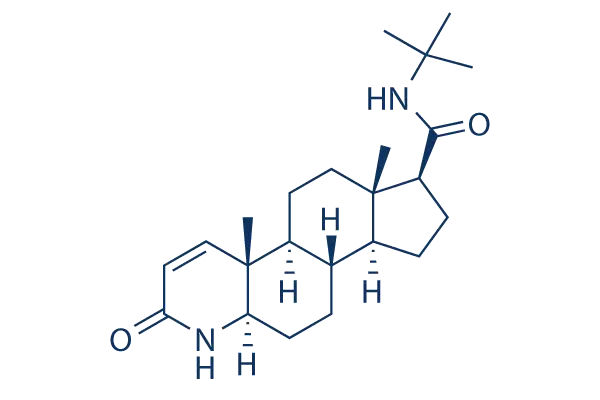
The balanced lipid-water partitioning of the Finasteride Powder determines its ability to diffuse into tissues within the body. The molecule is predominantly lipid-soluble, allowing it to reversibly bind to plasma transport proteins in the blood, slowing down its rapid metabolic clearance and prolonging its circulation time. In its free form, the Finasteride Powder can penetrate blood vessel walls to reach target tissues such as the prostate and hair follicles. Conversely, excessively hydrophilic small molecules tend to remain in the bloodstream and struggle to penetrate glandular tissues, while highly lipid-soluble substances tend to accumulate in adipose tissue, reducing their effective concentration at the target site. The Finasteride Powder's physicochemical balance avoids these drawbacks.
The Finasteride Powder does not require intracellular metabolic activation; its native molecular structure can recognize and bind to type II 5α-reductase. Many steroidal precursors, after entering cells, require modification by the liver or intracellular metabolic enzymes to become active molecules. This activation process is easily affected by cellular metabolic states, resulting in significant differences in the effectiveness of the molecule across different cell systems. Once inside the cytoplasm, the Finasteride Powder can directly dock with the target enzyme, reducing variables caused by metabolic activation, making the data from in vitro cell evaluation more stable and reliable, and facilitating gradient concentration testing and formulation adjustment.
⚖️ Enzyme inhibition blocks the active androgen conversion pathway
Testosterone, secreted endogenously in the human body, has limited androgenic activity. Under the catalysis of type II 5α-reductase, testosterone undergoes a double-bond hydrogenation reduction reaction, converting to dihydrotestosterone (DHT). DHT has a much higher affinity for androgen receptors than testosterone, enabling it to more effectively activate downstream signals and drive target cell proliferation. Once in the cytoplasm, the Finasteride Powder occupies the substrate catalytic pocket of type II 5α-reductase, preventing testosterone molecules from approaching the enzyme's catalytic center. This hinders the normal progress of the reduction reaction, resulting in a decrease in DHT production.
Type II 5α-reductase is mainly distributed in prostate tissue, scalp hair follicles, and the liver. The Finasteride Powder exhibits high selectivity for this subtype of enzyme, with weak inhibitory effects on type I 5α-reductase. The two subtypes of enzyme are distributed differently in human tissues: type I enzymes are widely distributed in the skin and liver, while type II enzymes are concentrated in glandular and hair follicle structures. Finasteride Powder's subtype selectivity allows for targeted reduction of dihydrotestosterone (DHT) levels in glands and hair follicles without significantly disrupting the overall androgen conversion process throughout the body, minimizing additional physiological changes caused by widespread pathway disturbances.
When DHT synthesis decreases, the total amount of active hormones capable of activating androgen receptors within the cell declines, leading to adjustments in receptor-mediated downstream gene transcription programs. This entire regulatory process does not damage the androgen receptors themselves, nor does it block the binding between testosterone and receptors; it merely reduces the supply of highly active derivatives. Compared to androgen receptor antagonists, Finasteride Powder does not completely shut down androgen signaling pathways, but only downregulates signal intensity, preserving testosterone's ability to maintain basic physiological functions, resulting in a gentler regulatory mechanism.
After the enzyme and Finasteride Powder form a stable complex, the enzyme protein itself does not undergo irreversible damage. With intracellular protein turnover, the enzyme molecules bound to Finasteride Powder gradually degrade, and the cell synthesizes a new type II 5α-reductase, allowing the catalytic reaction to slowly recover. The entire regulatory process is reversible. After the exogenous supply of Finasteride Powder is stopped, the level of dihydrotestosterone (DHT) production in the body will gradually return to its original baseline, without causing permanent pathway closure, thus providing a higher safety margin for formulation development.
The body possesses an endogenous hormone feedback regulation system. After a decrease in DHT levels, the hypothalamic-pituitary regulatory signals undergo a slight adjustment, resulting in a small increase in endogenous testosterone secretion. However, the newly generated testosterone cannot be successfully converted into highly active DHT, and the overall level of highly active androgens within the tissues remains low, thus not offsetting the regulatory effect of Finasteride Powder. Understanding this feedback balance mechanism allows for more rational design of dosing cycles and dosages, optimizing long-term intervention strategies.
🔋 Local hormonal changes regulate the proliferative state of target tissues
Prostate gland tissue is highly dependent on dihydrotestosterone (DHT) to maintain cell proliferation. Excessive DHT drives the continuous proliferation of prostate stroma and epithelial cells, leading to increased gland size and compression of surrounding urinary tract structures. Finasteride Powder reduces local DHT concentration in the prostate, weakening the signaling for continuous proliferation, slowing glandular cell proliferation, and restoring the normal rhythm of apoptosis, gradually improving the structural changes caused by excessive glandular hyperplasia. This process is a slow tissue remodeling; it does not rapidly alter glandular morphology, and a stable exposure time to raw materials is required to observe significant changes.
Scalp hair follicles are also an important target of DHT. Type II 5α-reductase deep within the hair follicle continuously produces DHT. Excessive DHT causes hair follicle miniaturization, shortening the hair growth cycle and reducing the diameter of newly grown hair. Finasteride Powder acts on target enzymes around the hair follicle, reducing local DHT accumulation, alleviating the continuous miniaturization process of the hair follicle, maintaining the normal hair growth cycle, and ensuring normal hair growth and development. Hormonal changes in hair follicles have a slow onset of action, requiring long-term, stable maintenance of effective raw material concentrations to continuously protect follicle structure.
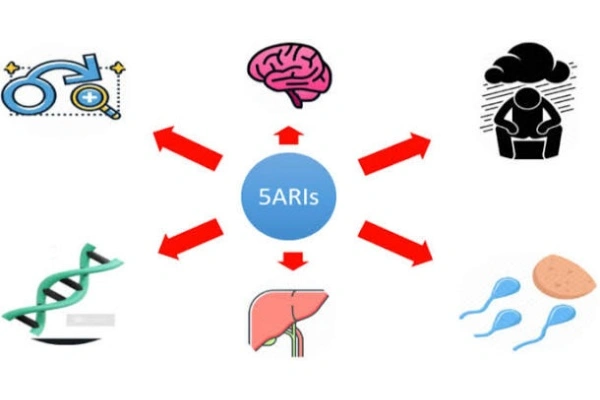
Reproductive accessory glands are also regulated by dihydrotestosterone (DHT). After Finasteride Powder downregulates local active androgen levels, the expression of glandular secretion-related proteins changes, affecting the composition of glandular secretions. These changes exhibit individual variability and are related to initial baseline endogenous hormone levels. In the long-term safety assessment of the formulation, continuous monitoring of relevant indicators is necessary to distinguish between physiological fluctuations and changes caused by raw material intervention, thus refining the raw material safety assessment data.
Skeletal and muscular tissues primarily rely on testosterone for physiological functions. Type II 5α-reductase expression is low in these tissues. After Finasteride Powder intervention, testosterone concentration is not directly inhibited, and androgen signals related to muscle synthesis and skeletal homeostasis can be maintained normally. This tissue-level difference allows Finasteride Powder to target the prostate and hair follicles while preserving the basic physiological value of androgens in multiple tissues throughout the body as much as possible.
The basal expression levels of type II 5α-reductase vary among individuals, with some samples exhibiting higher enzyme expression levels. Consequently, the decrease in dihydrotestosterone (DHT) under the same Finasteride Powder conditions will differ. During the formulation development and evaluation phase, it is crucial to avoid relying on a single fixed indicator to determine the activity of the active ingredient. A comprehensive analysis combining the basal expression levels of the target enzyme is necessary to establish a more robust data evaluation logic and prevent misjudgment of the actual inhibitory capacity of the active ingredient.
📋 Diverse directions for practical development and application
Finasteride powder is primarily used in the early-stage formulation development of oral solid dosage forms. As a core active ingredient, it is used in combination with various excipients to evaluate key formulation parameters such as powder flowability, dissolution rate, and stability. The characteristics of steroidal raw material powder directly affect tablet formation and in vivo dissolution. Different excipient ratios can alter the release rhythm of the finished product. High-purity finasteride powder is the foundational material for all formulation adjustments; excessive impurities can easily lead to decreased product stability and degradation during storage.
In in vitro cell research, finasteride powder is often used to build androgen metabolism cell models, artificially intervening in the dihydrotestosterone production pathway, observing changes in cell proliferation and apoptosis-related indicators, and elucidating the biochemical logic behind androgen imbalance-related tissue proliferation. Cell-level gradient concentration testing can determine the effective inhibition range of the raw material, distinguishing between the effective concentration and the high concentration threshold that generates cellular pressure, providing basic reference data for subsequent formulation dosage design.
Finasteride powder is also used in transdermal formulation development, in combination with penetration-enhancing carrier systems, to evaluate the efficiency of molecules penetrating the stratum corneum to reach the target site in hair follicles. Oral administration involves first-pass metabolism in the liver, with some raw materials being prematurely broken down. Transdermal delivery allows for direct action on the scalp, reducing systemic exposure. Developing such delivery methods requires using Finasteride Powder as a starting material and continuously optimizing the ratio of solubilizers and penetration enhancers.

In combination formulation development, Finasteride Powder is often combined with other active ingredients to synergistically intervene in hair follicle or prostate-related pathological changes. The complementary pathways of different ingredients allow for achieving the desired regulatory effect at lower effective doses, reducing the potential risks of long-term use of a single high-dose ingredient. Compound formulation development requires thorough evaluation of the physicochemical compatibility between ingredients to avoid instability such as precipitation or degradation after mixing.
Finasteride Powder is a steroidal active ingredient and cannot be used directly as powder. It must undergo complete formulation development, safety evaluation, and compliance registration procedures before being put into formal use. Direct use of the powder can lead to uncontrolled local concentrations and disrupt systemic hormone homeostasis. Furthermore, without formulation protection, Finasteride Powder is prone to rapid degradation and cannot stably reach the target tissue to exert its effect. The entire development process must strictly adhere to pharmaceutical raw material development standards.
Conclusion
Finasteride powder reduces dihydrotestosterone production by specifically inhibiting type II 5α-reductase, thus alleviating tissue proliferative changes caused by highly active androgens. With the continuous iteration of steroid formulation development technologies, fingertip powder will continue to play a valuable role in androgen metabolism regulation-related development scenarios, and standardized, high-purity fingertip powder can continuously meet the practical needs of various formulation developments.
Xi'an Faithful BioTech Co., Ltd. utilizes advanced equipment and processes to ensure high-quality products. Our Finasteride powder meets international pharmaceutical standards. Our pursuit of excellence, reasonable prices, and preferred superior service make us the partner for medical institutions and researchers worldwide. If you require Finasteride powder research or production,Please contact us Click email: allen@faithfulbio.com Or WhatsApp: +86 13137770562.
References
- Russell, D. W., & Wilson, J. D. (1994). Steroid 5 alpha-reductase: Two genes/two enzymes. Annual Review of Biochemistry, 63(1), 25-61.
- Matsumoto, A. M. (2002). Testosterone and dihydrotestosterone. Seminars in Reproductive Medicine, 20(1), 5-12.
- Gormley, G. J., Stoner, E., Bruskewitz, R. C., et al. (1992). Finasteride in the treatment of benign prostatic hyperplasia. The New England Journal of Medicine, 327(17), 1185-1191.
- Kaufman, K. D. (2002). Finasteride for male pattern baldness. Dermatologic Therapy, 15(2), 139-147.
- Thigpen, A. E., Silver, R. I., Guileyardo, J. M., et al. (1993). Tissue distribution and ontogeny of steroid 5 alpha-reductase isozyme expression. The Journal of Clinical Investigation, 92(2), 903-910.
- Traish, A. M., & Kim, N. N. (2005). 5α-reductase inhibitors and sexual function. Journal of Andrology, 26(3), 312-318.
- Horton, R. (2001). Dihydrotestosterone as a key mediator of androgen action. Journal of Steroid Biochemistry and Molecular Biology, 79(1-5), 301-308.