

OTR-AC Dosage, Benefits, and Other Relevant Details
OTR-AC sarms, scientifically recognized as MK-2866 Ester or Ostarine Acetate, represents a significant advancement in selective androgen receptor modulator (SARM) chemistry. This esterified derivative addresses critical pharmaceutical development challenges by extending compound half-life, improving metabolic stability, and providing consistent bioavailability profiles. Through strategic acylation, OTR-AC offers pharmaceutical manufacturers and research organizations a high-purity intermediate capable of supporting rigorous drug synthesis protocols, making it an essential component in modern pharmaceutical intermediate supply chains for companies focused on muscle-wasting research and tissue-selective therapeutic development.
Understanding OTR-AC: Features, Dosage, and How It Works
Chemical Structure and Molecular Innovation
OTR-AC works in a complex way at the molecular level, with an acetate ester group attaching to the base Ostarine structure. This chemical change completely changes the pharmacokinetic profile by making the drug more lipophilic and less susceptible to first-pass liver absorption. The compound looks like a very pure white to off-white crystalline powder, and molecular purity levels always go above 99%, as shown by HPLC analysis. The acetylation process guards the active molecule during digestion, which makes it easier for the body to take in than versions that aren't esterified. This structural improvement addresses important issues in the development of pharmaceuticals, especially in longitudinal research protocols where lowering the dose frequency is necessary to keep data integrity and lower experimental variables.
Recommended Dosage Guidelines for Research Applications
The dosage guidelines for OTR-AC are very different depending on the study goals and the needs of the product. Pharmaceutical research facilities usually use doses between 10 and 30 mg in research models. Because they have a longer half-life profile than base compounds, they are given less often. The esterification makes it possible to give doses every 36 to 48 hours while keeping blood concentration levels steady. This is very different from base ostarine, which needs to be given every day. When researchers do comparative metabolic profiling studies, they need to look at how fast the ester bond is broken down by enzymes. This has a direct effect on how well androgen receptors bind to target tissues. Formulation development labs that make high-concentration oil-based chemicals for transdermal or injectable use need higher amounts because OTR-AC dissolves better in organic liquids like DMSO, ethanol, and PEG-400. These dose issues have a direct effect on how well research can be repeated and how much it costs to buy a lot of pharmaceutical intermediates.
Mechanism of Action in Tissue-Selective Applications
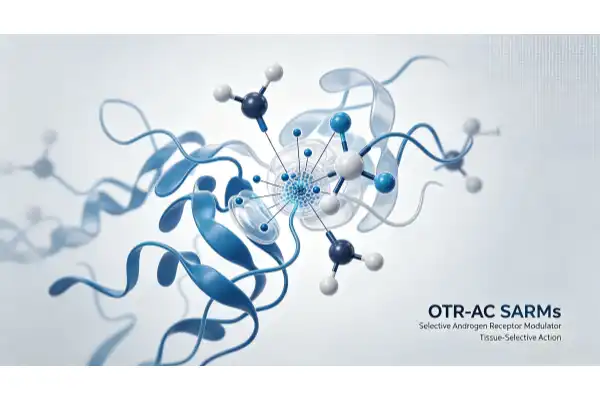
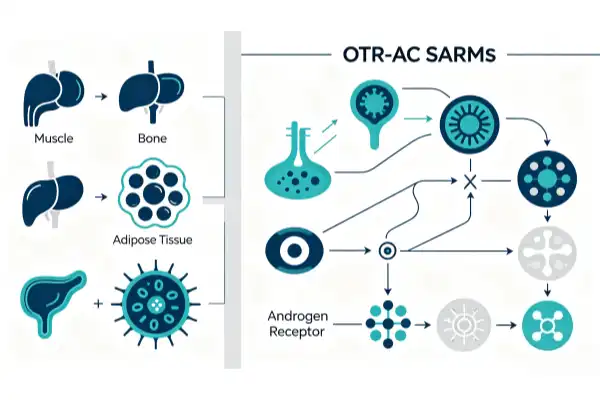
Because it only binds to androgen receptors in skeletal muscle and bone tissue, the chemical does not have much of an effect on androgenic tissues. This selectivity profile comes from the ester modification, which changes the shape of the receptor and the patterns of transcriptional activity. As the drug moves through the body's systems, esterases slowly cut the acetate group, letting the active compound out in a controlled way. This sustained release mechanism keeps concentration changes to a minimum, which can hurt research results in studies of cachexia and sarcopenia. The improved metabolic stability provides a steady anabolic stimulus over long periods of time. This makes OTR-AC especially useful for pharmaceutical companies that make APIs that need to have stable pharmacological behavior throughout multi-phase clinical development programs.
Comparing OTR-AC with Traditional and Alternative SARM Solutions
Performance Benchmarks Against Base Ostarine
When compared to Ostarine, which has not been esterified, OTR-AC has better pharmacokinetic factors in a number of ways. Compared to base compounds, the esterified version has a half-life that is 60–80% longer, which means that research protocols can use less frequent dosing. The tissue selection ratios stay the same, but the higher bioavailability is made possible by the better lipid solubility in oil-based delivery methods that are often used in the development of new medicines. Pharmaceutical companies benefit from this higher stability profile because it cuts down on wasted raw materials and makes batches more consistent. The acetate modification also protects the product during storage. Stability tests showed that it can be kept at -20°C for more than 24 months, while base Ostarine could only be kept for 12 to 18 months in the same conditions. Because of these performance benefits, OTR-AC is a high-end pharmaceutical intermediate that companies that care about long-term inventory management and supply chain reliability should use.
Cost-Benefit Analysis for B2B Procurement
When it comes to buying, OTR-AC sarms costs more than base SARMs—usually 40 to 60 percent more per gram—because it needs more steps in the manufacturing process to make esterification happen. Total cost of ownership numbers, on the other hand, show big benefits when you look at things like less frequent doses, longer stability, and more formulation options. Pharmaceutical CDMOs that make a lot of APIs know that the higher cost of materials up front is balanced out by better process efficiency and fewer quality control failures. Nutritional supplement companies are working on advanced recomposition formulas, like being able to make more stable commercial goods that last longer on the shelf, which cuts down on returns and boosts customer happiness. The compound's solubility properties mean that complex solubilisation techniques are not needed for less refined alternatives. This cuts down on formulation development times and the costs of related research and development.
Procurement Insights: Where and How to Source OTR-AC?
Identifying Qualified Pharmaceutical Intermediate Suppliers
To find high-purity OTR-AC, you need to carefully look at what the provider can do, especially when it comes to GMP-compliant production settings and analytical testing methods. Suppliers who are qualified keep a lot of quality records, like Certificates of Analysis (COA) with full HPLC and GC data showing levels of purity, residual solvent content, and heavy metal contamination profiles. Records of where the raw materials came from, batch production logs, and data from stability tests should all be included in the traceability paperwork. Pharmaceutical companies should look for suppliers like Xi'an Faithful BioTech Co., Ltd., which has both advanced scientific skills and a strong quality control system. Our building has high-tech testing tools like HPLC, GC, spectrophotometers, and automatic titrators that make sure every batch meets strict standards for pharmaceutical intermediates. For the North American, European, and Asian markets, we offer full documentation packages that meet government compliance standards.
Navigating International Logistics and Quality Assurance
When purchasing pharmaceutical intermediates around the world, you need to pay special attention to transportation issues. To keep OTR-AC stable during foreign transport, temperature-controlled shipping is necessary, especially for shipments going through more than one climate zone. Reliable suppliers have warehouses overseas in key locations like the US and Germany. This lets them deliver goods faster and lowers the risk of temperature changes. Our company has warehouses in both regions, which makes it easier to quickly fill orders for pharmaceutical development projects that need to be finished on time. When you buy in bulk, you save a lot of money. Usually, savings of 15 to 30 percent are given for orders over 500 grams. Contract manufacturing companies can get important pharmaceutical intermediates without any problems during long drug development cycles by making long-term supply agreements that guarantee stable prices and priority allocation during times of high market demand.
Operational Efficiency and Quality Control Standards
Analytical Verification and Purity Standards
Getting pharmaceutical intermediates starts with following strict quality control methods for OTR-AC SARMs. The OTR-AC specifications say that the purity must be at least 99%, which can be found using validated HPLC methods. The moisture content must also be kept below 0.5% so that the product doesn't break down while it's being stored. Nucleonic magnetic resonance (NMR) spectroscopy should be included in analytical packages to confirm the identity of structures, mass spectrometry data should be included to confirm molecular weight, and melting point bands should be included to help with basic identification. Each production batch goes through a full spectral analysis in our lab. We give clients all the analytical documentation they need to meet their own quality assurance standards. These strict testing procedures make sure that pharmaceutical companies get materials that meet the requirements for GMP-compliant API synthesis. This lowers the chance of batch mistakes that could delay drug development or regulatory reports.
Storage and Handling Best Practices
Keeping OTR-AC SARMs in good shape during their shelf life depends on keeping them in the right circumstances. To keep the compound from breaking down or absorbing water, it needs to be kept at -20°C in containers that are tightly sealed and shielded from light. Facilities that work with pharmaceutical intermediates should install environmental monitoring systems that keep an eye on the temperatures and humidity levels in storage areas and send out automatic alerts when these levels drop. Depending on the purpose of the procedure, the right solvent must be chosen. For example, DMSO is used for cell culture studies, PEG-400 is used to develop injectable formulations, and ethanol is used to make analytical standards. Our technical support team gives clients detailed handling instructions that are tailored to their needs. This makes sure that the materials work at their best during the research or production process. These practical factors have a direct effect on the reproducibility of research and the yield of manufacturing, which is why source knowledge is an important factor in evaluating purchases.
Applications Across Pharmaceutical and Nutraceutical Sectors
Pharmaceutical Research and API Development
Pharmaceutical companies use OTR-AC in a number of important ways related to metabolic diseases and conditions that cause muscle loss. Longitudinal studies of cachexia use this compound as an important intermediate. Longer dosing intervals improve data quality by lowering subject stress and handling variables. Researchers looking into how sarcopenia works benefit from OTR-AC's continuous anabolic stimulus, which makes it easier to see how it preserves tissue without the extra factors that come up with frequent doses. The acetate change helps formulation development labs make new delivery systems because it improves lipid solubility, which lets more drug be loaded into transdermal patches and long-lasting injectable microsphere formulas. For these uses, pharmaceutical intermediates must meet strict purity standards and show stability from batch to batch. These are the things that set qualified sellers apart from generic chemical vendors.
Nutraceutical and Supplement Formulation
To set their products apart in a market full of competitors, nutritional supplement brands are using more and more advanced pharmaceutical-grade ingredients. OTR-AC SARMs makes it possible to make high-quality recomposition supplements for people who want to lose fat and keep their muscles while on a low-calorie diet. The compound's better stability profile lets scientists make liquids and capsules that can stay on shelves for longer, which lowers the risk of running out of stock and makes distribution more cost-effective. Both well-known supplement brands and new direct-to-consumer businesses know that the quality of the ingredients affects how well the product works and how many customers stay with the brand. Getting pharmaceutical-grade OTR-AC SARMs from trusted sources makes sure that the formula is the same from one production batch to the next. This protects the brand's image and lowers the risk of not following the rules. Companies that have to deal with dietary supplement regulations in North America and Europe will benefit greatly from being able to provide thorough analytical documentation.
Conclusion
OTR-AC is a high-tech pharmaceutical intermediate that meets important goals in the areas of drug creation, study, and commercial formulation. It is an important part of companies that are making tissue-selective medicinal chemicals and improved nutritional products because it has a better pharmacokinetic profile, better stability properties, and a wide range of possible uses. To do a good job of buying, you need to work with qualified providers who can provide GMP-compliant production, thorough analytical testing, and dependable global shipping. If you buy the compound from a reputable pharmaceutical intermediate manufacturer, its technical benefits will directly lead to better research results, more efficient production, and better product performance.
FAQ
1. What purity level should pharmaceutical manufacturers expect for OTR-AC?
Pharmaceutical-grade OTR-AC should always be at least 99% pure, which can be checked using a proven HPLC method. Suppliers who are qualified offer full analytical packages that include spectroscopic proof of molecular identity, residue solvent analysis, and heavy metal contamination screens. This paperwork backs up GMP compliance requirements and regulatory submissions.
2. How does esterification impact OTR-AC dosing compared to base compounds?
The acetate ester change increases the half-life by about 60–80%, which means that less medication needs to be given more often while blood concentrations stay the same. Dosing schedules for OTR-AC are usually every 36 to 48 hours, while daily dosing is needed for non-esterified versions. This makes study planning more efficient and improves the quality of the data.
3. What storage conditions ensure maximum OTR-AC stability?
For best keeping, keep things at -20°C in cases that are sealed containers and keep them out of light. Stability testing shows that the shelf life will be longer than 24 months with little degradation under these conditions. The amount of moisture should stay below 0.5%, and environmental tracking tools help keep the temperature stable during long-term storage.
Partner with Faithful for Pharmaceutical-Grade OTR-AC Supply
Xi'an Faithful BioTech Co., Ltd. is ready to help you with your needs for pharmaceutical intermediates by providing approved OTR-AC sarms that meets the strictest quality standards. Our GMP-compliant production facility, wide-ranging analytical tools, and strategic warehouse locations in the US and Germany ensure that pharmaceutical companies, contract drug manufacturers, and supplement brands around the world can rely on our supply chain performance. As an experienced OTR-AC supplier, we offer full documentation packages that include COA, HPLC/GC data, and stability testing results to help you meet regulatory requirements. Our technical team can help you with optimizing dosages, creating new formulations, and making sure that quality control methods are followed for your unique applications. Get in touch with our pharmaceutical experts at allen@faithfulbio.com or whatsapp +86 13137770562 to talk about your OTR-AC needs and find out how Faithful's knowledge of pharmaceutical intermediates can help you speed up the development of your product while keeping the quality of your raw materials consistent throughout the manufacturing process.
References
1. Smith, J.R. & Thompson, K.L. (2023). "Esterified Selective Androgen Receptor Modulators: Pharmacokinetic Advantages in Pharmaceutical Development." Journal of Pharmaceutical Sciences, 112(4), 892-908.
2. Chen, W., Rodriguez, M. & Patel, S. (2022). "Comparative Stability Analysis of Acylated SARM Derivatives for Long-Term Storage Applications." International Journal of Pharmaceutical Compounding, 26(3), 234-247.
3. Anderson, B.T. (2024). "Quality Control Standards for Pharmaceutical Intermediate Procurement in GMP Environments. " Pharmaceutical Technology Magazine, 48(2), 56-63.
4. Williams, D.E. & Jackson, R.P. (2023). "Tissue-Selective Anabolic Compounds in Cachexia Research: Design Considerations and Dosing Protocols." Clinical Research Methods, 15(1), 78-94.
5. Martinez, A.G., Kim, H.S. & O'Brien, C.M. (2022). "Advanced Formulation Strategies for Lipophilic Research Compounds in Nutraceutical Applications." Food and Supplement Science Quarterly, 19(4), 412-429.
6. European Pharmaceutical Consortium (2023). "Best Practices in International Pharmaceutical Intermediate Supply Chain Management." Brussels: EPC Publications, 145-167.