

How does Thidiazuron regulate the process of plant cell division and differentiation?
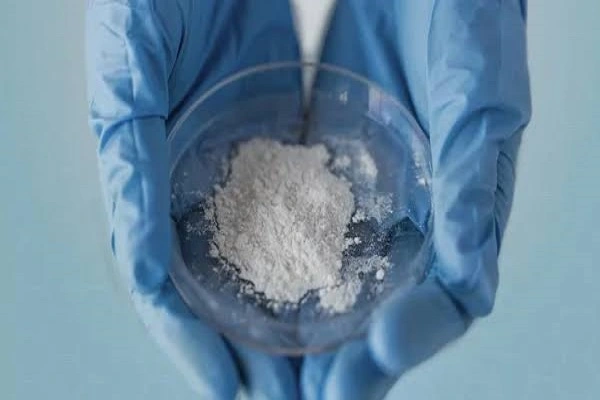
Thidiazuron is a highly active plant growth regulator belonging to the phenylurea class. It is prepared using organic synthesis processes and then undergoes recrystallization and purification to obtain a high-purity powder product. While lacking the purine ring structure of natural cytokinins, Thidiazuron can efficiently bind to cytokinin receptors in plants, triggering corresponding physiological signals and regulating plant cell proliferation, organ regeneration, and senescence delay. Compared to traditional purine cytokinins, Thidiazuron exhibits stronger bioactivity and a wider range of applicable crops, finding widespread use in plant tissue culture, seedling propagation, and field quality improvement. High-purity batches have low impurity content and stable, controllable physiological activity, meeting the diverse needs of plant biotechnology research and development and large-scale agricultural formulation development.
🧩 Molecular conformation adapted to plant receptor recognition sites
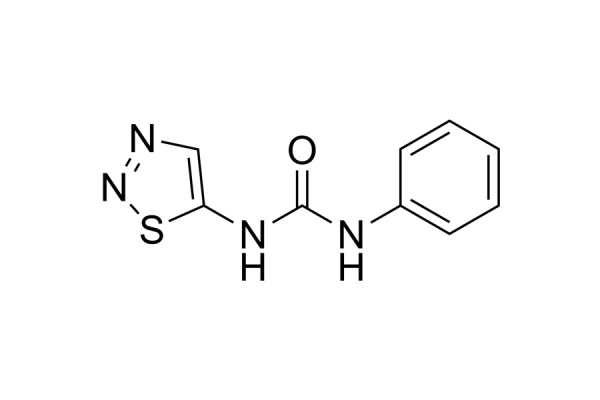
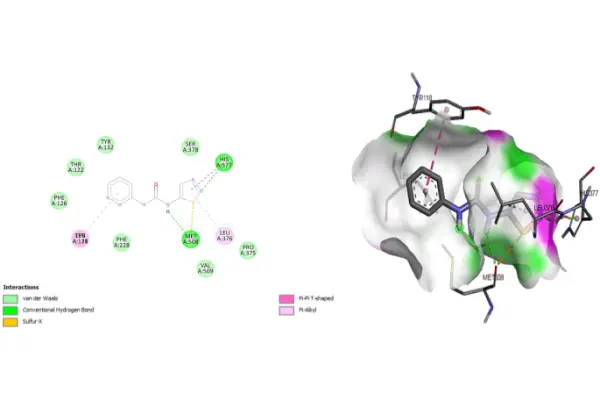
Thidiazuron possesses a unique phenylurea backbone structure. Its molecular core consists of a urea group connecting a benzene ring and a thiadiazole heterocycle, resulting in a compact spatial configuration and molecular size that perfectly matches the protein-binding pocket of plant cytokinin receptors. While most natural cytokinins use a purine ring as their core backbone, Thidiazuron relies on the heterocycle and urea group to form hydrogen bond sites, creating multiple interactions with amino acid residues within the receptor protein to achieve stable binding. This unique non-purine backbone structure allows Thidiazuron to evade recognition by some endogenous plant degrading enzymes, resulting in longer retention time within plant tissues and a more sustained physiological regulatory effect.
The five-membered Thidiazuron heterocycle on the molecule is a key structural unit maintaining high activity. The nitrogen atom within the heterocycle provides both hydrogen bond donors and receptor sites, firmly anchoring it to the receptor's active region. The benzene ring structure hydrophobically stacks with the hydrophobic amino acid fragments within the pocket, further strengthening the interaction between the molecule and the receptor. Substituting heterocyclic or urea groups alters the molecular spatial arrangement, reducing the match with the receptor and significantly decreasing overall activity. This is a common observed pattern in molecular structure modification studies.
The stereochemical purity of Thidiazuron produced by different purification processes directly affects its final efficacy. Synthetic preparation processes easily generate isomers and incompletely reacted intermediates, which cannot effectively activate cytokinin receptors and are considered inactive components. High-purity Thidiazuron removes byproducts through multiple crystallization separations, ensuring consistent molecular configuration in each batch. Under the same application conditions, the plant cell response remains stable, reducing data fluctuations in formulation adjustments and tissue culture experiments, making it suitable for standardized research and development.
Thidiazuron possesses excellent lipid-water partitioning properties, enabling osmotic transport between the plant cuticle and cell membrane. After exogenous application, Thidiazuron can enter the cell through the plant epidermis and contact receptor proteins located in the cell membrane or cytoplasm. Highly water-soluble regulators tend to remain on the plant surface, making it difficult to penetrate the protoplasm; highly lipid-soluble substances tend to accumulate in the epidermal wax layer, unable to diffuse into the tissue interior. Thidiazuron's balanced physicochemical properties ensure that the molecule can smoothly reach its target site to exert its regulatory effect.
Thidiazuron does not require additional metabolic activation by plant cells; its intact molecular form is sufficient for receptor activation. Some plant growth regulators, after entering the plant, require endogenous enzymes to modify their functional groups before being converted into active substances. Activation efficiency is affected by various factors such as crop type, tissue maturity, and environmental temperature. Thidiazuron is effective at its native molecular level and exhibits more stable performance in in vitro tissue culture systems, facilitating the setting of concentration gradients to compare differentiation differences caused by different dosages.
⚖️ Receptor activation initiates cell proliferation and differentiation signals
Plant cytokinin receptors belong to the histidine kinase family. Without active ligand binding, these receptors are quiescent, and downstream signaling pathways cannot be initiated. When Thidiazuron penetrates plant cells and binds to the receptors, the receptor protein undergoes a conformational change, activating the kinase domain and initiating a cascading phosphate signaling pathway. The phosphate signal is transmitted to the cell nucleus via intermediate transport proteins, regulating the transcriptional levels of numerous downstream response genes, altering the total synthesis of cell cycle-related proteins, and driving cell division and proliferation.
This entire signal regulation process can reprogram the cell life cycle, inducing quiescent plant parenchyma cells to re-enter the cell cycle. Highly differentiated mature plant cells typically lose their ability to divide continuously, but Thidiazuron-mediated signaling can relieve this inhibition, promoting dedifferentiation and callus formation. Callus possesses multi-directional differentiation potential and, under suitable hormone ratios, can further differentiate into adventitious shoots. This is the underlying principle behind the widespread use of Thidiazuron in plant in vitro regeneration systems.
Thidiazuron exhibits strong affinity for different subtypes of cytokinin receptors, covering a wide range of plant tissue types. Endogenous cytokinins are gradually degraded by oxidases within plants, resulting in a limited regulatory window. Thidiazuron, however, is less susceptible to degradation by these enzymes, leading to a longer-lasting signaling effect. At the same concentration, Thidiazuron significantly induces shoot differentiation compared to classic purine cytokinins, reducing the overall amount of regulators needed in tissue culture systems and mitigating tissue abnormalities caused by high hormone concentrations.
Intracellular signal transduction exhibits a stepwise amplification characteristic. A small amount of Thidiazuron molecule activating receptors can drive the transcription and translation of a large amount of messenger RNA, synthesizing functional proteins that regulate the cell cycle, ultimately leading to visible changes in tissue morphology. Even trace amounts can trigger significant physiological changes; therefore, precise dosage control is crucial during formulation. Excessive concentration can easily cause abnormal growth patterns such as dense adventitious bud growth, stunted plants, and deformed leaves.
Plants possess their own endogenous hormone balance regulation mechanisms. The addition of exogenous Thidiazuron allows the plant to adjust the synthesis and metabolism of endogenous cytokinins and auxins, re-establishing hormonal balance. When the external supply of Thidiazuron is stopped, the molecules continue to be consumed by plant metabolism, the receptor activation level gradually declines, and the rhythm of cell division and differentiation slowly returns to the plant's own regulatory state. The entire regulatory process is reversible and will not cause permanent changes to the plant's growth and development.
🔋 Multi-tissue level regulation of plant growth and senescence
In in vitro plant tissue culture systems, the core value of Thidiazuron lies in inducing adventitious bud differentiation and promoting the regeneration of intact plants. Many rare seedlings, medicinal plants, and ornamental flowers suffer from low natural propagation efficiency, making it difficult to expand seedling scale through seed or cutting propagation. Using Thidiazuron in combination with appropriate auxins can induce the generation of numerous adventitious buds from explants such as leaves and stem segments, achieving rapid seedling propagation, protecting scarce germplasm resources, and simultaneously obtaining asexually propagated offspring with uniform traits.
Thidiazuron can delay the senescence process of plant tissues, inhibit chlorophyll degradation in leaves, and maintain the integrity of photosynthetic tissue function. During leaf senescence, endogenous cytokinin levels decrease, chlorophyll decomposes rapidly, and photosynthetic capacity declines. Appropriate exogenous application of Thidiazuron can downregulate the expression of senescence-related genes, reduce the transport of nutrients to senescent organs, prolong the photosynthetic cycle of leaves, and increase the overall nutrient accumulation of the plant, making it suitable for the development of formulations related to leaf preservation and quality improvement in the later stages of economic crops.
Thidiazuron can regulate fruit setting and development, optimizing nutrient distribution within the fruit. Appropriate doses of Thidiazuron can regulate cell division rates in flowers and fruits, increasing the number of pulp cells and improving fruit size and plumpness. Simultaneously, this substance can regulate the direction of nutrient transport within the plant, directing more photosynthetic products to reproductive organs and reducing flower and fruit drop. Strict dosage control is crucial during application; excessively high concentrations can cause fruit deformities, affecting commercial quality.
Thidiazuron participates in regulating apical dominance and lateral bud sprouting. Most woody plants exhibit significant apical dominance, with auxin synthesized in the apical bud inhibiting the sprouting of lower lateral buds. Proper use of Thidiazuron can weaken the apical inhibition effect, promoting lateral bud sprouting and branching, resulting in a fuller plant shape, suitable for ornamental shrubs and seedling shaping. Different crops exhibit significantly different tolerance ranges for regulators; herbaceous crops generally tolerate lower concentrations than perennial woody plants, requiring individual testing for each variety in formulation development.
Environmental conditions can alter the efficacy of Thidiazuron. Temperature, light, and soil moisture all affect plant metabolic rates and molecular absorption efficiency. In warmer environments, increased plant cell membrane permeability accelerates regulator absorption, making phytotoxicity more likely at the same concentration. Conversely, low temperatures slow molecular penetration and prolong the onset of action. During field formulation development, it is necessary to adjust the application concentration and timing based on regional climate conditions to ensure stable and controllable regulatory effects.
📋 Diverse Application Directions
Thidiazuron is widely used in plant tissue culture research and development as a core cytokinin additive in the formulation of callus induction and adventitious shoot differentiation media. Researchers can set different Thidiazuron concentrations and combine them with various auxin ratios to screen hormone combinations suitable for specific plant regeneration, building efficient in vitro regeneration systems. This provides technical support for germplasm preservation, gene transformation, and new variety breeding. High-purity raw materials ensure that experimental results from multiple batches of culture media can be compared.
In agricultural formulation development, Thidiazuron is used to prepare various formulations such as wettable powders and aqueous solutions, combined with adjuvants to optimize leaf penetration. The adjuvant system can reduce leaf surface tension, helping Thidiazuron to adhere evenly and penetrate the plant cuticle, improving raw material utilization efficiency. Different formulations require stability testing to assess the degradation rate of the active ingredient during storage, ensuring the stability of efficacy throughout the shelf life of the finished product and complying with relevant regulations for agricultural formulation development.
In the industrialization of seedling propagation, Thidiazuron is used for factory-scale tissue culture seedling production, significantly shortening the seedling cycle. Traditional cutting propagation is limited by season and the number of mother plants, resulting in slow propagation. Tissue culture systems, relying on Thidiazuron to induce regeneration, can produce seedlings year-round in a closed culture environment, suitable for large-scale production of medicinal plants, fruit trees, and flowers, reducing seedling costs and increasing seedling supply capacity.
The development of compound plant growth regulator formulations often involves combining Thidiazuron with gibberellins and auxin-based raw materials to synergistically regulate plant growth and development. Single regulators have limited functions; a reasonable combination of multiple active substances can simultaneously achieve multiple effects such as promoting differentiation, promoting elongation, and protecting flowers and fruits. The compound development process requires assessing the physicochemical compatibility between different raw materials to avoid problems such as precipitation or decomposition after mixing, and conducting field trials to verify the actual performance of the compound formulation.
Thidiazuron is an agricultural plant growth regulator and cannot be sprayed at arbitrarily increased dosages; it must be applied according to the registered scope of use and recommended dosage. Using Thidiazuron technical grade powder directly without formulation protection can easily lead to excessively high local concentrations, causing phytotoxicity problems such as plant malformation and growth stagnation. Technical grade powder must undergo formulation processing, safety assessment, and compliance registration before it can be used in the field. The entire development process must comply with relevant regulations for agrochemicals.
Conclusion
Thidiazuron, through its unique phenylurea molecular structure, activates cytokinin receptors and regulates the dedifferentiation and redifferentiation processes of plant cells, playing a regulatory role in multiple scenarios such as tissue culture seedling cultivation, delaying leaf senescence, and optimizing fruit development. With the continuous development of plant biotechnology and agricultural formulation technology, Thidiazuron has broad application prospects in germplasm resource protection, large-scale seedling propagation, and quality improvement of economic crops. Standardized, high-purity Thidiazuron can continuously meet various downstream R&D and industrialization needs.
Xi'an Faithful BioTech Co., Ltd. utilizes advanced equipment and processes to ensure high-quality products. Our Thidiazuron meets international pharmaceutical standards. Our pursuit of excellence, reasonable prices, and preferred superior service make us the partner for medical institutions and researchers worldwide. If you require Thidiazuron research or production,Please contact us Click email: allen@faithfulbio.com Or WhatsApp: +86 13137770562.
References
Mok, M. C., & Mok, D. W. S. (2001). Cytokinin metabolism and action. Annual Review of Plant Physiology and Plant Molecular Biology, 52(1), 89-118.
Murthy, B. N. S., Murch, S. J., & Saxena, P. K. (1998). Thidiazuron: A potent regulator of in vitro plant morphogenesis. In Vitro Cellular & Developmental Biology - Plant, 34(4), 267-275.
Guo, Y., & Gan, S. (2014). Transcriptional regulation of plant senescence. Journal of Experimental Botany, 65(14), 3875-3885.
Sakakibara, H. (2006). Cytokinin biosynthesis and regulation. Phytochemistry, 67(20), 2054-2062.
Huetteman, C. A., & Preece, J. E. (1993). Thidiazuron: A substitute for benzyladenine in woody plant tissue culture. HortScience, 28(10), 1033-1038.
Kieber, J. J., & Schaller, G. E. (2018). Cytokinin signaling in plant development. Development, 145(4), dev149344.
Victor, J. M., Murch, S. J., KrishnaRaj, S., & Saxena, P. K. (1999). Thidiazuron-induced somatic embryogenesis in peanut. Plant Cell Reports, 18(11), 879-884.