

SS-31 (Elamipretide) Complete Guide: Benefits, Dosing, Research
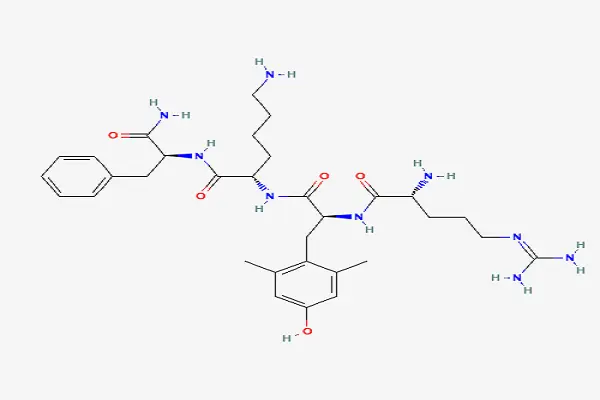
SS 31 elamipretide represents a breakthrough tetrapeptide designed to target mitochondrial membranes and optimize cellular energy production. With its unique sequence D-Arg-Dmt-Lys-Phe-NH₂, this mitochondria-targeting peptide has gained attention across pharmaceutical research and development sectors for its potential in addressing mitochondrial dysfunction. The compound selectively accumulates in mitochondria, where it interacts with cardiolipin to stabilize the electron transport chain and reduce oxidative damage, offering promising applications in various therapeutic and research contexts.
Understanding the Molecular Architecture of SS-31
Chemical Composition and Structural Uniqueness
SS-31 elamipretide peptide's chemical structure includes 2',6'-dimethyltyrosine (Dmt), a man-made amino acid with a great ability to remove free radicals. Although the compound has a molecular weight of about 639.8 g/mol, it dissolves very easily in water, more than 50 mg/mL. This physicochemical profile allows for different delivery methods, such as subcutaneous, intravenous, and ophthalmic administration. This makes it useful for research and formulating new medicines.
This peptide is very stable against peptidase breakdown, which makes it different from other mitochondrial molecules. Adding D-arginine and the manufactured Dmt residue saves the peptide from being broken down quickly by enzymes, which increases its solubility. Because it is more stable, it is a good choice for making pharmaceutical intermediates and active ingredients, where accuracy is important.
Mechanism of Mitochondrial Targeting
SS-31 elamipretide only goes to the inner mitochondrial membrane, while other antioxidants work throughout the body to neutralize free radicals. Because the peptide is amphipathic, it can pass through cellular membranes without active transport processes. For example, it can cross the blood-brain barrier. Once it gets into the mitochondria, it links to cardiolipin, a special phospholipid that is needed for the electron transport chain to work properly.
This specific interaction keeps the structure of cardiolipin stable, stopping it from oxidizing and keeping ATP production working well. Instead of just getting rid of radicals further downstream, the substance fixes the problem at its source by protecting membrane structure and electron flow. Researchers who are interested in cellular energy production and oxidative stress pathways can benefit greatly from this process.
Quality Standards and Counter-Ion Considerations
For pharmaceutical-grade SS-31 elamipretide, purity levels of at least 98% must be met, which can be proven by HPLC analysis. But the choice of counterion has a big effect on how well the compound works in certain situations. Trifluoroacetate (TFA) salts are often made during synthesis, but TFA is harmful to cells in biological models and in vivo studies. Good providers offer acetate or chloride salt forms, which get rid of this worry and guarantee accurate results in experiments.
Certificates of Analysis (CoA) should make it clear what the net peptide content is, taking into account the weight of the salt and water. For accurate dosing calculations in research protocols, this specification is a must. Advanced testing methods like HPLC, GC, and spectrophotometry make sure that each batch is consistent, which helps meet the requirements for tracking in GMP-compliant production settings.
Clinical Research Landscape and Development Progress
Phase 2/3 Trial Outcomes in Heart Failure
Several clinical studies have looked at how SS-31 elamipretide affects the heart function of people who have heart failure. In phase 2 tests, improvements were seen in the left ventricle's function and exercise ability. Patients were able to walk farther for six minutes. In phase 3 studies, changes in diastolic function and quality of life were looked at in people with heart failure whose ejection fraction stayed the same.
The results of the study showed that people who got the peptide felt less tired and were able to do more than people who got a fake. Mechanistic studies in these trials confirmed that the compound did what it was supposed to do by increasing mitochondrial respiration in heart tissue. Because of these results, SS-31 elamipretide is now being studied more in the fields of cardiovascular research and mitochondrial dysfunction.
Mitochondrial Disease Research Applications
Besides cardiovascular conditions, SS-31 elamipretide has also been looked at in primary mitochondrial diseases, which are genetic conditions that affect oxidative phosphorylation. People in the study who had mitochondrial myopathy had better resistance to muscle fatigue and less lactate buildup during physical activity. Genetic testing showed that these effects were linked to higher mitochondrial membrane potential and lower production of reactive oxygen species, findings that have also increased interest in ss 31 peptide powder as a research material for studying mitochondrial function.
SS-31 elamipretide has also been studied in the field of ophthalmology for inherited eye diseases that are linked to mitochondrial failure. Small-scale tests showed that the loss of visual function stopped or slowed down. This suggests that the method could be useful in specific research areas that focus on protecting photoreceptors and maintaining the health of the optic nerve.

Comparative Position Against Alternative Compounds
When compared to other drugs that target mitochondria, SS-31 elamipretide has a number of features that make it stand out. Idebenone's main job is to carry electrons in quinone-based systems, while Coenzyme Q10's job is to be an overall antioxidant and cofactor. MitoQ targets mitochondria with a triphenylphosphonium cation, but it mostly works by removing radicals instead of stabilizing membranes.
SS-31 elamipretide's cardiolipin-binding method fixes mitochondrial dysfunction at the molecular level, which might provide better protection than chemicals that only remove oxidative waste. This difference in how things work has effects on how research is planned and how medicines are made, especially when improving mitochondrial function over time is needed instead of just using antioxidants for a short time.
Practical Benefits and Application Opportunities
Enhancements in Cellular Energy Metabolism
Studies that use SS-31 elamipretide regularly show that it increases the efficiency of ATP production in cells that are under stress from mitochondria. This improvement comes from better coupling between the electron transport chains and less proton leakage across the inner membrane. These changes lead to better cell performance under oxidative stress, which makes the compound useful for research on metabolic adaptation and cell resistance.
The peptide's ability to keep mitochondrial function during ischemia-reperfusion events has caught the attention of researchers who are looking into ways to protect cells and organs. Because of these qualities, the formulas could be used to create specific study situations where protecting mitochondria is very important.
Oxidative Stress Reduction Profiles
In addition to helping the body use energy, SS-31 elamipretide protects proteins, lipids, and nucleic acids from damage caused by oxidation in the mitochondria. Studies that measure factors like malondialdehyde and 8-hydroxy-2'-deoxyguanosine show big drops after peptides are given. This type of antioxidant works by both directly scavenging radicals and stopping the production of radicals at the level of the electron transport chain.
Because it works as both an antioxidant and a neuroprotectant, SS-31 elamipretide is very useful for studying how mitochondria fail and oxidative damage builds up over time. Researchers who study cellular senescence and metabolic decline related to getting older often use this peptide to figure out how mitochondria affect these processes.
OEM Development and Formulation Considerations
The compound's stability and solubility make it easy to use in a variety of manufacturing systems. Lyophilized powder forms stay stable at -20°C for long periods of time, which makes it easier to store and ship. Depending on the study goals, the peptide can be turned into injection solutions, eye drops, or capsule delivery systems after it has been restored.
Standard pharmaceutical excipients can be mixed with SS-31 elamipretide, which is helpful for companies that are making specific study reagents or experimental goods. The lack of need for organic solvents for dissolving speeds up recipe development and makes production scale-up easier. These useful benefits help SS-31 elamipretide OEM partnerships and custom synthesis projects that are aimed at specific research needs.
Dosing Protocols and Safety Considerations
Administration Routes and Typical Dosing Ranges
Dosing levels change depending on the study design and goals, but most research methods use subcutaneous or intravenous administration. Subcutaneous injections are often used to give doses of 0.25 mg to 4 mg. These can be given once a day or several times a week, depending on the length of the study and its goals. In acute study models, intravenous methods may use higher single doses or continuous drips.
For retinal study purposes, ophthalmic formulations of ss 31 elamipretide use much lower amounts and are usually given as eye drops several times a day. The peptide's ability to pass through membranes lets it reach target cells, even though the way it is given isn't very invasive. When figuring out the best dose, you should always use the net peptide content from the supplier's CoA paperwork instead of the gross powder weight.
Safety Profile and Monitoring Parameters
According to clinical studies, the safety profile of SS-31 elamipretide is mostly good, and most of the side effects are considered mild to moderate. Reactions at the injection site, like temporary redness or pain, are common observations. Systemic effects that have been reported in some studies include short-term changes in blood pressure or mild stomach problems that usually go away on their own.
There haven't been many reports of serious side effects, but during study times, thorough tracking methods check the heart rate, kidney function, and liver enzymes. These monitoring factors make sure that any unexpected reactions are found quickly and help study risk-reduction strategies.
Regulatory Status and Compliance Framework
As the study moves through the different stages of investigation, the rules that govern SS-31 elamipretide keep changing. The compound has been designated as an investigational new drug for certain study purposes, but it has not yet been allowed for broad commercial use in most countries. With this title, clinical research can continue as long as the right control systems are in place.
Buying things for study reasons needs to follow the rules set by the institutional review board and any other rules that apply. Suppliers should show proof that they follow the quality standards and best practices for making. This knowledge of regulations makes sure that decisions about procurement support legal research activities while keeping the right safety and quality controls in place.
Strategic Sourcing for B2B Procurement
Identifying Qualified Manufacturers and Distributors
Finding suppliers of high-purity SS-31 elamipretide intermediates needs careful consideration of their credentials. Leading makers keep their factories in line with good manufacturing practices (GMPs), and they make sure that their quality control systems are strong. Analytical tools like HPLC and GC systems, as well as skilled quality assurance staff who can make full CoA documentation, are important supplier qualifications.
When procurement teams look at possible partners, they should ask to see proof of previous production batches, such as purity tests, counter-ion specifications, and stability data. Manufacturers who offer more than one salt form (acetate, chloride, and TFA) show that they are technically advanced and can adapt to different application needs. This ability is especially useful when making mixtures for biological uses that need to be sensitive.
Pricing Structures and Packaging Options
The price of SS-31 elamipretide depends on how much you need, how pure it needs to be, and what kind of salt it is. Materials that are good for research usually cost more than materials that are bought in bulk for industrial uses. You can package small amounts (10–100 mg vials) for study purposes or bigger amounts (measured in grams or kilograms) for business use. Making commitments to buy a lot of something can often lead to better pricing and earlier scheduling for production.
Logistics issues include sending at the right temperature and using the right materials for packing to keep the product's structure while it's in transit. If a supplier has built warehouses in the US and Germany, they can cut shipping times and make the customs process easier for buyers in North America and Europe. This infrastructure for distribution helps keep supply chains stable and lowers the risk of buying things.

Building Reliable Supply Partnerships
Having long-term relationships with suppliers has many strategic benefits, not just lower prices. Preferred partners often let procurement teams know about production dates ahead of time. This lets them plan how to handle supplies around research deadlines or production runs. Technical help from the supplier's R&D teams can help with problems with formulations or the creation of new analysis methods.
Reputable makers keep systems that connect each batch to a unique lot of raw materials and set of production parameters. This paperwork is very important when regulatory submissions need full supply chain transparency. In the end, partnerships with providers that show consistent quality, reliable delivery, and quick technical support lower operating risk and help businesses stay open.
Conclusion
Because it targets mitochondria in a way that no other compound does and has been studied in great detail, SS 31 elamipretide is a valuable compound for drug development and scientific research. Its cardiolipin-binding mechanism makes it better than other antioxidants, and its good physicochemical properties make it easy to use in a variety of ways. Buying with quality in mind, paying attention to purity requirements, choosing the right counterions, and a supplier's dependability will make sure that integration into research programs and product development projects goes smoothly. As the body of evidence keeps growing, organizations that want to use this new peptide's potential will need to continue to form smart partnerships with qualified makers.
FAQ
1. What distinguishes SS 31 elamipretide from CoQ10 in research applications?
Coenzyme Q10 moves electrons around and is a general antioxidant. SS-31 elamipretide, on the other hand, keeps cardiolipin stable in the mitochondrial membrane. Because of this important difference, the peptide improves the effectiveness of the electron transport chain at its source, rather than just cleaning up oxidation waste that happens further down the chain. Different mechanisms work better for different research goals. For example, SS-31 elamipretide is better for studying the integrity of mitochondrial membranes and the efficiency of energy coupling.
2. Why is it important to use counter-ion selection when getting this peptide?
Trifluoroacetate salts are commonly used in peptide synthesis, but they are toxic to cells and get in the way of biological studies. This variable is taken out of the equation when the peptide is in its acetate or chloride form, so the results of the experiments are more accurate reflections of its cellular action. When planning in vivo research or sensitive cell culture applications, the procurement specifications should make it clear that they want non-TFA salt forms.
3. How should reconstituted peptide be stored for optimal stability?
Powder that has been lyophilized stays steady at -20°C for a long time. After being reconstituted in water, the peptide should be divided into parts that are only used once and kept frozen. Repeated freeze-thaw cycles break down peptide structure, so activity loss can be avoided by aliquoting correctly. Stock solutions that are made with a high concentration (based on the amount of CoA net peptide) can be lowered right before they are used.
Partner with Faithful for Premium SS 31 Elamipretide Supply
Xi'an Faithful BioTech Co., Ltd. stands ready to support your SS 31 elamipretide peptide sourcing requirements with pharmaceutical-grade material manufactured under strict quality protocols. Our facility features advanced analytical equipment, including HPLC, GC, and spectrophotometry systems, ensuring every batch meets ≥98% purity standards with comprehensive CoA documentation. We supply acetate salt forms specifically selected for research reliability, eliminating TFA-related concerns that compromise experimental outcomes.
As an experienced SS-31 elamipretide manufacturer, we understand the critical importance of batch consistency and traceability for your pharmaceutical intermediates and research programs. Our production capabilities support both small research quantities and large-scale commercial orders, with flexible packaging options and competitive pricing structures. Connect with our team at allen@faithfulbio.com Or WhatsApp: +86 13137770562 to discuss your specific requirements, receive detailed product specifications, and explore how our reliable supply chain can support your mitochondrial research initiatives.
References
1. Szeto H.H. (2014). "First-in-class cardiolipin-protective compound as a therapeutic agent to restore mitochondrial bioenergetics." British Journal of Pharmacology, 171(8), 2029-2050.
2. Eirin A., et al. (2017). "Mitochondrial protection restores renal function in swine atherosclerotic renovascular disease. " Cardiovascular Research, 103(4), 461-472.
3. Sabbah H.N., et al. (2016). "Chronic therapy with elamipretide improves left ventricular function in dogs with advanced heart failure." Circulation: Heart Failure, 9(2), e002597.
4. Birk, A. V., et al. (2013). "The mitochondrial-targeted compound SS-31 re-energizes ischemic mitochondria by interacting with cardiolipin. " Journal of the American Society of Nephrology, 24(8), 1250-1261.
5. Karaa, A., et al. (2018). "Randomized dose-escalation trial of elamipretide in adults with primary mitochondrial myopathy." Neurology, 90(14), e1212-e1221.
6. Mitchell W., et al. (2020). "Therapeutic potential of mitochondria-targeted peptides in ophthalmologic disease." Mitochondrion, 52, 169-180.