

How does the Finasteride Powder regulate androgen metabolism?
Finasteride Powder is a tetracyclic steroidal reductase inhibitor powder that targets 5α-reductase in vivo, interfering with the metabolic conversion of testosterone to dihydrotestosterone (DHT). Finasteride Powder selectively binds to the active site of the enzyme protein, blocking normal substrate docking and thus reducing the total amount of DHT produced within tissues. DHT, as a more potent androgen subtype, participates in the regulation of growth in multiple tissues; when its synthesis level declines, various downstream hormone-mediated physiological responses also change. Finasteride Powder is physicochemically stable, highly lipid-soluble, and can easily cross cell membranes to exert its effects. Unlike antagonists that directly act on hormone receptors, Finasteride Powder does not compete for receptor binding sites but rather reduces the production of highly active androgens at the metabolic source; their modes of action are fundamentally different. Finasteride Powder is widely used in cellular pathway observation and early-stage formulation development, and its actual effectiveness is influenced by multiple factors, including enzyme protein expression levels, substrate concentration, and the tissue microenvironment.
🧩 Molecular backbone adapts to enzyme protein space pockets
The complete Finasteride Powder molecule is built upon a tetracyclic steroid core, with an overall skeletal structure highly similar to natural testosterone. This is a crucial structural basis for its recognition by 5α-reductase. The steroidal ring system of natural testosterone can perfectly embed itself within the catalytic cavity of the enzyme protein, undergoing double bond reduction under enzyme catalysis. While retaining the overall spatial configuration of the tetracyclic steroid, the Finasteride Powder substitutes groups at key positions on the ring, introducing nitrogen atoms to form a unique amide structure. This modified site is located close to the enzyme's catalytic center, enabling it to form multiple hydrogen bonds and hydrophobic interactions with key amino acid residues within the enzyme protein, allowing the Finasteride Powder to firmly anchor itself within the active cavity. Although its appearance is similar to the natural substrate, the Finasteride Powder cannot undergo reduction under enzyme catalysis and does not detach from the enzyme site after chemical transformation like testosterone. Therefore, it can occupy the catalytic pocket for a long time, continuously preventing the entry of endogenous substrate molecules. The folding angle of the steroidal ring system and the spatial orientation of each side chain directly affect the matching degree between the molecule and the enzyme pocket. Once the molecule undergoes oxidative cleavage or side chain breakage, its spatial configuration is disrupted, and the Finasteride Powder will directly lose its ability to recognize and bind to the target enzyme.
The polar arrangement of functional groups shapes the unique lipid-water partition properties of the Finasteride Powder. The vast majority of the molecule is composed of hydrophobic steroidal carbon rings, with only a small number of polar amide sites, exhibiting strong lipid solubility and weak water solubility. These molecular characteristics mean that the Finasteride Powder is difficult to dissolve directly in pure water; direct addition of water and stirring only results in suspended particles, failing to obtain a homogeneous solution with molecular-level dispersion. However, in organic solvents such as DMSO and anhydrous ethanol, the Finasteride Powder can dissolve efficiently, allowing for the preparation of high-concentration stock solutions for convenient gradient addition in subsequent experimental systems. The lipophilic properties of Finasteride Powder allow it to easily penetrate the cell membrane barrier formed by the phospholipid bilayer, diffusing from the extracellular matrix into the cytoplasm to contact the free 5α-reductase protein distributed within the cell. However, improper storage leading to oxidative degradation can damage the side chains of the steroid ring, disrupting the balance between hydrophobicity and polarity within the molecule and significantly reducing transmembrane permeation efficiency. Even if some degradation products can still weakly contact the enzyme protein, the number of effective molecules entering the cell is drastically reduced, resulting in a perceptible decrease in overall inhibitory effect, directly impacting the final data output of the entire system.
In its solid state, Finasteride Powder maintains its molecular structure integrity for extended periods under sealed, light-protected, and room-temperature storage conditions, with a very low rate of impurity formation. However, in a liquid environment, the molecular tolerance narrows significantly. Strongly acidic or alkaline solutions can easily cause hydrolysis and damage to the steroid side chains and amide sites; prolonged exposure to high temperatures also accelerates the oxidative degradation of the steroid ring. Once the molecular backbone degrades, the original three-dimensional shape of the adapted enzyme protein pocket is disrupted, preventing stable intercalation of the catalytic center and thus eliminating the ability to inhibit the target enzyme's catalytic activity. Therefore, when preparing working solutions in vitro, neutral buffer systems should be used whenever possible to avoid extreme pH environments. Preparation should be done immediately before use; prolonged refrigeration of prepared working solutions is not recommended. Similarly, strict humidity control is necessary when storing solid raw materials. Under high humidity conditions, trace amounts of hydrolysis and oxidation will slowly occur on the surface of solid particles, gradually generating inactive degradation impurities. As impurities accumulate, the proportion of effective Finasteride Powder molecules in the same mass of raw material continuously decreases, causing data fluctuations between parallel samples. Many in vitro experiments show reduced reproducibility not due to fluctuations in cell state, but rather due to the implicit change in effective concentration caused by raw material degradation.
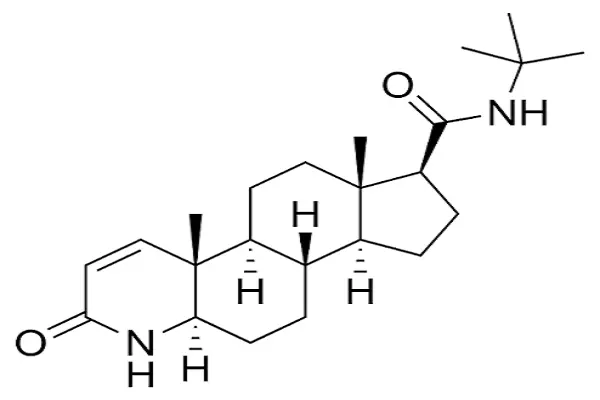
Finasteride Powder exhibits a substrate-competitive inhibition mode with 5α-reductase. Under normal physiological conditions, testosterone substrate molecules rely on the steroidal skeleton to recognize the cavity of the enzyme protein, precisely docking at the catalytic center. The enzyme protein provides hydrogen atoms to complete the double bond reduction, generating dihydrotestosterone. The product molecule then detaches from the cavity, and the enzyme protein returns to an idle state to catalyze the next set of substrate molecules. Finasteride powder, with its steroidal shape highly similar to testosterone, competes for the identical substrate-binding cavity on the enzyme protein. When a large amount of Finasteride powder binds to the enzyme's active site, the testosterone substrate cannot dock properly, and the enzyme's catalytic function is blocked. Finasteride powder itself is not metabolized by the enzyme and remains stably at its binding site, achieving long-term site blockade. The higher the concentration of testosterone substrate within the system, the more Finasteride powder molecules are needed to occupy the site to effectively suppress the enzyme's catalytic activity. There is a dynamic concentration game between substrate and inhibitor, meaning there is no fixed absolute effective concentration. Changes in substrate levels require corresponding adjustments to the effective concentration of Finasteride powder.
Finasteride powder exhibits a significant selective bias towards different isoforms of 5α-reductase in the human body. Two main isoenzymes, type I and type II, exist primarily in the body. These two isoenzymes differ in their amino acid sequences, resulting in varying amino acid residue arrangements within their catalytic cavities. They are distributed in different tissues and cells, responsible for the physiological function of testosterone reduction. Finasteride powder has a high binding affinity for type II 5α-reductase, efficiently occupying its catalytic cavity and strongly inhibiting its catalytic activity. However, with type I 5α-reductase, the match between the molecule and the cavity decreases, the binding force weakens significantly, and the inhibitory efficiency is far lower than with type II isoenzymes. The spatial morphology of the steroidal side chain is the core reason for this isoform preference; the side chain groups can perfectly fit into the spatial gaps of the type II enzyme pocket but cannot form a stable interaction with the type I enzyme cavity. Understanding this isoform selectivity explains the uneven decrease in dihydrotestosterone levels observed in different cells after Finasteride powder intervention. If cells primarily express type I isoenzymes, even increasing the dosage of Finasteride Powder will still result in some testosterone being catalyzed into dihydrotestosterone, making it impossible to completely block the pathway. This is an objective limitation imposed by the molecular structure itself and cannot be completely eliminated by simply increasing the concentration of the feed.
⚖️ Blocking substrate catalysis alters hormone metabolic pathways
Testosterone itself possesses basic androgenic physiological activity, but dihydrotestosterone (DHT), produced by the reduction catalyzed by 5α-reductase, has a much stronger binding affinity to androgen receptors than testosterone. It is a core active molecule mediating hormone responses in many target tissues. In the complete catalytic metabolic process, testosterone diffuses to the active site of the enzyme protein, where amino acid residues provide hydrogen donors to perform addition reduction on the double bonds within the testosterone molecule, generating DHT. The product then leaves the enzyme cavity, enters the cytoplasm, and further diffuses to the nucleus, where it binds to androgen receptors and initiates downstream gene transcription. After the introduction of the finasteride powder, it occupies a large portion of the enzyme's catalytic site, making it difficult for testosterone substrates to approach the catalytic center. This hinders the reduction reaction and directly results in a significant decrease in the total amount of DHT produced. It is crucial to distinguish that Finasteride Powder does not affect the synthesis and production of testosterone itself, nor does it damage the molecular structure of testosterone. It merely blocks the pathway for testosterone to be converted into highly reactive metabolites. The overall intracellular testosterone content does not decrease due to Finasteride Powder intervention; only the metabolic course changes. This is fundamentally different from substances that directly degrade hormones.
The intracellular steroid hormone metabolic network is interconnected, and multiple metabolic pathways can compensate for each other. When the 5α-reduction pathway is blocked by Finasteride Powder, unreduced testosterone molecules do not accumulate intracellularly but are converted through other metabolic pathways. Some testosterone molecules become substrates for aromatase, which catalyzes their conversion into estradiol metabolites. In some in vitro cell systems, the shift in testosterone metabolic flow and the increase in estradiol production lead to a series of indirect cellular physiological changes. Many researchers, when conducting related work, focus only on dihydrotestosterone (DHT) levels, easily overlooking changes in the levels of other steroid metabolites. Estradiol can also activate corresponding nuclear receptors, regulate downstream gene expression, and lead to additional cellular state changes. Interpreting various cellular phenomena after Finasteride Powder treatment requires considering multiple indicators, including testosterone, dihydrotestosterone (DHT), and aromatized metabolites, to fully reconstruct the changes in the hormonal network. Focusing on a single indicator can lead to the mistaken attributing all secondary effects of metabolic compensation solely to a decrease in DHT.
The expression abundance of 5α-reductase protein within target cells directly determines the effective concentration threshold that Finasteride Powder needs to achieve. If type II 5α-reductase is highly expressed in cells, and the number of free enzyme molecules in the cytoplasm is sufficient, a higher molar concentration of Finasteride Powder is required to ensure that the majority of enzyme sites are occupied by the powder. Conversely, cells with very low basal expression levels of the enzyme protein can achieve considerable catalytic inhibition at lower concentrations. Primary cells from different cell lines and tissue sources exhibit significant differences in isoenzyme expression levels; therefore, there is no universally applicable fixed concentration parameter suitable for all cell models. Directly copying the drug concentrations from other cell systems in the literature can easily lead to insufficient inhibition or excessive concentration redundancy. Before conducting large-scale sample processing, it is essential to establish complete concentration gradient groups. By observing changes in dihydrotestosterone production through gradients, the appropriate Finasteride Powder intervention parameters for the current cell model can be determined, ensuring that the enzyme inhibition effect achieves the expected experimental design, and only then will the obtained data be of reference value.
The prerequisite for the inhibitory effect of Finasteride Powder is that the target cells express structurally and functionally intact 5α-reductase protein. If the gene encoding this enzyme mutates, the amino acid sequence inside the catalytic cavity of the enzyme protein changes, and the spatial conformation of the cavity deforms. Finasteride Powder cannot stably embed itself into the catalytic site, the molecular binding affinity is significantly reduced, and the inhibitory effect will decline significantly. In in vitro cell systems with long-term continuous Finasteride Powder intervention, some cells exhibit adaptive changes, upregulating the synthesis and expression of type II 5α-reductase protein, and the total amount of enzyme molecules inside the cell continuously increases. With the emergence of more enzyme protein molecules, the same concentration of Finasteride Powder can only block a portion of enzyme sites. The remaining free enzymes can still catalyze the conversion of testosterone to dihydrotestosterone, gradually weakening the overall inhibitory effect. To restore the pathway blocking effect, the concentration of Finasteride Powder needs to be further increased. This compensatory phenomenon of upregulating enzyme expression is an important intrinsic factor contributing to the weakening effect in long-term intervention systems, and this compensatory mechanism must be included in the analysis when constructing long-term treatment cell models.
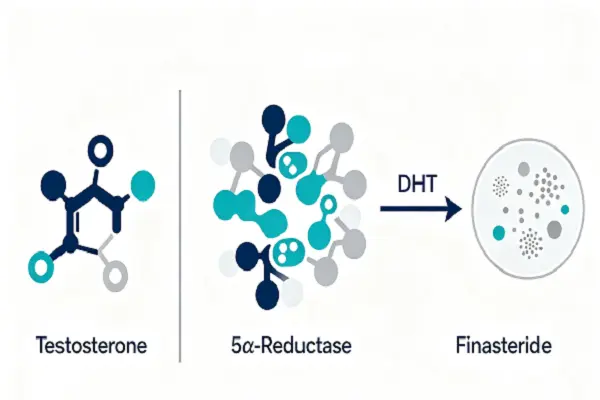
Finasteride Powder does not have any direct effect on androgen receptor proteins; this characteristic clearly distinguishes it from enzyme inhibitors and receptor antagonists. Finasteride Powder does not compete for hormone-binding cavities on androgen receptors and does not interfere with the recognition and binding process between testosterone molecules and receptors. Testosterone molecules remaining in the cell can still freely diffuse into the nucleus, bind to androgen receptors, and normally initiate the transcription of downstream target genes. All physiological changes brought about by Finasteride Powder stem from a decrease in dihydrotestosterone synthesis, reducing the supply of highly active ligands. If dihydrotestosterone (DHT) is directly supplemented exogenously in the culture system, the process bypasses the 5α-reductase catalysis, directly circumventing the target site of the Finasteride Powder. DHT directly activates the receptor pathway, and the Finasteride Powder will not produce any restraining effect. This characteristic is a crucial diagnostic tool in in vitro mechanism verification, used to distinguish whether observed cellular phenomena originate from 5α-reductase pathway blockage or non-specific toxic interference from the Finasteride Powder molecule.
🔬 Hormone level changes trigger multi-layered cellular responses
Dihydrotestosterone (DHT), a highly active androgen ligand, binds to androgen receptors after entering the cell nucleus, initiating the transcription of a large number of target genes related to cell cycle progression, protein secretion, and cell proliferation, profoundly influencing the growth rhythm of target cells. After a significant decrease in DHT supply caused by Finasteride Powder intervention, the DHT-dependent gene transcription program weakens, leading to corresponding changes in the proliferation status of target cells. Many target cells are far more sensitive to DHT than to testosterone; even if the intracellular testosterone concentration remains at its original level, simply reducing DHT production is sufficient to significantly slow the proliferation rate of some target cells. Large-scale apoptosis and death do not immediately occur; instead, the cell cycle progresses more slowly, and population expansion efficiency decreases. Only when cells are continuously in a low-DHT microenvironment for a prolonged period, with insufficient proliferation-driving signals, can a significant decline in cell population size be gradually observed. Short-term Finasteride Powder treatment mostly only observes a decrease in proliferation rate, rarely showing large-scale cell death. This is determined by the molecular mechanism itself; one cannot expect to achieve large-scale target cell clearance with short-term treatment.
The secretory function of target cells is also finely regulated by dihydrotestosterone (DHT) signaling. When DHT is maintained at adequate levels, target cells synthesize and release various specific secretory proteins, shaping the local tissue microenvironment and influencing surrounding cells through paracrine mechanisms. After the finasteride powder causes a decrease in DHT levels, the synthesis of these hormone-regulated secretory proteins decreases accordingly, altering the types and concentrations of signaling molecules exported by the cells. These secreted signaling molecules diffuse to the cell periphery, indirectly regulating the proliferation and adhesion of neighboring cells. In in vitro co-culture systems, the cascading effects of this paracrine signaling are particularly pronounced; even cells not directly exposed to the finasteride powder will exhibit changes in cell state due to alterations in the secretome of surrounding cells. Interpreting results from co-culture systems requires distinguishing between direct molecular effects and secondary paracrine effects caused by hormonal changes, avoiding the misinterpretation of all indirect cascading reactions as direct effects of the finasteride powder on these cells.
Target cells from different sources exhibit significantly different degrees of dependence on DHT signaling. Some cellular physiological activities are highly dependent on dihydrotestosterone (DHT)-mediated signaling input. After treatment with Finasteride Powder, gene expression profiles and cell proliferation rates show significant fluctuations. Other cells primarily rely on testosterone activation of androgen receptors for physiological function, exhibiting low dependence on DHT. After Finasteride Powder treatment, even with a decrease in DHT levels, the overall physiological state of these cells shows almost no significant fluctuation. Many cells simultaneously express both type I and type II 5α-reductase isoenzymes. Even after Finasteride Powder effectively inhibits type II, type I can still continuously catalyze the conversion of small amounts of testosterone to DHT. DHT is not completely eliminated from the microenvironment, retaining some hormonal signal output. This pathway compensation caused by isoenzymes weakens the overall intervention effect of Finasteride Powder. In these cell systems, no matter how much the Finasteride Powder concentration is increased, it is difficult to completely eliminate DHT; this is an objective consequence of the co-expression of isoenzymes.
Prolonged and sustained Finasteride Powder intervention induces target cells to activate multiple compensatory regulatory pathways to counteract the effects of decreased hormone supply. Some target cells upregulate the translation of type II 5α-reductase, producing more enzyme molecules to counteract the competitive occupation by Finasteride Powder. Others upregulate the total expression of androgen receptor proteins, increasing cellular sensitivity to residual testosterone molecules to compensate for insufficient signaling caused by reduced dihydrotestosterone (DHT). Still others adjust the expression levels of other enzymes in the steroid metabolic network, altering the flow of substances within the entire hormone metabolism network. With these multiple compensatory mechanisms at work, the initial physiological inhibitory effect of Finasteride Powder is gradually offset, and cells gradually adapt to the low DHT environment. This type of cellular compensatory adaptation is easily observed in long-term, continuously passaged in vitro cell models. Long-term intervention studies require regular monitoring of enzyme and receptor-related protein expression levels to promptly identify these adaptive changes in cells.
Finasteride powder itself does not directly trigger the apoptosis process. Its core function is to reduce the positive proliferative signaling of highly active androgens, without directly activating endogenous cell death pathways. Intervention using only Finasteride powder results in limited fluctuations in the expression of apoptosis-related proteins, with the main phenotype being inhibited cell proliferation. To increase the rate of apoptosis, it is often necessary to combine it with other types of active substances. This involves removing androgen-driven signals, coupled with DNA damage stimulation and cell cycle arrest interventions. Only through the combined effect of multiple pressures can the rate of apoptosis be significantly increased. Based on these characteristics, in the early stages of formulation development, Finasteride powder is often used as a pathway modulator, combined with other active substances, relying on multi-pathway synergy to achieve more ideal cell regulation effects.
✨ Application scenarios and the objectively existing boundary of effects
In in vitro cell pharmacology, Finasteride Powder is primarily used as a specific inhibitor of the 5α-reductase pathway. It is employed to artificially construct cell models where dihydrotestosterone synthesis is inhibited, allowing observation of changes in downstream target genes, cyclins, and the secretome after hormonal metabolic disturbances. Dissolution is a crucial and critical step in the experimental process. Finasteride Powder has extremely poor water solubility; therefore, a high-concentration stock solution must be prepared in advance using a suitable organic solvent, followed by serial dilution into the cell culture medium. Strict control of the final concentration of the solubilizer is essential to prevent cellular stress damage caused by the organic solvent itself, which could introduce additional interfering variables into the entire system. Different cell lines exhibit significant differences in isoenzyme expression patterns. Some cells primarily express type I 5α-reductase, making it difficult for Finasteride Powder to achieve sufficient pathway inhibition. Before conducting experiments, the background expression of the enzyme subtype in the cells used should be clearly defined. Dosage parameters from other cell literature should not be directly copied; otherwise, inexplicable observations can easily result.
In the early stages of formulation development, the steroidal physicochemical properties of Finasteride Powder impose numerous practical constraints on dosage form design. The raw material's insufficient solubility in aqueous phase necessitates the use of solubilizers, cyclodextrin inclusion complexes, and other techniques to improve solubility and dispersion when developing liquid formulations; otherwise, solute precipitation is likely during storage. In the processing of solid dosage forms, high-temperature and high-humidity conditions must be strictly avoided to reduce steroidal side-chain oxidation and amide hydrolysis, ensuring a stable proportion of active Finasteride Powder molecules in the finished product. In batch quality control of raw materials, oxidative degradation impurities are a key focus. Excessive oxidative impurities lack enzymatic inhibitory activity, leading to a higher impurity percentage and a decrease in the actual number of effective molecules per feed weight, directly resulting in reduced activity of the final formulation. Effective impurity control and ensuring consistent quality across different batches are fundamental prerequisites for stable efficacy in downstream formulations.
Finasteride powder exhibits significant isoenzyme subtype limitations. While it exhibits strong inhibitory efficacy against type II 5α-reductase, its inhibitory effect on type I isoenzymes is relatively weak. When type I 5α-reductase dominates within the target cell, even increasing the concentration of Finasteride powder can only achieve partial pathway inhibition, failing to completely block dihydrotestosterone (DHT) production. This subtype selectivity stems from the matching relationship between the steroid side chain and the enzyme cavity, an inherent molecular property that cannot be completely overcome by simply increasing the concentration of the raw material. When conducting related development and model construction, this limitation must be acknowledged. It cannot be simply assumed that adding Finasteride powder will completely eliminate DHT in the system; the degree of pathway inhibition that can be achieved must be objectively predicted based on the target cell isoenzyme expression background.
Exogenous hormone supplementation experiments are crucial for mechanism verification, directly bypassing the target site of Finasteride powder. Adding exogenous dihydrotestosterone directly to the culture system bypasses the 5α-reductase catalysis step, allowing it to directly bind to the androgen receptor and initiate downstream signaling. Finasteride Powder has no inhibitory effect on this process. However, if testosterone is added to the system, the residual 5α-reductase activity within the cells still influences the production of some dihydrotestosterone. Using this control logic, it's possible to distinguish whether the observed cell phenotype stems from 5α-reductase pathway blockage or non-specific cytotoxicity from Finasteride Powder, effectively eliminating irrelevant interference and ensuring the rigor and reliability of the mechanism derivation.
Finasteride Powder does not directly antagonize androgen receptors; all its physiological effects are based on the presence of a fully functional 5α-reductase protein in the target cells. If the target cells lack this enzyme or the enzyme protein undergoes inactivation mutation, the addition of Finasteride Powder will not induce any hormonal changes, and the cell state will not fluctuate significantly. Meanwhile, target cells can gradually weaken the intervention effect of Finasteride Powder by upregulating enzyme protein expression and activating other metabolic compensatory pathways. Only by objectively recognizing all the boundaries of its action can Finasteride Powder be properly positioned. Finasteride Powder is a metabolic regulatory raw material targeting 5α-reductase and is not a broad-spectrum cell proliferation inhibitor. Its research and development value can only be fully realized within a system where the target enzyme is expressed normally.
Conclusion
Finasteride powder, relying on a modified steroid molecular backbone, competitively occupies the catalytic site of type II 5α-reductase, blocking the catalytic conversion of testosterone to dihydrotestosterone, reducing the supply of highly active androgens in the cellular microenvironment, and further altering downstream hormone-mediated cell proliferation, secretion, and other physiological responses. Finasteride powder naturally exhibits isoenzyme subtype selectivity, and target cells can also mitigate the pathway inhibitory effect of fingertip fingertip fingertip through mechanisms such as enzyme upregulation and metabolic network compensation. With the continuous iteration and upgrading of in vitro cell model systems and formulation processing technologies, fingertip fingertip fingertip, as a raw material for 5α-reductase targeting, continues to have stable and continuous application value in hormone metabolism pathway analysis and early-stage formulation development.
Xi'an Faithful BioTech Co., Ltd. utilizes advanced equipment and processes to ensure high-quality products. Our Finasteride powder meets international pharmaceutical standards. Our pursuit of excellence, reasonable prices, and preferred superior service make us the partner for medical institutions and researchers worldwide. If you require Finasteride powder research or production,Please contact us Click email: allen@faithfulbio.com Or WhatsApp: +86 13137770562.
References
- Russell, D. W., & Wilson, J. D. (1994). Steroid 5 alpha‑reductase: two genes/two enzymes. Annual Review of Biochemistry, 63(1), 25‑61.
- Hirshburg, J. M., Kelsey, P. A., Therrien, C. A., & Gerstner, E. (2016). Finasteride: early and late‑phase clinical pharmacology. Journal of Drugs in Dermatology, 15(8), 957‑963.
- Andriole, G., Bruchovsky, N., Chung, B. W., Matsumoto, A. M., Rittmaster, R., Russell, D. W., & Tindall, D. J. (2004). Dihydrotestosterone and the prostate: the scientific rationale for 5α‑reductase inhibitor treatment. The Journal of Urology, 172(4), 1399‑1403.
- Imperato‑McGinley, J., Guerrero, L., Gautier, T., & Peterson, R. E. (1992). The in‑vitro inhibition of human 5 alpha‑reductase isoenzymes 1 and 2 by finasteride. Journal of Clinical Endocrinology and Metabolism, 75(6), 1535‑1539.
- Mittman, N., & Berman, B. (2004). Finasteride in the treatment of androgen‑dependent dermatologic conditions. American Journal of Clinical Dermatology, 5(1), 17‑27.