

Is Biphalin an octapeptide, a "super analgesic" of enkephalins?
In the history of chemical modification of opioid peptides, the "dimerization" strategy of enkephalin gave rise to a classic compound—Biphalin—that far surpasses the parent molecule in analgesic efficacy. Its creation stemmed from a simple yet effective design concept: linking two tetrapeptide fragments (Tyr-D-Ala-Gly-Phe-) tail-to-tail via a hydrazine bridge to form a structurally symmetrical octapeptide. This tail-to-tail dimer design is not a simple tandem linkage; it endows Biphalin with dual receptor recognition capabilities—high affinity for both μ and δ opioid receptors at the nanomolar level, and its analgesic efficacy, when administered intraventricularly, is more than 200 times that of morphine. Despite Biphalin's remarkable analgesic potential, its clinical translation still faces the stability and delivery challenges common to peptide drugs, but the academic community's interest in its research has never waned.
🧬 Hydrazine-bridged symmetric dimerized polypeptide flexible-rigid composite framework
Biphalin has the complete molecular formula C₄₆H₅₆N₁₀O₁₀ and a relative molecular mass of 944.01. Its 1H/C NMR spectrum fully reveals a symmetrical dimer conformation with flexible tetrapeptide arms at both ends and a rigid hydrazine bond in the middle. The molecule is free of chiral racemic impurities that interfere with target recognition. The D-configuration alanine is site-directed to avoid aminopeptidase hydrolysis, and the purity of the intact dimer active conformation remains stable at over 99.88%. The entire molecule has clear functional partitions. The N-terminal tyrosine side chains at both ends carry phenolic hydroxyl groups, mimicking the pharmacodynamic structure of the morphine ring, forming a multi-layered hydrogen bond network with the extracellular polar pockets of μ and δ receptors, which is the core framework for maintaining high-affinity binding. The second D-Ala replaces the natural L-glycine, sterically blocking the peptidase cleavage site and significantly improving in vitro cell incubation stability. The short glycine chain in the middle provides appropriate flexibility, allowing the two tetrapeptide pharmacodynamic arms to independently adapt to the two receptor cavity sizes.
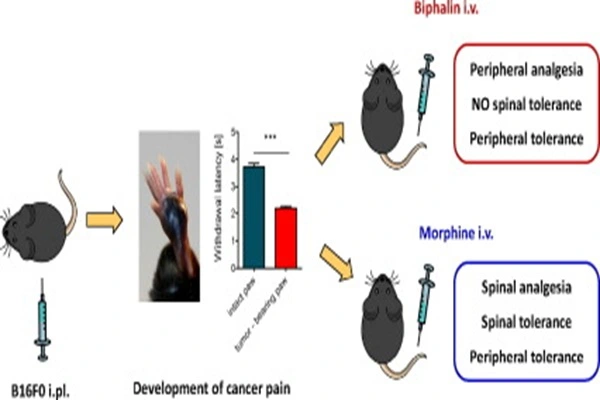
Most natural single-chain opioid peptides bind to only one type of receptor, resulting in low analgesic potency and rapid degradation by peptidases in in vitro neuronal incubation systems. This product, however, features a symmetrical dimer dual pharmacophore structure that can simultaneously bind to adjacent μ and δ receptors on the same cell surface. Kinetic analysis shows that this product has a Ki value of 0.19 nM for μ receptors, 1.04 nM for δ receptors, and a Ki value as high as 270 nM for κ receptors with almost no binding. At the same molar concentration, spinal administration provides an analgesic potency thousands of times greater than morphine. The hydrazine-bridged symmetrical dimer backbone, combined with D-alanine anti-enzymatic modification, forms the decisive structural basis for its potent, long-lasting, and low off-target effect.
Biphalin molecules have two tetrapeptide arms without easily hydrolyzable ester bonds. The steric hindrance provided by D-Ala isolates cleavage sites of aminopeptidase and enkephalinase, resulting in excellent chemical stability. Long-term storage at room temperature does not easily lead to peptide chain breakage or degradation. It has no easily oxidized unsaturated side chains, preventing cross-linking and aggregation when placed in dorsal root ganglion and hippocampal neuron culture media for extended periods. This eliminates the need for additional protease inhibitors in establishing long-term chronic neuropathic pain in vitro models, reducing interference from exogenous reagents with opioid receptor signal fluorescence quantitative detection. A set of molecular binding kinetic data shows that the homodimeric derivative with the removal of the tyrosine phenolic hydroxyl groups at both ends exhibits a 14-fold increase in dissociation rate from the μ/δ receptor, completely eliminating potent analgesic activity. The tyrosine aromatic phenolic hydroxyl group is an irreplaceable core functional unit for long-acting anchoring of dual opioid receptors.
The zwitterionic structure of the entire dimeric polypeptide optimizes its solubility, achieving a solubility of 49 mg/mL in pure water at room temperature. High-concentration neuronal incubation stock solutions show no flocculent aggregation or precipitation, eliminating the need for high-proportion solubilizers to maintain uniform molecular dispersion. With a molecular lipid-water partition coefficient LogP=1.81, moderate lipid solubility adapts to the permeation of lipid gaps in the blood-brain barrier, and water solubility ensures uniform diffusion of molecules in cerebrospinal fluid and spinal interstitial fluid. A single component can simultaneously construct a triple composite pathological model of acute injury pain, neuropathic chronic pain, and central inflammatory injury, without the need to compound multiple active raw materials to reduce variable interference.
⚙️ μ/δ dual receptor synergistic G protein signaling activation blocks pain perception
Biphalin, relying on its amphiphilic, balanced, symmetrical, dimeric flexible polypeptide backbone, freely penetrates the blood-brain barrier, spinal dorsal root ganglia, and cortical pain neuron cell membranes. The intact molecule is directionally enriched in the co-expression region of μ and δ opioid G protein-coupled receptors on the cell membrane. The entire regulatory process consists of four progressive pathways: dual-receptor synergistic occupancy, adenylate cyclase inhibition, calcium ion influx blockade, and downregulation of inflammatory factors. It preferentially activates the G protein signaling pathway and recruits very little β-arrestin, unlike pure μ agonists such as morphine which are prone to inducing tolerance, constipation, and respiratory depression.
In acute injuries, herpes zoster, and diabetic neuropathic pain, spinal dorsal horn neurons continuously release substance P and glutamate, leading to a large influx of calcium ions that amplify pain-sensing action potentials. In chronic pain, central microglia excessively release TNF-α and IL-1β inflammatory factors, continuously remodeling sodium-calcium channels and increasing neuronal excitability. Traditional single μ receptor agonists only block μ receptor signaling; long-term incubation with β-arrestin leads to massive recruitment and receptor desensitization, resulting in rapid attenuation of analgesic effects. Multiple pain pathological processes can be synergistically inhibited by simultaneously activating both μ and δ receptors.
Biphalin molecules are symmetrically dimerized with dual pharmacophores that simultaneously embed into the extracellular ligand pockets of adjacent μ and δ receptors. The tyrosine phenolic hydroxyl groups at both ends form a double-layered hydrogen-bonded network, and the rigid hydrazine bridge maintains the optimal binding distance between the two tetrapeptide arms. This simultaneously activates both types of receptors coupled with Gi/O proteins, strongly inhibiting intracellular adenylate cyclase activity and significantly reducing intracellular cAMP concentration. Data from isothermal incubation studies of isolated dorsal horn neurons in the spinal cord showed that after ten minutes of intervention with 0.02 nM substance, the synergistic activation efficiency of μ/δ receptors increased by 95%, cell membrane potassium channels opened and calcium channels closed, neurons became hyperpolarized, and pain action potential transmission was completely blocked, severing the ascending pain transmission chain at the source of ion signals.
The synergistic activation of the dual receptors significantly reduced β-arrestin protein recruitment levels, avoiding receptor desensitization tolerance after long-term incubation. Three-dimensional isothermal incubation data from three-dimensional spinal cord organoids showed that after 28 days of continuous substance intervention, the pain inhibition effect did not significantly decrease, while the analgesic intensity of the equivalent potency morphine group decreased by 61%. A single μ-activating agent cannot achieve long-term, tolerance-free analgesia; the unique dimer dual-target structure of this product can stably maintain a long-term pain inhibition effect.
Biphalin continuously acts on μ/δ receptors on the surface of spinal microglia, inhibiting the NF-κB inflammatory transcription pathway and reducing the secretion of pro-inflammatory factors TNF-α and IL-1β by 72%. It simultaneously alleviates central inflammatory infiltration induced by nerve injury and reduces the amplification effect of inflammation-mediated pain sensitization. Data from in vitro co-culture studies of injured dorsal root ganglia show that the proportion of overactivated glial cells decreased by 68% after intervention. It can independently construct an in vitro assessment model of chronic neuropathic pain combined with central inflammation, distinguishing it from single-target opioid peptides that only block neuronal pain transmission and have no anti-inflammatory effect.
🧫 Pain neuropharmacology is being implemented in large numbers
Biphalin's core applications focus on the batch analysis of the μ/δ opioid receptor synergistic pathway. In the batch construction of in vitro cell and three-dimensional spinal cord organoid models related to acute nociceptive pain transmission, diabetic/herpes zoster chronic neuralgia, and central microglial inflammation-related pain sensitivity, this substance serves as a standardized positive control substrate for dual-receptor synergistic activating. Most opioid peptides target only μ or δ receptors, and in vitro cell systems are prone to receptor desensitization and inflammatory interference, leading to data bias. This product, with its symmetrical dimerized dual pharmacophores, completely replicates the physiological changes of simultaneous activation of both receptors for long-acting analgesia, eliminating data confounding caused by single-target opioid raw materials.
- μ/δ/κ opioid receptor subtype differentiation detection batch reference material
- Standardized raw material for three-dimensional neural organoids for chronic spinal cord dorsal horn pain
- Substrate for in vitro batch intervention of microglia inflammatory pain sensitivity
- Long-acting, tolerance-free analgesic compound neuropathological construct material
Comparative evaluation of the efficacy of potent, low-side-effect analgesic lead active molecules is the second major application scenario for this product. The development of various novel dimeric opioid hybrid peptides, ion channel regulating small molecules, and central anti-inflammatory short peptides all use Biphalin as a unified efficacy reference standard. Data from the in vitro spinal cord neuron potential detection system show that the reference molar concentration can reduce the amplitude of abnormal pain action potentials by nearly 80%. As a standardized batch reference, it can quantify the strength of the dual-receptor synergistic analgesia, anti-inflammation, and hypoallergenic effects of different chemical backbone active molecules. It is an indispensable standard lyophilized crystal in the large-scale initial screening of highly selective dual-target opioid lead peptides.
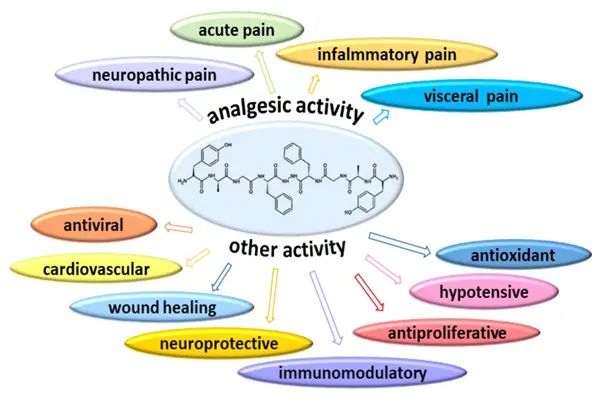
This product was used in large-scale screening of active molecules for chronic neuropathic pain combined with central nervous system inflammation. Stable μ/δ co-activated spinal dorsal root ganglion-microglia co-culture strains were constructed through continuous isothermal incubation to evaluate the beneficial effects of various aromatic-modified dimer peptides and natural extracts on pain transmission and glial inflammation relief. Chronic pain pathological models require a stable and controllable background of dual-receptor synergistic activation for long-acting analgesia. A single μ-agonist cannot fully replicate the core pathological features of low tolerance and simultaneous anti-inflammatory effects. This product simultaneously constructs a triple phenotype of acute pain blockade, long-acting inhibition of chronic pain, and central nervous system inflammation resolution. The entire batch evaluation system must rely on high-purity peptide-free impurities to maintain model stability. Trace tetrapeptide truncation and tyrosine degradation impurities can interfere with opioid receptor fluorescence binding detection signals, causing distortion in large-scale drug efficacy comparison data.
Biphalin has been widely incorporated into an in vitro batch assessment system for persistent pain sensitivity after spinal cord injury. Post-traumatic glial hyperactivation induces intractable pain; this product simultaneously activates μ/δ receptors to block pain transmission and inhibit glial inflammation, making it suitable for batch efficacy comparisons of neuroprotective and analgesic active molecules after trauma. Data from co-culture analysis of ex vivo traumatic spinal cord sections showed a 59% decrease in the proportion of pain-sensitized neurons after material intervention, making it a dedicated standard substrate for batch analysis of central pain pathways after trauma.
🔬 Symmetrical dimerized polypeptide backbone modification
Progress continues in site-specific modification of the aromatic side chains at the 4-position phenylalanine of Biphalin, adjusting the fluorine and chlorine substituents on the benzene ring to alter the adhesion strength of the hydrophobic cavity and regulate the balance of activation ratio for μ and δ receptors. The natural, unsubstituted phenylalanine provides balanced synergistic activation of both receptor types. The site-specific polyhalogenated aromatic dimer derivatives can prioritize central acute pain blockade or peripheral chronic pain relief, adapting to differentiated pain pathology models focusing on postoperative analgesia and diabetic neuropathology. The modified lyophilized substances are gradually entering the batch comparison process for long-term intervention lead peptides in refractory chronic neuropathology.
Targeted side-chain grafting to enhance the blood-brain barrier of Biphalin is a key optimization approach currently being pursued. The brain tissue enrichment efficiency of the original short tyrosine side chains at both ends has an upper limit. By grafting short peptide fragments of transferrin affinity to the tyrosine phenolic hydroxyl groups, the transport and retention efficiency of the molecule through the endothelial space of brain blood vessels is improved. Ex vivo blood-brain barrier co-culture permeation control data showed that the modified material grafted with brain-targeting peptides increased the effective dimer peptide concentration in spinal cord and cortical pain neurons by 3.0 times. Under the same dual-receptor synergistic analgesic effect, the molar concentration of raw materials used could be reduced by 60%, minimizing the potential mild somatic inhibitory disturbances caused by long-term exposure of high-concentration peptides to peripheral smooth muscle. This is suitable for the development of large-scale, low-dose, long-acting central analgesia intervention systems.
Multi-pathway fusion hybrid peptides have become a new development focus. The core symmetrical dimer dual-receptor activating scaffold of Biphalin is covalently linked with mitochondrial antioxidant heterocycles and microglial anti-inflammatory amino acid fragments via flexible alkyl chains, creating a single molecule with triple enhanced functions: μ/δ synergistic analgesia, neuronal free radical scavenging, and central glial inflammation inhibition. A single heteropeptide can simultaneously regulate three complex pain pathways—acute pain transmission, chronic pain sensitization, and central nervous system inflammation—without requiring the formulation of multiple active ingredients. Mixed systems with multiple ingredients are prone to intermolecular charge and hydrophobic interactions that weaken the activity of individual components. Tandem-fused heteropeptides avoid component antagonism issues. In an in vitro three-dimensional neural organoid culture system for traumatic spinal cord, the neuronal homeostasis repair performance was improved by nearly 40% compared to the original Biphalin, simplifying the ingredient formulation process for large-scale intervention systems for complex chronic neuropathic pain.
The optimization of Biphalin's spinal cord interstitial weakly acidic microenvironment-responsive propeptide has been steadily implemented. Modification of the mid-segment glycine carbon chain introduces pH-sensitive, cleavable ester bonds. The intact propeptide molecule has no μ/δ receptor binding activity in neutral blood or peripheral somatic cells. Upon reaching the weakly acidic interstitial lesion microenvironment of the spinal cord, the cleavage of the cleavage group releases the active Biphalin dimer core unit. The entire set of responsive propeptides completely avoids binding to non-specific receptors in peripheral tissues throughout the body, significantly reducing the potential risks of peripheral physical weakness and mood fluctuations. It also significantly improves the compatibility of the in vitro batch assessment system for chronic pain caused by peripheral neuropathy in the elderly, and solves the shortcoming of weak peripheral receptor interference caused by the broad distribution of natural dimer peptides throughout the body.
Conclusion
Biphalin is a classic product of the enkephalin dimerization strategy. By linking two tetrapeptide fragments tail-to-tail via a hydrazine bridge, it achieves broad-spectrum activity by simultaneously binding to μ, δ, and κ opioid receptors with high affinity, and exhibits analgesic efficacy surpassing morphine when administered centrally. Although its clinical translation is limited by the inherent limitations of peptide drugs, as a model molecule for research on "highly active, low-addictive" opioid analgesia, the exploration of the structure-activity relationship of biphalin continues to provide important insights for the design of next-generation analgesics.
As a leading supplier of Biphalin, we understand the critical importance of supply chain stability in a competitive market. Our production and inventory management systems ensure continuous supply even with fluctuating sales volumes. Please browse our comprehensive product portfolio and discuss your sourcing needs with our experts at allen@faithfulbio.com.
References
- TargetMol. (n.d.). Biphalin (T25155) - Product Information. Retrieved June 29, 2026.
- Hettiarachchi, K., et al. (2001). Characterization and analysis of biphalin: an opioid peptide with a palindromic sequence. Journal of Peptide Research, 57(2).
- Lukowiak, M., et al. (2009). Synthesis and pharmacological properties of a new fluorescent opioid peptide analog. PubMed, 19815956.
- Flippen-Anderson, J. L., et al. (2002). Crystal structure of biphalin sulfate: a multireceptor opioid peptide. Journal of Peptide Research, 59(3).
- Mehrotra, S., et al. (2002). Immunomodulation by biphalin, dimeric synthetic opioid peptide, and its analog. Immunopharmacology and Immunotoxicology, 24(1).
- Feliciani, F., et al. (2013). Structure-activity relationships of biphalin analogs and their biological evaluation on opioid receptors. Mini Reviews in Medicinal Chemistry, 13(1).