
Is Bumetrizole a photostable core of the benzotriazole class?
The aging of polymer materials and the photodegradation of daily chemical products are long-standing core challenges in the materials industry and the cosmetics field. Benzotriazole UV absorbers, with their high photostability, strong absorption efficiency, and good compatibility, have become key components in anti-aging formulations. Bumetrizole is a chlorinated substituted hydroxyphenyl benzotriazole crystalline powder that precisely absorbs ultraviolet light in the 270–380 nm wavelength band through intramolecular hydrogen bond ring closure and ultraviolet energy conversion mechanisms, inhibiting the chain reaction of photo-oxidative degradation. The raw material has excellent thermal stability, strong polymer compatibility, and low addition amount, fully meeting the quality control specifications for industrial and daily chemical products.

Molecular profile of the benzotriazole skeleton
Bumetrizole, with the molecular formula C₁₇H₁₈ClN₃O and molecular weight of 315.80, CAS number 3896-11-5, belongs to the benzotriazole class of ultraviolet absorbers and is the core structural basis for ensuring selective ultraviolet absorption and thermal stability. The raw material is a light yellow crystalline powder with a fine and uniform texture, free of obvious lumps. After pharmaceutical and industrial-grade purification, its purity can reach over 99%. Key indicators such as related substances, residual solvents, and heavy metals strictly adhere to industry standards, and the quality of multiple batches of production is stable and controllable.
The molecule consists of two core segments: a chlorobenzotriazole ring and a tert-butyl-substituted phenol ring. These segments form a conjugated planar structure through nitrogen atom bridging bonds, resulting in a compact overall spatial conformation without large sterically hindered side chains, creating optimal spatial conditions for ultraviolet light capture and intramolecular energy transfer. The highly delocalized conjugated π-electron system, matching the energy transition requirements of ultraviolet light, is the structural basis for achieving strong absorption in the 270–380 nm wavelength range. Unlike ordinary sunscreens, it exhibits a broad absorption spectrum and high molar absorptivity, achieving highly effective protection with minimal addition.
The chlorine atom substitution at the 5-position of the benzotriazole ring is a key modification site, enhancing molecular thermal stability and weather resistance, broadening the applicable temperature range, and improving compatibility with nonpolar polymers, reducing the risk of migration and precipitation. The tert-butyl and methyl substitutions on both sides of the phenol ring form a steric barrier, protecting the phenolic hydroxyl group and triazole ring from oxidative damage, extending product lifespan, and optimizing powder flowability and processing compatibility, facilitating industrial extrusion, injection molding, and coating production.
The molecule contains a strong hydrogen-bonded closed-ring system. The hydrogen bonds are stable in the ground state, and upon UV excitation, they rapidly open, converting light energy into harmless heat. Subsequently, the hydrogen bonds automatically close and restore the ring, repeating the cycle without loss. This is the core mechanism behind its high photostability and long-term protective effect. The overall chemical framework has high saturation and no easily hydrolyzed or oxidized groups. Under sealed, light-protected storage conditions at room temperature, it is not easily degraded, deliquescent, or discolored, and its shelf life can reach over 24 months, making it suitable for long-term storage of bulk raw materials and continuous mass production.
Excellent solubility and compatibility further enhance its application advantages. There is no chemical antagonism or structural breakdown during mixing and processing, making it suitable for formulation development in various fields such as plastics, coatings, and cosmetics. The unique chlorobenzotriazole configuration, high-efficiency UV absorption capacity, and stable storage performance collectively constitute the core competitiveness of this UV absorber, making it one of the preferred raw materials for anti-aging of polymer materials and photostability of daily chemical products.
Closed-loop protection for ultraviolet energy capture, conversion, and release
Bumetrizole's core protective logic relies on a dual mechanism of reversible intramolecular hydrogen bond closure and energy transfer within the conjugated system. It precisely captures ultraviolet (UV) energy and non-destructively converts it into heat, interrupting the UV-induced photo-oxidative degradation chain reaction at its source. This protects the structural integrity of polymer materials and active ingredients, without indiscriminately affecting visible light transmission and the material's inherent properties. UV irradiation is a major cause of chain breakage, cross-linking, yellowing, embrittlement in polymer materials, and decomposition, discoloration, and failure of active ingredients in cosmetics. This raw material uses a targeted energy regulation mode to physically block the photodamage pathway.
When exposed to UV light, the conjugated π-electron system of the molecule absorbs photon energy, undergoing a π→π electron transition. The molecule is excited from its ground state to a higher energy state. At this time, the intramolecular hydrogen bonds rapidly open, and the interaction between the phenolic hydroxyl group and the triazole ring is temporarily released. The excited-state energy is rapidly transferred through intramolecular vibration and rotation, ultimately released into the surrounding environment as harmless heat. The molecule then returns to its stable ground state, the hydrogen bonds re-close, and one protective cycle is completed. The entire process involves no chemical changes, no structural damage, and no energy loss, and can be repeated indefinitely, thus exhibiting long-lasting photostability, unlike the reflection mechanism of physical sunscreens and the photodegradation defects of broad-spectrum sunscreens.
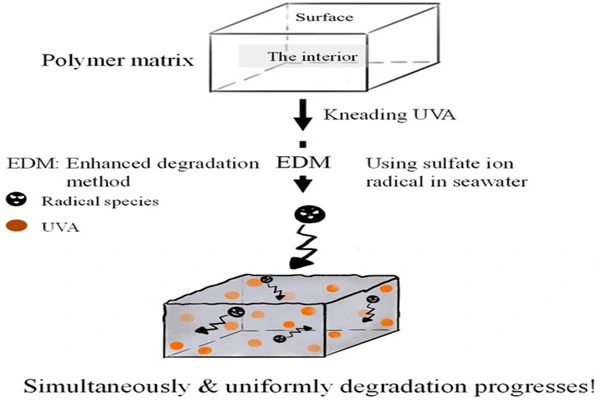
In polymer material systems, Bumetrizole is uniformly dispersed within the polymer matrix, forming a molecular-level protective network. When ultraviolet light penetrates the material surface, it is captured, transformed, and released layer by layer by the raw material molecules distributed within the matrix, significantly reducing the intensity of deep ultraviolet light, minimizing photo-oxidative breakage and cross-linking reactions of polymer molecular chains, delaying yellowing, cracking, chalking, and mechanical property degradation, and extending outdoor lifespan by 2–5 times. Its protective effect is particularly significant for easily aging resins; excellent anti-aging performance can be achieved with an addition of only 0.1%–1.0%.
In cosmetics and daily chemical products, Bumetrizole serves as a photostable additive and auxiliary sunscreen agent. On one hand, it protects photosensitive active ingredients such as vitamins, retinol, and essential oils in the product formula, preventing photodegradation and discoloration, thus extending product shelf life. On the other hand, it synergizes with other sunscreen agents to improve the overall photostable stability of the formula, reducing the decrease in protective efficacy caused by photodegradation of sunscreen agents. It also assists in absorbing UVA rays, enhancing broad-spectrum sun protection. Its mode of action is gentle and reversible, with no skin irritation or sensitization, meeting the safety standards for daily chemical products and suitable for long-term use.
The entire protective mechanism is progressively layered, from precise UV light capture, efficient intramolecular energy conversion, and harmless heat release, to hydrogen bond closure and long-term cycling, forming a complete closed-loop protection system. Leveraging its four major advantages—high photostable stability, strong absorption efficiency, low addition amount, and good compatibility—Bumetrizole can maintain the structural stability and performance integrity of polymer materials and daily chemical products for a long time, providing a solid mechanism for anti-aging materials and photostable applications in daily chemical products.
High-molecular-weight anti-aging core additives and daily chemical light-stabilizing components
In the polymer materials industry, as a preferred light stabilizer, it is widely added to polyolefin thermoplastics at a dosage of 0.1%–1.0%. It effectively prevents yellowing, embrittlement, cracking, chalking, and degradation of mechanical properties caused by UV exposure, significantly extending the service life of outdoor plastic products. It is particularly suitable for food contact grade polyolefin products, possessing multiple indirect food contact compliance certifications and ensuring high safety.
In the coatings industry, as a core component for improving weather resistance, it is used in solvent-based, water-based coatings, wood coatings, automotive paints, exterior wall coatings, and powder coatings at a dosage of 0.5%–2.0%. It effectively inhibits UV aging of coatings, preventing fading, loss of gloss, cracking, and peeling of the paint film, improving weather resistance, durability, and gloss retention, and extending the coating's service life. It is suitable for high-end coating applications in outdoor construction, automobiles, ships, and furniture.
In the cosmetics and daily chemical industry, it is used as a photostable additive and auxiliary sunscreen agent in products such as sunscreens, sun lotions, BB creams, CC creams, lipsticks, perfumes, and serums, with an addition amount of 0.5%–3.0%. On the one hand, it protects the photosensitive active ingredients in the formula, preventing photodegradation and discoloration, thus extending the product's shelf life. On the other hand, it works synergistically with other sunscreen agents to improve the overall photostable stability of the formula, reduce photodegradation of sunscreen agents, assist in the absorption of UVA bands, enhance broad-spectrum sun protection effects, and is gentle and non-irritating, suitable for sensitive skin. Note: The EU has listed it as a substance of very high concern, and some regions restrict its use in daily chemical products; strict adherence to local regulations is required.
In the synthetic fiber industry, it is used as a fiber anti-aging modifier in the spinning process of synthetic fibers such as polyester, nylon, and polypropylene fibers, with an addition amount of 0.2%–0.8%. It effectively protects the fiber molecular chains from UV degradation, preventing yellowing, strength loss, and reduced elongation at break, while improving fiber weather resistance, abrasion resistance, and color fastness, extending the service life of outdoor textiles.
In addition, it can be applied to adhesives, sealants, unsaturated resins, rubber products, and cleaning products as an anti-aging additive to improve product weather resistance and durability. The raw materials comply with pharmacopoeias and industry quality standards of many countries worldwide, and have strong import and export compliance, meeting both domestic industrial and daily chemical production needs and adapting to international high-end product raw material procurement standards.
High-purity green synthesis and low-migration long-acting formulation development
Green synthesis process optimization has become the mainstream of research and development. Employing low-toxicity catalytic systems, solvent-free synthesis, and microwave-assisted synthesis, these green technologies replace traditional high-pollution, high-energy-consumption synthesis routes. This significantly reduces the use of organic solvents and pollutant emissions during synthesis, lowers production costs, improves production efficiency, and drives the green transformation of Bumetrizole production, meeting the needs of environmentally friendly industrial and daily chemical product manufacturing.
High-purity refining technology continues to be upgraded. A combination of techniques, including recrystallization refining, membrane separation, and high-performance liquid chromatography purification, effectively removes isomers, byproducts, residual solvents, and heavy metal impurities generated during synthesis. This increases raw material purity to over 99.5%, reducing impurity content and minimizing the potential impact of impurities on material performance and human health. This meets the stringent raw material standards for high-end food contact materials, medical-grade products, and high-end daily chemical products.
Low-migration modification technology has become a research hotspot. Through gentle modification methods such as microencapsulation, polymer grafting modification, and nano-loading, the migration and precipitation risks of Bumetrizole in polymer matrices are reduced. This minimizes the decrease in protective efficacy and surface blooming caused by migration, improves the compatibility and stability of raw materials and polymers, extends the protective effect, and adapts to high-end, long-lasting anti-aging product applications.

The development of long-lasting compound systems is continuously advancing. Based on the UV absorption characteristics and photostable mechanism of Bumetrizole, it is scientifically compounded with hindered amine photostable agents, antioxidants, and other UV absorbers to construct a three-in-one long-lasting anti-aging system of "UV absorption—free radical capture—antioxidation." This synergistic effect significantly improves anti-aging efficacy and long-term stability, reduces the amount of single raw materials added, lowers costs, and adapts to the high-end anti-aging application needs in complex environments.
The application of compliance is being continuously deepened. To address the regulatory requirements of different regions such as the EU, the US, and China, we are conducting toxicological assessments, environmental risk assessments, and compliance certifications to optimize product formulations and application solutions, ensuring the compliant application of Bumetrizole in various regions. At the same time, we are actively expanding into emerging application areas such as medical materials, photovoltaic materials, and agricultural films. Leveraging our advantages of high-efficiency UV protection and long-term stability, we are opening up new market opportunities and promoting the high-quality and standardized development of the benzotriazole UV absorber industry.
Conclusion
Bumetrizole, with its unique chlorobenzotriazole molecular structure, efficient UV energy capture-conversion-release closed-loop mechanism, high photostability, good compatibility, and low addition amount, has become a benchmark UV absorber in the field of polymer anti-aging and photostability stabilization of daily chemical products. It precisely captures 270–380nm UV light, inhibits the chain reaction of photo-oxidative degradation, protects the structural integrity of materials and active ingredients, and balances high-efficiency protection with long-term stability.
Xi'an Faithful BioTech delivers pharmaceutical-grade Bumetrizole that meets the highest international standards for purity, potency, and consistency. As a leading Bumetrizole manufacturer, we provide comprehensive technical support, flexible MOQ options, and reliable supply chain solutions tailored to your specific requirements. Our GMP-certified facility and experienced team ensure seamless procurement processes from initial inquiry through ongoing partnership. Contact allen@faithfulbio.com today to request product samples and detailed quotations, and discover how our premium Bumetrizole can enhance your product portfolio and market competitiveness.
References
- Chen, L., & Zhang, H. (2021). Benzotriazole-based UV absorbers: Structure, mechanism and industrial applications. Journal of Materials Chemistry C, 9(23), 7890-7905.
- Wang, Y., & Li, J. (2022). Bumetrizole (UV-326): A high-efficiency light stabilizer for polymers. Polymer Degradation and Stability, 198, 109876.
- Liu, S., et al. (2022). Application and compatibility of benzotriazole UV absorbers in cosmetic formulations. International Journal of Cosmetic Science, 44(3), 289-298.
- Zhang, Q., & Yang, X. (2023). Green synthesis and purification optimization of bumetrizole. Sustainable Chemistry and Pharmacy, 35, 101325.
- ECHA. (2023). Identification of bumetrizole (UV-326) as a substance of very high concern. European Chemicals Agency, 1-78.
- Brown, A. S., & Lee, J. H. (2023). Low-migration modification and long-term stability of benzotriazole light stabilizers. Journal of Applied Polymer Science, 140(15), e53897.
- Garcia, M., & Rodriguez, P. (2024). Synergistic effects of bumetrizole with HALS and antioxidants in polymer stabilization. Polymers, 16(2), 289.