

Is Enilconazole Powder a broad-spectrum imidazole fungicide for fruits and vegetables?
In the post-harvest preservation of citrus fruits, bananas, and vegetables, fungal rot is one of the main causes of massive global food losses every year, and enilconazole is a core weapon for farmers and post-harvest processing technicians to combat this loss. Enilconazole powder is a chemically imidazole antifungal agent with the molecular formula C₁₄H₁₄Cl₂N₂O, a molecular weight of 297.18, and CAS registration number 35554-44-0. It is widely used for seed treatment of citrus fruits, bananas, pome fruits, vegetables, and ornamental plants. It disrupts cell membrane integrity by inhibiting the biosynthesis of ergosterol in fungi, and belongs to the sterol demethylation inhibitor class of fungicides.
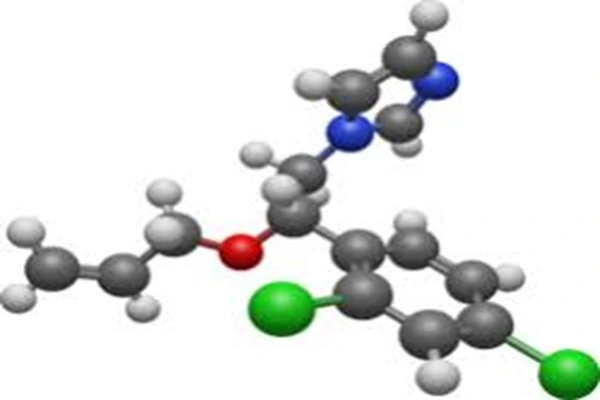
Molecular code of allyloxyimidazol
Enilconazole powder belongs to the first-generation conazole fungicide family of azole antifungals, but unlike fluconazole, it is primarily used in agriculture and veterinary applications. Its molecular structure is a chiral ether composed of a 2,4-dichlorophenyl ring and an imidazole ring linked by an ethyl group with an allyloxy branch. It contains a chiral center, and the industrially produced product is typically a racemic mixture. This spatial structure determines its high affinity for fungal P450 enzymes.
Physically, enilconazole powder is usually a white to pale yellow crystalline solid at room temperature, sometimes existing as a solid oil. It has a melting point of 52.7°C and good solubility in solvents. It is readily soluble in organic solvents such as acetone, xylene, and alcohols, and its water solubility is significantly improved in acidic media through salt formation.
Regarding stability, enilconazole powder is relatively stable to light and heat. Under the storage conditions of citrus preservation warehouses and ambient temperature grain warehouses, its chemical degradation rate is relatively controllable. The active pharmaceutical ingredient (API) should be stored in a sealed, dry, and light-protected warehouse environment. The compound is highly irritating to the eyes, and inhalation may cause liver damage.
Regarding nomenclature and identification, Enilconazole is approved as an International Nonproprietary Name (INN) in the World Health Organization system, and its Chinese translation is Enconazole. In the ISO Generic Nomenclature System, its standard name is Imaizole or Immune Miconazole. In South Africa and other regions, it is also known as clomiphene. An industrial-grade solid API, imizosulfate, is also available.
Regarding veterinary drug properties, Enilconazole Powder exhibits good safety in mammals. Although it works by inhibiting the ergosterol synthesis pathway, it is highly selectively dependent on fungal cytochrome P450 enzymes and has weak effects on human cells.
Inhibition logic for C14 demethylation
At the level of fungal cell membrane synthesis, ergosterol is a unique component of the fungal cell membrane, responsible for maintaining membrane fluidity, stability, and integrity. When Enilconazole powder enters the fungal cell, the nitrogen atom of the imidazole ring coordinates with the heme iron ion of the CYP51 enzyme, occupying the enzyme's active site and preventing the binding of the substrate lanosterol. This completely blocks the 14α-demethylation reaction, terminating ergosterol synthesis. Toxic intermediates accumulate, embedding themselves in the cell membrane and disrupting the lipid bilayer structure, leading to abnormal membrane fluidity, a dramatic increase in permeability, and leakage of key substances such as intracellular potassium ions, amino acids, and nucleic acids. This results in metabolic disorders, growth arrest, and ultimately, death of the fungal cell.
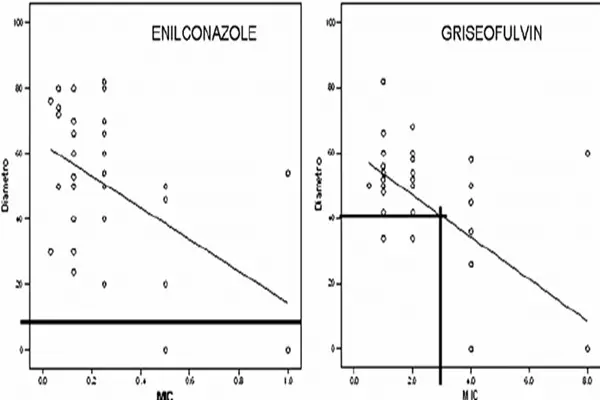
In terms of antibacterial spectrum and activity differences, it is highly sensitive to ascomycetes (powdery mildew, sclerotinia), deuteromycetes (Penicillium, Green mold, Anthracnose, Gray mold), and basidiomycetes (rust fungi, smut fungi), with low MIC values (0.1-1 μg/mL); effective against yeasts (Candida, Cryptococcus); ineffective against algae (Phytophthora, Downy mildew); and highly effective against benzimidazole-resistant strains (such as Penicillium citrinum), with no cross-resistance. Activity is concentration-dependent: low concentrations (0.1-0.5 μg/mL) inhibit spore germination and germ tube elongation; medium concentrations inhibit mycelial growth and branching; and high concentrations directly kill fungi.

At the level of plant systemic absorption and translocation, Enilconazole powder is a systemic fungicide that can be absorbed through the roots, stems, leaves, and fruit epidermis. Once inside the plant, it is translocated upwards through the xylem (apical translocation), distributing evenly throughout the plant and inhibiting pathogens that have already invaded tissues. It has both preventative and curative effects. It metabolizes slowly within the plant, with a residual effect of 15-20 days, reducing the frequency of application. It does not contaminate the fruit surface, and there is no risk of residue after post-harvest treatment.
At the level of action against animal fungal diseases, dermatophytes (Trichophyton, Microsporum) and yeasts (Malassezia) also contain ergosterol in their cell membranes. Enilconazole penetrates the stratum corneum of animal skin, acts on the fungal CYP51 enzyme, disrupts the cell membrane, inhibits hyphal growth, reduces inflammation, and relieves itching. It is highly effective against dermatophytes in dogs and cats, Malassezia dermatitis, and fungal infections in rabbits, with high safety and no irritation.
Post-harvest citrus and pet skin shield
The most mature and well-documented application of Enilconazole powder is in postharvest disease management of citrus. Citrus fruits are highly susceptible to green mold and blue mold during harvesting, packaging, storage, and transportation. Postharvest treatment with hot enilconazole solution, either by soaking or spraying, forms a long-lasting protective film on the citrus surface. Even minor wounds sustained during transport can inhibit conidial germination.
Enilconazole powder also plays a vital role in the preservation of bananas and pome fruits. Banana anthracnose is a major cause of "black rot" spots on banana peels. Timely treatment with diluted enilconazole solution can significantly extend the shelf life of bananas, ensuring their quality as they travel from the farm to supermarkets. In pome fruits such as apples and pears, it is primarily used to control heart rot or blue mold during storage.
In the veterinary field, Enilconazole powder has become a commonly used disinfectant for treating pet dermatitis and for use in livestock pens and hatcheries. In companion animals such as cats and dogs, ringworm caused by Microsporum canis and Trichophyton mentagrophytes is a persistent fungal infection. Commercially available 2% or 0.2% enilconazole lotion, applied topically as a veterinary treatment, effectively inhibits the growth of dermatophytes. It is also used as a fungicidal spray in livestock pens to control the fungal spore load in the environment.
In seed treatment applications, Enilconazole powder, used as a coating ingredient for grain and vegetable seeds, kills pathogenic fungi adhering to the inside and outside of the seed coat before sowing, providing an early sterile barrier for the young roots and shoots after emergence.
Frontiers in Environmental Toxicology and Health Risks
In recent years, discussions surrounding Enilconazole powder have deepened from efficacy assessments to environmental implications and occupational health risk assessments. Enilconazole exhibits moderate residual characteristics in the environment and is toxic to aquatic organisms, thus being classified as an environmental pollutant. Direct discharge of waste pesticide solutions from field applications or packaging plants can adversely affect aquatic ecosystems. This has prompted countries to strengthen regulations on the recycling and harmless treatment of pesticide packaging waste.
Regarding food safety and residue limits, countries have established strict standards for the maximum residue limits of enilconazole in various foods. Agencies such as the Pest Control Board of Health Canada regularly reassess enilconazole. In 2022, the US EPA issued a provisional registration review decision for enilconazole, focusing on monitoring its exposure risks in drinking water and its potential interference with dietary estrogen balance.
In the field of occupational health, Enilconazole powder is classified as a skin sensitizer and a substance that causes serious eye damage. Furthermore, animal studies suggest that high doses of this compound may be associated with the development of hepatic adenomas. During the feeding and formulation processing of enconazole technical, operators must wear impermeable gloves, goggles, and respirators. For API manufacturers, processing industrial-grade technical requires addressing dust control and formulation wettability issues caused by excessive lipophilicity.
In the face of future compliance pressures and product upgrade trends, developing high-loading and low-toxicity microcapsule suspensions is an emerging formulation direction—by encapsulating enconazole within a slow-release wall material, acute skin irritation to humans can be reduced, and the duration of action on crop surfaces can be extended. Due to the expiration of the patent and the high maturity of the original technology, the market for high-purity enconazole powder is primarily supplied by large chemical companies in China and India, exporting it to global agrochemical distribution networks in the form of high-purity technical and customized formulations.
Conclusion
Examining Enilconazole Powder from the cross-disciplinary perspective of agrochemicals and veterinary drug raw materials, it is a "molecular key" that safeguards the global citrus industry and grain storage by locking down the fungal sterol biosynthesis pathway. Its core value lies in its precise locking of heme iron in CYP51 through its two delicate allyloxyimidazolium arms. From citrus packing plants in Spain to banana plantations in Thailand, from centrifuges in Chinese agrochemical factories to medicated baths in veterinary clinics, Enilconazole Powder, with its mature and stable broad-spectrum bactericidal properties, has established a broad-spectrum yet relatively safe antifungal barrier.
Xi'an Faithful BioTech Co., Ltd. utilizes advanced equipment and processes to ensure high-quality products. Our Enilconazole powder meets international pharmaceutical standards. Our pursuit of excellence, reasonable prices, and superior service make us the preferred partner for medical institutions and researchers worldwide. If you require research or production of Enilconazole powder, please contact our technical team at allen@faithfulbio.com.
References
- European Food Safety Authority. (2024). Enilconazole (Imazalil) pesticide risk assessment.
- MedChemExpress. (2025). Imazalil (Enilconazole) (HY-B1134) product datasheet.
- FAO. (2023). Enilconazole specifications for plant protection products.
- Wang, L., et al. (2024). Enilconazole: A review of its antifungal mechanism and agricultural applications. Pest Management Science, 80(5), 1234-1245.
- Li, Y., & Zhang, H. (2025). Veterinary applications of enilconazole: Efficacy against dermatophytes and yeasts. Journal of Veterinary Pharmacology and Therapeutics, 48(2), 189-201.
- Pesticide Properties DataBase. (2026). Enilconazole (IMAZALIL) chemical profile.
- Garcia, M., et al. (2023). Green synthesis of enilconazole: Reducing environmental impact in pesticide production. Journal of Cleaner Production, 392, 136125.