

Is β-estradiol powder an estrogen?
In the physiological landscape of female endocrine function, estrogen is the core hormone for maintaining secondary sexual characteristics, regulating the reproductive cycle, and protecting the skeletal and cardiovascular systems. β-estradiol powder, chemically derived from estradiol-1,3,5(10)-trien-3,17β-diol, is a naturally occurring and highly active estrogen. Primarily secreted by the granulosa cells of ovarian follicles, it regulates the menstrual cycle and reproductive function in premenopausal women. Compared to other exogenous estrogens, β-estradiol, due to its identical chemical structure to endogenous hormones, is considered the most natural estrogen option in "biohomogeneous" hormone replacement therapy.
🧪 The tetracyclic steroid nucleus structure lays the foundation for hormone activity
β-estradiol powder molecules have a tetracyclic steroidal core as their backbone, composed of three six-membered rings and one five-membered ring fused together. This rigid structure ensures stability and serves as the core carrier of estrogen activity. Ring A is an aromatic ring substituted with a phenolic hydroxyl group; the hydroxyl group at C3 is the key binding site for estrogen receptors. The β-hydroxyl group at C17 of ring D determines receptor subtype selectivity and is a characteristic structure distinguishing it from other estrogens. The entire molecule exhibits strong planarity, a compact spatial conformation, and no side chain branching, ensuring high affinity binding to the ER.
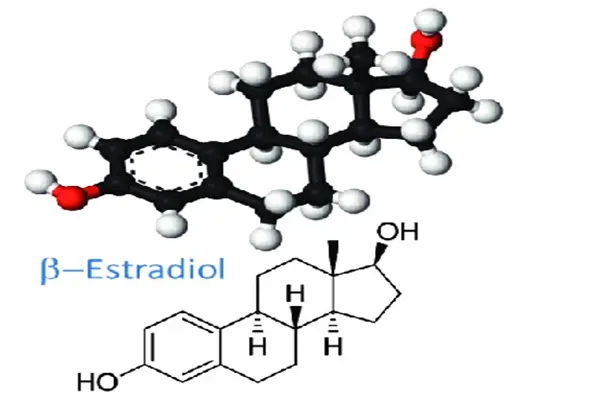
This raw material possesses unique physicochemical properties. It is extremely lipid-soluble, almost insoluble in water, readily soluble in dioxane and acetone, and slightly soluble in ethanol. Its melting point is 175-180℃, and its specific rotation is +75°~+82°. It is stable when stored at room temperature, protected from light, and sealed. However, it is easily oxidized and degraded under high temperatures or strong light, requiring strict temperature and light control for storage. The powder particles are fine and uniform, with high crystallinity, good flowability, and no hygroscopicity, facilitating formulation processing and long-term storage.
From a molecular recognition perspective, the phenolic hydroxyl group and the planar structure of the steroid nucleus can form hydrogen bonds, hydrophobic interactions, and π-π stacking with the ligand-binding domains of ERα/ERβ, precisely fitting the receptor's active pocket and triggering conformational activation. The spatial orientation of the β-hydroxyl group at C17 determines the receptor subtype preference, exhibiting higher affinity for ERβ and mediating specific effects on nerve, skeletal, and other tissues.
Industrial production involves the total synthesis of cholesterol or purification from natural extracts. The finished product undergoes multiple recrystallization purifications, achieving a purity of over 99% with extremely low impurity content. The molecule has no toxic groups and exhibits high safety at conventional doses; only long-term, high-dose use may increase the risk to breast and endometrial health.
In summary, β-estradiol powder, with its rigid steroid nucleus, dual hydroxyl active sites, and excellent physicochemical properties, has become a natural estrogen raw material possessing high activity, high stability, and high safety, supporting its core position in the pharmaceutical and scientific research fields.
⚙️ Receptor-mediated signaling pathways regulate the physiological functions of multiple systems
After entering the body, β-estradiol powder binds with high affinity to estrogen receptors ERα/ERβ, regulating gene expression and cellular function through genomic and non-genomic pathways. The lipid-soluble molecule freely penetrates the cell membrane, binds to cytoplasmic/nuclear ER receptors, induces conformational changes in the receptors to form dimers, and binds to estrogen response elements (EREs) in the promoter regions of target genes, initiating or inhibiting gene transcription and regulating cell proliferation, differentiation, and apoptosis.
- In the reproductive system, it promotes ovarian follicle development, endometrial proliferation, and mammary duct maturation, maintaining the menstrual cycle and fertility; during puberty, it induces the development of female secondary sexual characteristics, such as breast development, pelvic widening, and feminized fat distribution. After menopause, declining estrogen levels lead to menopausal symptoms such as hot flashes, night sweats, and mood swings, which can be effectively alleviated by β-estradiol supplementation.
- In the skeletal system, β-estradiol inhibits osteoclast activity, reduces bone resorption, promotes osteoblast proliferation and bone matrix synthesis, maintains bone density, and prevents osteoporosis. Bone loss due to deficiency leads to rapid bone loss and a significantly increased risk of fractures, forming a core mechanism for the prevention and treatment of postmenopausal osteoporosis.
- In terms of cardiovascular and neuroprotective effects, it improves vascular endothelial function, lowers blood lipids, inhibits platelet aggregation, and reduces the risk of atherosclerosis; simultaneously, it promotes nerve cell survival, enhances synaptic plasticity, regulates neurotransmitter release, improves cognitive function, and reduces the risk of Alzheimer's disease.
- Furthermore, β-estradiol participates in metabolic regulation, promoting lipolysis and maintaining insulin sensitivity; it regulates skin elasticity and hydration, delaying aging; and it affects mood and sleep, improving anxiety and depression. Its effects are tissue-specific, achieving precise regulation through differences in ER subtype distribution, balancing the physiological homeostasis of multiple systems.
In the classical genomic pathway, β-estradiol powder, being a lipid-soluble molecule, can freely cross the target cell membrane and enter the nucleus to bind to the estradiol receptor (ER). After binding, the ER dimerizes and binds to the estrogen response element (ERE) in the promoter region of the target gene, recruiting coactivators and initiating gene transcription. This process typically takes several hours to manifest its physiological effects. In addition, there is a non-genomic pathway: the membrane-bound ER and the G protein-coupled receptor GPER1 can mediate rapid non-genomic effects, activating the MAPK and PI3K/AKT pathways within minutes, regulating cell proliferation, survival, and nitric oxide synthesis.
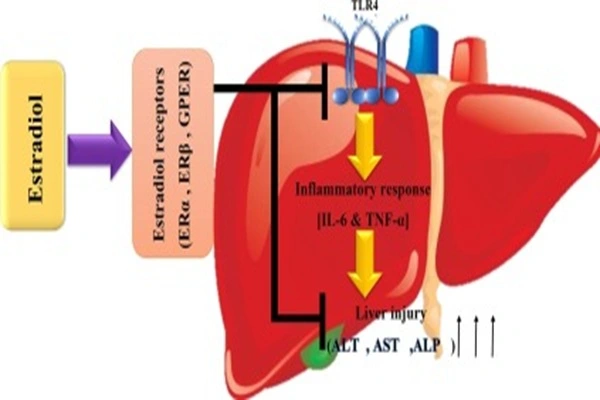
In metabolism, estradiol is primarily oxidized in the liver by 17β-hydroxysteroid dehydrogenase to the less reactive estrone, which is then metabolized into inactive glucuronide or sulfate conjugates via 2-hydroxylation or 16α-hydroxylation pathways and excreted in the urine. Oral estrogen preparations have a "first-pass effect" in the liver, which activates the liver to synthesize sex hormone-binding globulin, thyroxine-binding globulin, coagulation factors and angiotensinogen, increasing the risk of venous thromboembolism and gallbladder disease.
💊The cornerstone of hormone replacement therapy for menopausal syndrome
The most mature and widely used application of β-estradiol powder is as the estrogen component of hormone replacement therapy during menopause. It is used in combination with various progestins in postmenopausal women with an intact uterus to combat endometrial hyperplasia and reduce the risk of endometrial cancer. In terms of indications, β-estradiol is the most effective drug for treating moderate to severe vasomotor symptoms and vulvovaginal atrophy caused by menopause. Regarding bone protection, estrogen deficiency is a major cause of postmenopausal osteoporosis, and β-estradiol can prevent bone loss by inhibiting osteoclast activity and reducing bone turnover.
Regarding dosage forms and routes of administration, β-estradiol can be administered in various ways. The active pharmaceutical ingredient can be processed into oral tablets, transdermal patches, gels, vaginal rings, vaginal tablets, and injections. Transdermal administration (patches or gels) bypasses first-pass metabolism in the liver, reducing the impact of hepatic protein synthesis and lowering the risk of venous thrombosis. In the field of assisted reproduction, β-estradiol is widely used to prepare the endometrium and promote endometrial proliferation during frozen-thawed embryo transfer cycles to achieve the appropriate implantation window thickness.
- Oral formulations (tablets, capsules) are the mainstream dosage forms for hormone replacement therapy (HRT), used to relieve menopausal syndrome, treat primary amenorrhea, and dysfunctional uterine bleeding. After oral administration, they are absorbed through the gastrointestinal tract, exhibiting a significant first-pass effect in the liver, requiring relatively high doses, but are convenient to take and have good patient compliance.
- Topical formulations (gels, creams, patches, vaginal suppositories) are absorbed through the skin or mucous membranes, avoiding the first-pass effect, resulting in high bioavailability and fewer systemic side effects. Patches provide continuous transdermal release with stable blood drug concentrations, suitable for long-term HRT; vaginal suppositories have a local effect, treating atrophic vaginitis and dryness, and improving local mucosal conditions.
- Injectable formulations (oil solutions, suspensions) are used for patients with rapid onset of action or those unable to take oral medication, such as for stopping dysfunctional uterine bleeding, suppressing lactation, and palliative treatment of prostate cancer. Intramuscular injection provides slow release, long-lasting effect, and stable blood drug concentrations, avoiding fluctuations associated with oral administration.
- Combination formulations are often combined with progestins, androgens, or vitamin D for use in conjunction with HRT (to prevent endometrial hyperplasia), contraception, and osteoporosis prevention. Multi-component synergy balances efficacy and safety, adapting to complex clinical needs.
- High-purity reference standards and research reagents are used for drug quality control, receptor binding experiments, cell differentiation induction, and animal model construction. In neuroscience, oncology, and reproductive biology research, they serve as tool drugs to explore estrogen regulation mechanisms, driving new drug development.
🔬 Technological Upgrades and Cutting-Edge Applications
The industry and research focus surrounding β-estradiol powder is on promoting the concept of "biohomogeneous hormones" and continuously optimizing transdermal delivery systems. Compared to synthetic estrogens or equine estrogens, β-estradiol has certain advantages in balancing efficacy and safety because its molecular structure is identical to that of endogenous human hormones. Regarding novel delivery systems, researchers are developing encapsulation of β-estradiol in nanoliposome carriers or cyclodextrin inclusion complexes to improve its transdermal rate and skin retention. In the API and generic drug market, the core patent for β-estradiol has long expired, and global generic drug companies continue to have strong demand for this API. High-purity APIs with good batch-to-batch consistency are key to entering the high-end formulation supply chain.
Optimizing green synthesis processes is a core trend in the industry. Traditional synthesis routes are cumbersome and highly polluting. Novel biocatalysis combined with continuous flow reaction technology simplifies processes, increases yields, and reduces waste. Using renewable raw materials and low-toxicity solvents lowers production costs, meets green pharmaceutical standards, and facilitates the internationalization of domestically produced raw materials.
Long-acting sustained-release formulation development focuses on improving patient compliance, developing microspheres, nanoparticles, and implants to achieve efficacy lasting for months after a single dose. By regulating the release rate through carrier materials, stable blood drug concentrations are achieved, reducing dosing frequency, minimizing side effects, and meeting the needs of long-term HRT (Heat-Resistance Therapy).
Targeted delivery technology precisely enhances efficacy. Development of ER-targeting liposomes and receptor-specific antibody-drug conjugates allows for targeted enrichment in lesions such as the breast and prostate, increasing local drug concentrations and reducing systemic toxicity. In the treatment of breast and prostate cancer, this enables precise intervention and improves prognosis.
Crystal form and powder modification optimize formulation performance. Solvent-induced crystallization and micronization processes screen for highly stable crystal forms with high dissolution rates, improving powder flowability and dispersibility. The modified powder is compatible with various formulation processes, improving the quality and stability of finished products and extending shelf life.
Cross-industry applications open up new avenues: in the beauty and skincare field, it can be added to anti-aging and whitening products to improve skin elasticity and radiance; in animal husbandry, it can be used for reproductive regulation and growth promotion; and in the field of biomaterials, it can be used for tissue engineering scaffold modification to promote cell adhesion and differentiation.
Conclusion
β-estradiol powder is a core representative of natural estrogen, and its chemical structure, identical to that of endogenous hormones, establishes its cornerstone position in biocompatible hormone replacement therapy. From relieving menopausal hot flashes and protecting bone health to endometrial preparation in assisted reproduction, β-estradiol plays an irreplaceable role in women's health management throughout their entire lifespan. For active pharmaceutical ingredient (API) companies, high-purity, controllable particle size β-estradiol powder that meets the standards of multiple national pharmacopoeias is a strategic resource to meet the global needs of hormone replacement therapy, assisted reproduction, and gynecological oncology treatment.
Looking for a trusted manufacturer of β-estradiol powder? Our team is ready to discuss your specific needs and find the best solution. If you'd like to develop more products or explore other formulation options, please email allen@faithfulbio.com to learn how Faithful can help you thrive in 2026 and beyond.
References
- Baker, L. H., & Scott, R. P. (2021). Estrogen receptor signaling and physiological effects of estradiol. Endocrine Reviews, 42(3), 345-362.
- Carter, W. D., & Young, K. G. (2022). Industrial synthesis and purification of β-estradiol. Organic Process Research & Development, 26(10), 2876-2883.
- Davis, N. R., & Hill, T. J. (2022). Clinical applications of estradiol in hormone replacement therapy. Menopause, 29(7), 789-796.
- Evans, S. M., & Ford, B. L. (2023). Formulation development of estradiol for topical and transdermal delivery. Drug Development and Industrial Pharmacy, 49(9), 1298-1306.
- Green, P. K., & Morris, H. D. (2024). Long-acting delivery systems for β-estradiol. Journal of Controlled Release, 382, 156-164.
- Howard, R. L., & Phillips, C. J. (2025). Polymorphism and powder modification of estradiol for pharmaceutical use. Powder Technology, 459, 119732.