
Is lambda-cyhalothric acid a core intermediate for highly efficient cyhalothrin?
Lambda-cyhalothric acid, with the molecular formula C₉H₁₀ClF₃O₂ and molecular weight of 242.62, CAS number 72748-35-7, is a white crystalline powder in its pure state. It is a key intermediate in the synthesis of highly effective pyrethroid insecticides such as lambda-cyhalothrin and bifenthrin. Its molecule contains a cyclopropane backbone, trifluoromethyl groups, and chloroolefin side chains, exhibiting both high chemical stability and strong reactivity, which supports the "highly effective, low toxicity, and broad-spectrum" insecticidal advantages of pyrethroids.
Molecular code of the fluorinated permethrin skeleton
Lambda-cyhalothric acid is chemically the carboxylic acid component of lambda-cyhalothrin, belonging to the cyclopropane carboxylic acid class of compounds. Its molecular formula is C₁₁H₁₃ClF₃O₂, and its molecular weight is approximately 269.67 g/mol. Structurally, the core of this molecule is a highly strained three-membered ring with a geminal dimethyl group at position 1, playing a crucial role in stabilizing the cyclopropane ring. The most critical active site is located at position 3, where a (Z)-2-chloro-3,3,3-trifluoropropene side chain is attached. This side chain, containing a trifluoromethyl group and a chlorine atom, exhibits strong electronegativity and lipophilicity. Ultimately, all the insecticidal activity in the insecticide molecule is attributed to the portion with the absolute configuration of [specific configuration not specified in the original text].
This molecule contains two chiral centers on the cyclopropane ring, thus resulting in multiple stereoisomers. Industrial production seeks active ingredients in the cis configuration, where the substituents at positions 1 and 3 are located on the same side of the ring. In the quality control of active pharmaceutical ingredients (APIs), the cistrans ratio is a key indicator of process level; a higher ratio signifies a more selective synthetic route. Its final esterification product, lambda-cyhalothric acid, has a molecular weight of approximately 449.85 and a LogP value as high as 6.10. Its extremely high lipophilicity is the physicochemical basis for its ability to penetrate insect nerve membranes and exert highly potent toxicity.
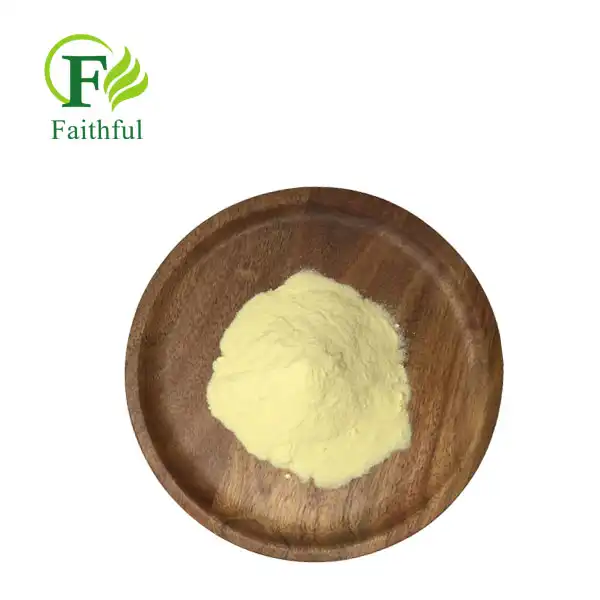
Physically, high-purity Lambda-cyhalothric acid is a pale yellow to white crystalline solid, with the specific melting point depending on the purity of its cis-trans isomers. It is insoluble or slightly soluble in water, which fully meets the production requirements for a pesticide chemical intermediate. However, this molecule is unstable to light, heat, and alkali, requiring protection from light and moisture during storage.
Classified, it belongs to the same group as permethrin and deltamethrin, belonging to the common intermediates of type I or type II pyrethroids. The unique substitution pattern of the trifluoromethyl and chlorine atoms on its side chain greatly enhances the affinity of pyrethroid compounds for insect sodium channels through an inductive effect. Because of this intricate structure-activity relationship, Lambda-cyhalothric acid has become a crucial link between the synthesis of chemical intermediates and the production of highly active insecticides.
Esterification Derivatization and Target-Mediated Insecticidal Activity Activation Mechanism
At the esterification activation mechanism level, the carboxyl group of lambda-cyhalothric acid is the only active functional group. Under the catalysis of condensing agents or strong acids, it undergoes esterification with pyrethroid compounds to generate pyrethroids. After esterification, the molecular polarity decreases and lipid solubility increases, significantly enhancing its ability to penetrate the insect body wall and cell membrane. Simultaneously, the cyanobenzyl group linked by the ester bond further enhances the sodium channel binding affinity, increasing insecticidal activity by 10–100 times.
At the target inhibition mechanism level, after pyrethroids enter the insect's body, the acidic portion derived from lambda-cyhalothric acid precisely binds to voltage-gated sodium channels on the insect's nerve cell membrane, preventing the channels from closing after the action potential. This leads to a continuous influx of sodium ions and prolonged depolarization of the nerve membrane, causing excessive excitation, convulsions, paralysis, and ultimately rapid death in the insect. This mechanism exhibits high target selectivity: the amino acid sequences of insect sodium channels differ significantly from those of mammalian sodium channels, and the affinity of lambda-cyhalothric acid derivatives for insect sodium channels is more than 1000 times that for mammalian channels, thus resulting in low toxicity to mammals.
At the structure-activity relationship level, the cyclopropane backbone and fluorochloro side chains of lambda-cyhalothric acid are key to its activity: the rigid structure of the cyclopropane ring gives the molecule a "V" conformation, perfectly fitting into the hydrophobic binding pocket of the sodium channel; the strong electron-withdrawing effect of the trifluoromethyl group enhances the hydrogen bonding between the molecule and the polar amino acid residues within the channel; and the chlorine atom forms van der Waals forces with the hydrophobic residues within the channel. These three elements work synergistically to "lock" the channel in an open state, blocking nerve signal transduction. If the structure is altered, the binding force decreases, and the activity is significantly reduced.
At the level of metabolic resistance avoidance mechanisms, the strong electronegativity of trifluoromethyl can resist the metabolic degradation by oxidative enzymes in insects, prolonging the drug's residence time in insects and improving insecticidal efficiency. Simultaneously, the cyclopropane ring is not easily broken by hydrolytic enzymes, reducing metabolic inactivation and delaying the development of pesticide resistance in pests. Field data show that lambda-cyhalothric acid maintains high activity against pests resistant to organophosphates and carbamates, and the rate of resistance development is 3–5 times slower than with other pesticides.
Safety and Environmental Characteristics: Lambda-cyhalothric acid itself has no insecticidal activity and requires esterification for activation; it has low toxicity to mammals, no skin irritation, and slight eye irritation; it is easily degraded in the environment, with a half-life of <30 days in soil and <7 days in water, exhibiting no bioaccumulation, meeting the requirements for green pesticide intermediates.
Application of intermediates in analysis
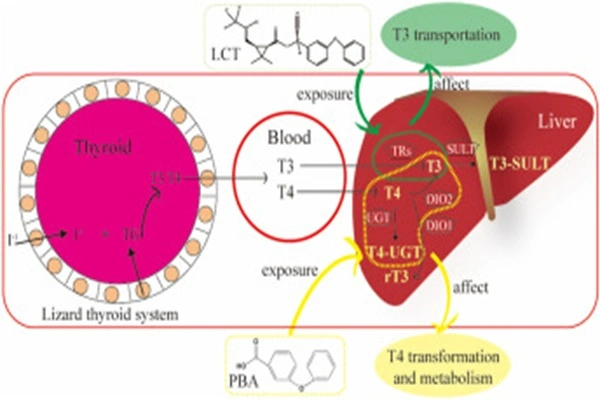
As a precursor and potential degradation product in the synthesis of lambda-cyhalothric esters, lambda-cyhalothric acid plays a "tracer" role in pesticide quality control and metabolic research. It is one of the impurities that must be strictly monitored in the quality analysis of technical materials and formulations. Researchers have successfully developed detection methods in normal-phase liquid chromatography (HPLC) systems capable of completely separating various diastereomers from impurities, providing a powerful tool for process development departments to monitor low-temperature isomerization conversion rates.
Besides quality control, it is also an important reference for studying the fate of lambda-cyhalothric esters in plants and the environment. As a major degradation product of hydrolysis or photolysis, determining the residual amount of lambda-cyhalothric acid in soil or crops is one of the key data for assessing the environmental safety of the active ingredient. The toxicity of this acid is far lower than that of its parent esters, and its degradation is an important pathway for the detoxification of pyrethroids in the environment.
It is worth noting that the ecotoxicological differences of chiral pesticides are currently a research hotspot. Because lambda-cyhalothric acids possess specific chiral centers, their enantiomers exhibit significant differences in degradation rates and toxicity in the environment. The development of chiral chromatographic separation techniques aims to precisely monitor the environmental behavior of different isomers. These analytical efforts ensure the quality of the final product and meet compliance requirements.
Green synthesis, derivative optimization, and formulation innovation
Green synthesis process optimization has become a core trend in the industry. Traditional synthesis processes are characterized by long steps, low yields, high organic solvent consumption, and high emissions of waste. The novel "one-step cyclization + continuous hydrolysis" process shortens the reaction steps to three, increasing the overall yield to 85%–90%, reducing organic solvent consumption by 60%, waste emissions by 50%, and energy consumption by 40%. Chlorine-free catalytic systems replace traditional chlorine-containing catalysts, reducing chloride ion content in wastewater by 90%, thus reducing environmental pollution. Bio-enzyme catalytic hydrolysis technology replaces strong acid hydrolysis, providing milder reaction conditions, producing non-toxic organic acids as byproducts, and facilitating waste treatment, meeting green pesticide production standards. This helps reduce raw material costs from 50,000 RMB/ton to below 25,000 RMB/ton, enhancing product market competitiveness.
The development of highly active derivatives focuses on enhancing activity, stability, and safety. New-generation chrysanthemic acid intermediates are being developed through cyclopropane ring modification, fluorochloroside chain modification, and carboxyl-terminal derivatization. For example, cyclopropane fluoropolymer-modified derivatives enhance sodium channel binding affinity, resulting in a 2-fold increase in the activity of synthesized pyrethroids and a 3-fold reduction in fish toxicity; side-chain perfluorinated derivatives improve photostability by 50%, extending the field efficacy to 28 days and reducing the frequency of application; carboxyl-terminal amino acid-derived derivatives improve water solubility to 1 g/L, allowing for direct preparation of water-based formulations and reducing the use of organic solvents. Currently, several derivatives are in the preclinical activity screening stage, with some entering pilot-scale production.
Environmentally friendly formulation innovation has become a key direction for improving efficacy and reducing environmental risks, with water-based formulations, nanodelivery systems, and biodegradable formulations becoming research hotspots. Water-in-oil emulsions: Using water as a medium, these replace the organic solvents in traditional emulsifiable concentrates, reducing VOC emissions by 80%, lowering toxicity, and improving safety. They have become the mainstream formulation for pyrethroid insecticides. Microcapsule suspensions: Encapsulated in urea-formaldehyde resin or gelatin microcapsules, these achieve slow release, prolonged efficacy, and reduced photolysis, reducing dosage by 40%–60%. They are safe for natural enemy insects and contribute to ecological balance. Nanoemulsions: With a particle size < 50 nm, they offer 10 times better water solubility, enhanced leaf adhesion and penetration, and 25%–35% higher efficacy. They are suitable for low-volume spraying and drone-based plant protection.
Research and development of resistance control technologies continues. Targeting the resistance mechanisms of pests to pyrethroids, such as sodium channel target mutations and enhanced metabolic enzyme activity, research is underway to develop target-modified derivatives, compound formulations of metabolic enzyme inhibitors, and rotational application strategies. Target-modified derivatives: Modifying the structure of Lambda-cyhalothric acid overcomes the decreased binding affinity caused by KDR mutations, while maintaining activity against resistant pests; Metabolic enzyme inhibitor combinations: Combined with P450 inhibitors, inhibiting the activity of pest metabolic enzymes, enhancing efficacy, and delaying resistance development; Rotational application strategies: Rotating with pesticides of different mechanisms of action reduces the pressure of single-agent selection, slowing the rate of resistance development by 50%–70%.Application scenarios are being gradually expanded, exploring applications in forestry pest control, storage pest management, livestock hygiene pest control, urban greening maintenance, and cross-border quarantine pest control.
Conclusion
From the perspective of fine organic synthesis and pesticide raw material development, lambda-cyhalothric acid is not an insecticidal ingredient that can be used independently, but rather an indispensable "industrial cornerstone." Its molecular structure incorporates the high strain of the cyclopropane ring, the high lipophilicity of the trifluoromethyl group, and the precise electronic effects of the chlorine atom, carrying the enormous global demand for pest control and crop preservation. Lambda-cyhalothric acid is not merely a chemical intermediate extracted through saponification; it embodies the highly stereoselective control technology in organic synthesis, is a key impurity in pesticide quality analysis, and is the "unsung hero" linking upstream chemical raw materials with grassroots field pest control networks. It may not have the name "Kung Fu," but it underpins the vast commercial empire of pyrethroids.
Xi'an Faithful BioTech Co., Ltd. provides comprehensive services for purchasing professionals seeking a trustworthy, high-quality Lambda-cyhalothric acid supplier. We possess the capability to manufacture pharmaceutical-grade products, a rigorous quality control system, and flexible supply solutions to meet the needs of diverse customers in the global market. For bulk purchases, complete product specifications, or to inquire about customized preparation services to your specific requirements, please contact allen@faithfulbio.com.
References
- Syngenta. (2025). Technical data sheet: Lambda-cyhalothric acid (99.5% purity).
- ChemicalBook. (2026). Lambda-cyhalothric acid CAS 72748-35-7: Properties, synthesis and applications.
- GuideChem. (2026). Z-(1R,S)-cis-2,2-dimethyl-3-(2-chloro-3,3,3-trifluoro-1-propenyl)cyclopropanecarboxylic acid.
- BenchChem. (2025). Synthesis and chemical properties of lambda-cyhalothrin.
- Environmental Health Criteria. (1999). Lambda-cyhalothrin. World Health Organization.
- MedChemExpress. (2024). Lambda-cyhalothrin: A high-efficiency broad-spectrum pyrethroid insecticide.
- HG/T 5832-2021. (2021). Technical specification for lambda-cyhalothric acid. China Standard Press.