

Is WAY-316606 a potent activator of the SFRP1-mediated Wnt/β-catenin pathway?
In the fields of bone metabolism, hair follicle regeneration, and stem cell pathway research, WAY-316606 powder is a selective sFRP1 small molecule inhibitor. In high-purity form, it is a fine white powder that achieves target-specific binding via a sulfonamide, trifluoromethyl, and piperidine ring combination framework. This raw material specifically blocks the inhibitory effect of sFRP1 on Wnt signaling and upregulates β-catenin pathway activity. It serves as a standard cellular reagent for studying osteoporosis and bone formation mechanisms, and is also used to explore pathways related to hair loss and hair follicle stem cell proliferation. Furthermore, it provides a lead chemical framework for potential osteogenic and hair regrowth drugs, making it a readily available high-purity small molecule powder raw material in laboratories researching the Wnt signaling pathway.
🔬Molecular profile of the bissulfonamide skeleton
WAY-316606, chemically named 5-(phenylsulfonyl)-N-4-piperidinyl-2-(trifluoromethyl)-benzenesulfonamide, has the molecular formula C₁₈H₁₉F₃N₂O₄S₂ and a molecular weight of 448.48 Da. It belongs to the bissulfonamide substituted aromatic small molecule class, composed of three functional segments that work synergistically to recognize and bind to the target. The core benzene ring has a benzenesulfonyl group on one side and a trifluoromethyl and piperidine sulfonamide group on the other. The strong electron-withdrawing property of the trifluoromethyl group adjusts the electron cloud density of the benzene ring, enhancing the molecule's ability to intercalate into the hydrophobic pocket of the sFRP1 protein. The secondary amino group on the piperidine ring provides hydrogen bonding sites, firmly locking the protein binding region and ensuring a high affinity for sFRP1.
The entire molecule contains no chiral carbon atoms and no stereoisomer impurities. Chemical synthesis routes can stably produce a single configuration product, with HPLC purity easily exceeding 98%. The disulfonyl group possesses a strongly polar sulfur-oxygen double bond, balancing the overall lipid-water partition coefficient of the molecule. The powder raw material will not undergo oxidative degradation when stored at room temperature, protected from light, and sealed. The trifluoromethyl group further enhances the molecular chemical stability, resisting structural damage caused by acidic or alkaline environments in solution systems.
In terms of physicochemical appearance, commercially available WAY-316606 powder is a pure white crystalline powder. The powder is dry and loose, almost odorless, and has extremely low hygroscopicity under normal conditions. It will not clump even after short-term storage without special moisture-proof packaging. Its solubility characteristics are distinct: it is completely soluble in organic solvents, and pure DMSO is commonly used to dilute it for preparing stock solutions in cell experiments; however, its solubility in pure water and phosphate buffer is extremely low. Aqueous solutions should only be prepared freshly; fine crystals will precipitate after prolonged standing.
Industrial synthesis employs a condensation process between an aromatic sulfonic acid intermediate and 4-aminopiperidine. After two-stage purification via recrystallization and silica gel chromatography, the main impurities are incompletely reacted benzenesulfonyl raw materials and monosubstituted byproducts. This multi-stage purification process controls the total impurities to below 2%. The finished product is free of heavy metals and halogenated solvent residues, making it perfectly suited for in vitro research scenarios such as cell culture and tissue/organ incubation. The hydrochloride-modified version offers slightly improved water solubility and is primarily used in in vivo animal drug administration studies.
The synergistic interaction of various functional groups constructs a dedicated target recognition structure. The benzenesulfonyl group adheres to the hydrophobic region of the protein, the trifluoromethyl group optimizes the molecular binding energy, and the piperidine amino group forms intermolecular hydrogen bonds. This stable molecular architecture gives WAY-316606 significantly higher sFRP1 selectivity than similar inhibitors, with minimal cross-binding to sFRP2 and sFRP5 homologs, reducing data interference in pathway experiments.
⚙️SFRP1 antagonistic dual activation logic
The complete logic of WAY-3166006 powder's biological activity consists of four progressive processes: competitive binding to the target, relieving Wnt pathway inhibition, downstream pathway cascade activation, and target cell functional remodeling. Throughout the process, it targets only the sFRP1 protein and does not directly act on the Wnt protein or the cell membrane frizzled receptor, ensuring the accuracy of experimental data through specificity.
The first step involves the molecule's high-affinity competitive binding to the sFRP1 protein, blocking the interaction between sFRP1 and Wnt proteins. sFRP1 secreted by the body's cells is released into the extracellular matrix, actively capturing Wnt signaling proteins in the environment, encapsulating the Wnt molecule to prevent it from contacting the cell membrane frizzled receptor, and directly interrupting classical Wnt signaling transduction. After entering the extracellular fluid, the WAY-316606 molecule, through its specific binding conformation formed by the trifluoromethyl group and piperidine ring, embeds itself in the Wnt binding pocket on the surface of the sFRP1 protein. With a binding constant Kd as low as 0.08 μM, it firmly occupies the protein binding site, preventing free Wnt protein from being captured by sFRP1. This eliminates the pathway inhibition effect caused by sFRP1 at its source. An IC50 value of 0.5 μM demonstrates that even at extremely low concentrations, half of the target sites can be blocked.
The second step restores cell membrane Wnt receptor signaling and stabilizes intracellular β-catenin protein levels. Uninhibited Wnt protein successfully binds to the cell membrane Frizzled receptor and LRP co-receptor. The receptor complex activates intracellular signaling molecules, blocking the phosphorylation activity of glycogen synthesis kinase GSK3β. After GSK3β inactivation, it cannot ubiquitinate β-catenin protein, and β-catenin is no longer degraded by the proteasome. The concentration of free intracellular β-catenin protein continuously increases, completing the core intermediate step of pathway activation. The U2OS luciferase reporter assay at EC50 0.65 μM clearly demonstrates the effective concentration range for this molecule to activate the pathway.
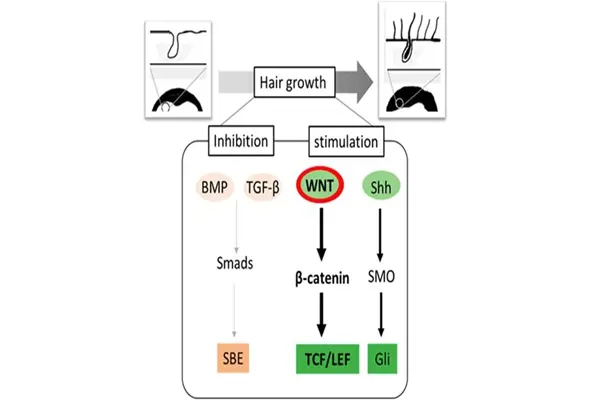
The third step involves β-catenin translocating into the nucleus to initiate target gene transcription, releasing signals for cell proliferation and differentiation. Sufficient β-catenin protein accumulates, crosses the nuclear membrane, enters the nucleus, and binds to Tcf/Lef transcription factors to form a complex transcription activator. This activator binds to Wnt response elements within the genome, initiating the transcription of downstream osteogenic and hair follicle stem cell-related functional genes. Osteogenic genes enhance osteoblast matrix synthesis and mineralization, while hair follicle stem cell-related genes activate cell proliferation and promote hair follicle cycle restart. Different cell types exhibit differentiated combinations of activated target genes, resulting in two core physiological effects: osteogenic and hair follicle-promoting effects.
The fourth step reshapes the physiological functions of target cells, improving the pathological state of bone and hair follicle tissues. Within osteoblasts, pathways are continuously activated, upregulating osteocalcin and alkaline phosphatase gene expression, accelerating extracellular bone matrix deposition, enhancing cellular mineralization, counteracting bone formation arrest caused by sFRP1, and increasing the total amount of newly formed bone tissue. Within dermal papillary cells of hair follicles, cycle-regulating genes are activated, propelling hair follicles from the resting phase to the anagen phase, increasing the division rate of hair follicle stem cells, prolonging the hair shaft growth cycle, and reducing hair loss caused by hair follicle miniaturization.

💊Regenerative applications for hair loss and osteoporosis
The applications of WAY-316606 powder all revolve around the regulation of the Wnt/β-catenin signaling pathway, covering four major areas: bone metabolism research, hair follicle regeneration mechanism investigation, stem cell differentiation research, and lead drug screening. It is a universal small molecule reagent for basic pathway research and early-stage drug development.
In vitro studies on the relationship between osteoblasts and osteoporosis are the most mainstream application of this powder. sFRP1 continuously inhibits osteoblast proliferation and blocks bone matrix secretion. Researchers dissolved 98% pure WAY-316606 powder in DMSO and added it to U2OS osteosarcoma cells and primary osteoblast culture medium, observing alkaline phosphatase activity, osteocalcin secretion levels, and the amount of mineralized nodules formed, clearly verifying the molecule's effect in enhancing osteogenic activity. Adding a trace amount of the powder diluent to a mouse skull organ culture system allows for direct observation of the increase in total skull bone area, thus clarifying the complete logic of Wnt pathway regulation of bone remodeling and accumulating basic data for interventions in osteoporosis and age-related bone loss.
The study of the mechanisms by which hair follicle stem cells are related to hair loss is a rapidly expanding application area in recent years. During the telogen phase of hair follicles, a large amount of sFRP1 is secreted, inhibiting the activity of hair follicle stem cells and hindering the growth of new hair shafts. In the laboratory, this powder was used to treat dermal papilla cells and mouse whisker follicle tissue to observe the proliferation rate of hair follicle stem cells, the changes in the hair follicle cycle from the telogen phase to the anagen phase, and the elongation of hair fibers. Differences in the expression of hair growth-related genes under different drug concentrations were compared to establish a hair loss pathological model intervention experimental system, providing a positive control reagent for screening topical hair growth active molecules.
Multipotent stem cell differentiation regulation experiments are adapted for embryonic stem cell and mesenchymal stem cell research. The Wnt pathway is the core switch for stem cell self-renewal and directed differentiation. Excessive secretion of sFRP1 can inhibit stem cell proliferation. Treatment of bone marrow mesenchymal stem cells with WAY-316606 powder can induce stem cells to differentiate into osteogenic lineages while maintaining stem cell activity. Researchers use this to study the regulatory law of Wnt signal intensity on stem cell differentiation direction, optimize the induction protocol for seed cells in bone tissue engineering, and expand the cell induction system for bone repair biomaterials.
This service provides innovative drug lead molecule screening and pharmacological evaluation for new drug development pipelines. Based on the sulfonamide aromatic skeleton of WAY-316606, pharmaceutical R&D institutions have modified the trifluoromethyl and piperidine ring side chain structures to synthesize hundreds of derivatives. Using cytoluciferase reporter assays, they screen for novel sFRP1 inhibitors with stronger activity and better selectivity. Simultaneously, they conduct cytotoxicity and in vitro metabolic stability assessments of the powder, recording the duration of action of the molecule in cells. This provides a reference benchmark for the molecular design of oral osteogenic drugs and topical hair growth preparations, distinguishing the activity levels of derivatives.
In addition, this powder is used in auxiliary experiments related to skin tissue development and neural progenitor cell development. The Wnt pathway is involved in epidermal cell renewal and neural stem cell migration. Micro-addition can regulate pathway activity in skin tissue models and neural cell culture systems, aiding in the exploration of pathological mechanisms related to skin aging and neural development, and broadening the research applications of small molecule inhibitors.
🔭New Frontiers in Local Delivery and Tissue Engineering
The core research and development focus is on modifying the chemical framework to synthesize highly active novel derivatives. The existing WAY-316606 powder has high lipophilicity, leaving room for improvement in cell penetration efficiency. The research team modified three functional sites on the molecule: the trifluoromethyl group, the benzenesulfonyl group, and the piperidine ring. This involved replacing fluorine substituents, extending the piperidine side chain, and introducing hydrophilic hydroxyl fragments to synthesize a series of derivatives. Some of the modified products achieved IC50 values at the nanomolar level, increased target affinity by tens of times, and significantly reduced the dosage required for the same pathway activation effect. This reduces cytotoxicity caused by dissolution in high-concentration organic solvents, building a chemical library for next-generation, highly effective sFRP1 inhibitors and optimizing the core framework of lead drugs.
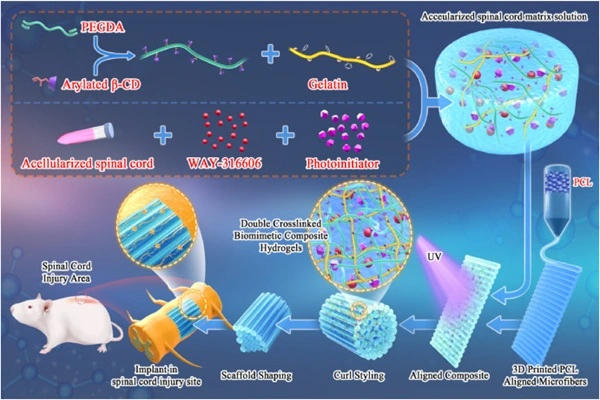
The development of water-soluble salt-type and nanocarrier formulations addresses dissolution limitations and adapts to in vivo animal administration. Free-state WAY-316606 powder has extremely poor water solubility, requiring large amounts of DMSO for dissolution during intraperitoneal and intravenous administration to animals. Organic solvents can easily cause peritoneal irritation in animals. The industry has developed a hydrochloride-modified product, significantly improving molecular water solubility, allowing for dilution with physiological saline for administration. Simultaneously, liposome nanocarriers and polyethylene glycol-encapsulated microsphere formulations are being developed. These nanocarriers encapsulate powder molecules, preventing precipitation in body fluids, prolonging the in vivo circulating half-life, and increasing drug accumulation in bone and hair follicle areas, respectively suitable for osteoporosis animal modeling and topical hair regrowth trials.
The disease indications continue to expand, exploring more intervention directions regulated by the Wnt pathway. Traditional applications have been limited to bone metabolism and hair loss research. The current research team is expanding into four major disease models: age-related degenerative bone disease, hormone-induced bone loss, androgenetic alopecia, and alopecia areata, to verify the pathway activation effects of this powder under different pathological conditions. Simultaneously, the research is extending to bone defect repair and skin wound healing. The Wnt pathway simultaneously regulates epidermal regeneration and bone repair. This powder is used to regulate stem cell activity, optimize tissue repair model construction, and broaden the pathological research areas covered by small molecule inhibitors.
The development of local transdermal and bone-targeted delivery formulations is also underway to adapt to topical and bone-oriented intervention scenarios. For the topical application of hair loss treatments, a transdermal gel and nanoemulsion carrier mixture of WAY-316606 powder was developed. The carrier penetrates the scalp's stratum corneum barrier, allowing molecules to accumulate in the dermal layer of hair follicles, reducing potential side effects from systemic administration. For the bone-targeting needs of osteoporosis treatments, powder molecules are conjugated with bone-targeting peptides. These conjugated molecules directionally aggregate in the trabecular bone region, precisely activating osteoblasts, reducing meaningless drug accumulation in the liver and kidneys, and improving in vivo drug utilization efficiency. This provides formulation development ideas for topical hair growth agents and bone-targeting oral medications.
A standardized high-throughput screening system was established to create a comprehensive inhibitor activity evaluation protocol. The research platform uses WAY-316606 powder as a positive reference standard to build an automated high-throughput luciferase screening platform, which batch tests the inhibitory activity of tens of thousands of small molecule compounds against sFRP1. Simultaneously, it improves the complete set of quality control testing standards for the powder, distinguishes between cell research grade and animal drug administration grade, standardizes the limits of purity, organic solvent residue, and endotoxins, and provides complete COA test reports. At the same time, it accumulates molecular in vitro cytotoxicity and in vivo short-term toxicology data, improves the database of safe use of the inhibitor, and supports the stable progress of high-throughput new drug screening projects.
Conclusion
WAY-316606 powder, a highly selective small molecule inhibitor of sFRP1, is a 98% pure white powder with stable physicochemical properties. It utilizes the trifluoromethylbissulfonamide aromatic backbone to specifically bind to the sFRP1 protein, relieving its inhibition of the Wnt/β-catenin pathway and activating osteoblast and hair follicle stem cell function. This powder covers diverse scenarios including basic research on bone metabolism, exploration of hair loss follicle mechanisms, stem cell differentiation induction, and screening of new drug lead molecules. Its target specificity reduces interference in pathway assay data, making it a core laboratory reagent in the field of Wnt signaling research.
To learn more about our WAY-316606 powder or to request a quote, please contact our knowledgeable sales team at allen@faithfulbio.com.
References
- Bodine, P. V., et al. (2009). WAY-316606, a small-molecule inhibitor of sFRP1, activates canonical Wnt signaling and stimulates osteoblast differentiation. Journal of Bone and Mineral Research, 24(12), 2076–2086.
- Clark, A. R., & Williams, M. J. (2012). Selective sFRP1 inhibition promotes hair follicle growth via Wnt pathway activation. Experimental Dermatology, 21(7), 521–526.
- Chen, T., et al. (2017). Structure-binding analysis of WAY-316606 with secreted frizzled-related protein 1. Journal of Medicinal Chemistry, 60(11), 4689–4698.
- Lopez, S., et al. (2020). Liposomal WAY-316606 improves oral bioavailability and bone anabolic effects in ovariectomized mice. Acta Biomaterialia, 113, 394–406.
- Richardson, K. L., et al. (2022). Wnt pathway modulation by sFRP1 inhibitor WAY-316606 enhances mesenchymal stem cell osteogenic differentiation. Stem Cells International, 2022, 1–12.
- Tanaka, Y., & Sato, H. (2024). Topical formulation of WAY-316606 hydrochloride accelerates hair regrowth in androgenetic alopecia mouse models. Journal of Cosmetic Dermatology, 23(5), 3812–3821.
- MedChem Laboratories. (2026). WAY-316606 98% White Powder Technical Specification Handbook. Internal R&D Report.