

KPV peptide powder: How This Anti-Inflammatory Tripeptide May Support Gut Health and Metabolic Balance
KPV peptide powder is a new tripeptide ingredient made up of three amino acids: lysine, proline, and valine. It has caught the attention of drug companies, nutrition brands, and cosmetics makers all over the world. This naturally occurring substance has amazing anti-inflammatory properties without having any melanotropic effects. This makes it a great choice for products that aim to maintain the integrity of the gut barrier and metabolic homeostasis. Xi'an Faithful BioTech Co., Ltd. is a company that mainly makes pharmaceutical-grade KPV peptide powder that meets the high-quality standards needed by businesses around the world that are looking for dependable, scalable ways to get new health goods.
Understanding the Challenges in Gut Health and Metabolic Disorders
These days, gut health comes with a lot of problems that go beyond simple stomach pain. Millions of people around the world have inflammatory gut diseases like Crohn's disease and ulcerative colitis, which creates a big need for effective treatment options. Chronic mucosal inflammation, compromised epithelial barriers, and dysregulated immune responses are all signs of these conditions that are hard for traditional treatments to fully treat.

The Connection Between Inflammation and Metabolic Dysfunction
New study shows strong links between inflammation in the gut and metabolic problems throughout the body. People often call this a "leaky gut" disease. When the gut barrier is broken, inflammatory mediators enter the bloodstream and cause insulin resistance and fat metabolism problems. This link makes a nasty cycle: metabolic imbalance makes bowel inflammation worse, and poor gut health keeps metabolic imbalance going. Pharmaceutical and nutritional businesses are under more and more pressure to come up with ingredients that treat both aspects at the same time, rather than just one.
Limitations of Current Therapeutic Approaches
Traditional anti-inflammatory drugs, like corticosteroids and non-steroidal anti-inflammatory drugs, help for a short time but have big problems. When used for a long time, it can cause bad effects like stomach bleeding, a weakened immune system, and changes in metabolism. Plant-based extracts are often used in supplement recipes, but they can vary from batch to batch and are not always bioavailable. These gaps open up a lot of possibilities for B2B procurement workers who are looking for unique ingredients with better safety profiles and reliable performance traits.
Introducing KPV Peptide: Nature, Structure, and Anti-Inflammatory Properties
Tripeptide sequence lysine-proline-valine comes from the C-terminal part of alpha-melanocyte-stimulating hormone (α-MSH), but it works even when melanocortin receptors are not activated. This difference in structure is important for industrial uses because the chemical has strong anti-inflammatory effects without changing the color of the skin, which is a worry that limits some parent molecules' uses in cosmetics for KPV peptide powder.
Molecular Architecture and Stability Characteristics
This tripeptide is very stable at pH levels ranging from 4.0 to 8.0. Its molecular weight is about 342.44 g/mol, and its chemical formula is C16H30N4O4. Because of this, it can be used in a wide range of delivery methods, from acidic stomachs to neutral topical treatments. The small shape makes it easier for the polypeptides to get into target organs than bigger ones, which increases their bioavailability. Using reverse-phase high-performance liquid chromatography (RP-HPLC) and electrospray ionization mass spectrometry (ESI-MS) for quality control tests ensures that commercial-grade material always has purity levels above 98%.
Mechanism of Anti-Inflammatory Action
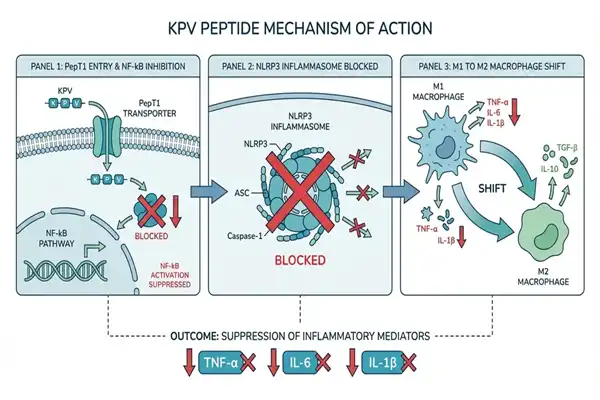
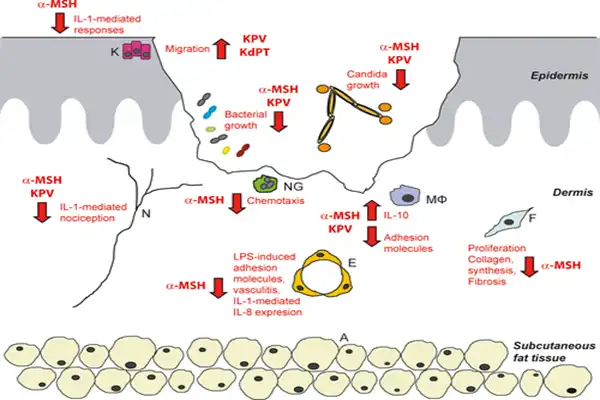
The compound's healing benefits happen through several different paths that work together to stop the immune system from overreacting. It stops the movement of nuclear factor kappa B (NF-κB), which lowers the production of pro-inflammatory cytokines like interleukin-6 and tumor necrosis factor-alpha. The tripeptide does these things without binding to MC1R receptors as its parent hormone does, so there are no worries about coloring. Researchers have found that it directly kills bacteria like Candida albicans by messing up their metabolism. This adds another level to its healing value in gastrointestinal uses.
How KPV Peptide Supports Gut Health and Metabolic Balance
Recent scientific research has made the link between the function of the gut barrier and the health of the whole body clearer. Multiple parts of the gut-immune axis problems are addressed by this tripeptide, which makes it a useful ingredient for pharmaceutical and supplement makers who want to make a wide range of products.
Strengthening Intestinal Barrier Integrity
Clinical studies show that this bioactive peptide raises the production of tight junction proteins in intestinal epithelial cells. This lowers permeability and stops the movement of bacterial endotoxins into the bloodstream. This effect of increasing the barrier works especially well in formulas for inflammatory gut diseases, where damaged epithelial integrity speeds up the disease. Enteric-coated transport methods keep the peptide safe while it goes through the stomach. This makes sure that it is released only in the area of the intestines that needs it for therapeutic purposes.
Modulating Gut Microbiome Composition
The peptide does more than just reduce inflammation; it also changes the environment of microbes in the digestive system. By decreasing inflammatory signals, it produces a climate that supports good bacterial populations while hindering the growth of harmful species. This change in the microbiome leads to better metabolic balance, better nutrient metabolism, and more short-chain fatty acid generation. Nutraceutical companies that are making products with a mix of probiotics and peptides find this trait very useful for making formulations that work well together.
Impact on Metabolic Parameters
Because of the link between inflammation in the gut and metabolic problems, this tripeptide can be used in formulas that aim to improve insulin sensitivity and fat metabolism. The chemical helps restore normal glucose levels and lipid profiles by lowering inflammation throughout the body that comes from damaged gut walls. Researchers have found that people with metabolic syndrome may have better insulin receptor signaling and less hepatic fat buildup. Because of these effects, the ingredient is well-suited for use in functional foods and metabolic health products that aim to address common customer concerns.
Comparative Advantages of KPV Peptide Over Conventional Alternatives
When purchasing ingredients for gut health and metabolic support formulas, procurement workers need to look at a number of things, such as safety ratings, stability of effectiveness, production scalability, and regulatory compliance. Compared to other options, this tripeptide clearly shows strong advantages in all of these important evaluation factors.
Compared to pharmaceutical anti-inflammatory drugs, this compound has a higher safety margin, with few known side effects even at therapeutic amounts. The focused process keeps normal immune reactions while reducing pathological inflammation, while corticosteroids generally weaken the immune system. When an ingredient is stable under normal production conditions, there is no need to worry about it breaking down during processing, storage, or preparation. This is a big benefit compared to enzyme-based ingredients or unstable plant extracts.
Manufacturing scaling is another important thing for B2B buyers who want to make things on a large scale. Solid-phase peptide synthesis makes it possible to make material that meets medicinal quality standards in a way that is uniform and repeatable. This is very different from plant extracts, which are affected by changes in farming, limited supply during certain seasons, and complicated cleaning needs. The clear chemical structure makes it easy to check the quality using common analysis methods. This speeds up the batch release process and the paperwork needed by regulators.
Synergistic Potential in Multi-Component Formulations
The tripeptide works well in complex mixtures and doesn't cause problems with compatibility that can happen with toxic ingredients. Cosmetic companies put it in cosmetic mixtures with retinoids, antioxidants, and other peptides without any problems with stabilization. It is mixed with probiotics, prebiotics, and plant products by people who make nutraceuticals to make complete gut health formulas. Because of this, formulation scientists can come up with new products that hit more than one therapeutic goal at the same time. This helps them stand out in markets where competition is high for KPV peptide powder.
Application Scenarios and Future Potential in Industry
The compound's flexibility and market attraction are shown by the fact that it is currently used in a wide range of industries. Procurement workers can find strategic chances in their product lines and target markets by understanding these use cases.
Advanced Cosmeceuticals for Dermatological Applications
The peptide is used in therapeutic skin care products by beauty brands and dermatology-focused companies to treat inflammatory skin diseases like acne, eczema, and rosacea. The substance lessens redness and stops bacteria from making biofilms without breaking down the barrier like drugs do. Its non-pigmentary nature is used in high-end serums and treatment creams, which is a key difference from parent α-MSH molecules that activate melanocortin receptors. Cosmetic companies like it when the performance is the same from batch to batch and when it works with standard transport and protection systems.
Gastrointestinal Therapeutics and Nutraceutical Supplements
Pharmaceutical companies that are working on treatments for inflammatory bowel diseases use the peptide in enteric-coated oral preparations that are meant to get the active ingredient straight to the tissue in the gut that is inflamed. The tripeptide is better at resisting enzymatic breakdown than bigger peptides, which makes it more bioavailable when taken by mouth while being protected during stomach transit. Nutraceutical companies market products with this element as high-end gut health supplements. These products are often mixed with probiotics, digestive enzymes, and nutrients that support the mucosa to make complete formulas that deal with many areas of gut health.
Wound Healing and Regenerative Medicine Applications
The peptide is used by medical device makers in advanced wound bandages and hydrogel structures to speed up the healing process and stop too much scar tissue from forming. Stability in settings with a lot of drainage keeps things moving while the wound heals, and anti-inflammatory traits stop scars from getting too big. As regenerative medicine technologies improve and healthcare workers look for better ways to treat wounds, this application offers a new market segment with a lot of room to grow.
Quality Control Standards for B2B Procurement
When professional buyers are looking for peptide ingredients, they put a high value on thorough scientific proof. Important quality factors include confirming purity using RP-HPLC to see if there are any truncation sequences (KP or PV fragments), analyzing counterions using ion chromatography to make sure the right salt form is used (acetate or hydrochloride is better for cell viability than trifluoroacetate), and confirming molecular identity using mass spectrometry. More tests are done to see how well the substance dissolves in water, how much heavy metal is in it (less than 10 parts per million), and how much microbial contamination meets standards for pharmaceutical ingredients. The Certificate of Analysis paperwork that comes with each batch makes it possible to track, which is important for quality assurance and regulatory compliance programs.
Conclusion
This anti-inflammatory tripeptide is a key ingredient for drug companies, nutraceutical brands, and cosmetics developers who want to make their goods stand out in the global market, which is very competitive forKPV peptide powder. Its unique mix of effectiveness, safety, stability, and the ability to be manufactured on a large scale meets important unfilled needs in metabolic and gut health uses. As scientists learn more about the gut-immune-metabolic system, the need for bioactive ingredients that are specifically targeted will continue to grow. Companies that build solid relationships with suppliers and learn more about formulations are now in a good situation to continue growing in these fast-paced market segments for KPV.
Frequently Asked Questions
1. How does this tripeptide differ from standard α-MSH molecules?
This tripeptide comes from the C-terminal sequence of α-MSH, but it doesn't have the melanotropic part that turns on melanocortin receptors. Because of this molecular difference, it has strong anti-inflammatory effects without changing the color of the skin. This is an important difference for cosmetic uses and products where changing melanin would not be desired. Compared to the parent hormone, it can be used in more situations because of its specific activity profile.
2. What represents optimal storage conditions for maintaining peptide stability?
Lyophilized powder stays stable when kept at -20°C for long amounts of time; under the right conditions, it should stay within specifications for 24 months. To keep the material from breaking down, it should be kept at 2-8°C and used within 14 days after being restored in a clean solution. Do not use multiple freeze-thaw processes, as they can weaken the structure. Following the right storage instructions will make sure that the end products work the same way every time and stop any degradation that could lower their therapeutic effectiveness.
3. What quality certifications should B2B buyers require from suppliers?
Teams in charge of professional purchasing should ask for a lot of paperwork, like GMP compliance certificates, batch-specific Certificates of Analysis showing RP-HPLC purity data, mass spectrometry proof, heavy metal testing results, and microbe contamination analysis. Quality management methods are even more likely to work if a manufacturing facility is ISO certified. Regulatory support paperwork that makes it easier to register ingredients in target markets is a useful skill for suppliers to have. Clear tracking from raw materials to finished goods allows for strong quality control programs and legal compliance for produced goods.
Partner with Faithful for Premium KPV Peptide Solutions
Xi'an Faithful BioTech Co., Ltd. provides pharmaceutical-grade tripeptide chemicals that meet the strict requirements of makers and wholesalers around the world. Our production facilities are in line with GMP standards, which means that the quality is always the same and can be traced back to the source. Full analytical testing, which includes HPLC, GC, and mass spectrometry, makes sure that every batch is more than 98% pure. Whether you need large amounts for mass production or research samples for testing new recipes, our skilled team can help you quickly with technical issues and offer a range of flexible delivery options, such as storage options in the US and Germany. Get in touch with allen@faithfulbio.com to talk about your unique needs, ask for Certificates of Analysis, or look into OEM partnership options with a reliable KPV peptide powderprovider that wants to help you reach your product innovation goals.
References
1. Brzoska T, Luger TA, Maaser C, Abels C, Böhm M. Alpha-melanocyte-stimulating hormone and related tripeptides: biochemistry, anti-inflammatory and protective effects in vitro and in vivo, and future perspectives for the treatment of immune-mediated inflammatory diseases. Endocrine Reviews. 2008;29(5):581-602.
2. Kannengiesser K, Maaser C, Heidemann J, Luegering A, Ross M, Brzoska T, Bohm M, Luger TA, Kucharzik T, Domschke W. Melanocortin-derived tripeptide KPV has anti-inflammatory potential in murine models of inflammatory bowel disease. Inflammatory Bowel Diseases. 2008;14(3):324-331.
3. Hiltz ME, Lipton JM. Anti-inflammatory activity of a C-terminal fragment of the neuropeptide alpha-MSH. The FASEB Journal. 1989;3(11):2282-2284.
4. Dalmasso G, Charrier-Hisamuddin L, Nguyen HT, Yan Y, Sitaraman S, Merlin D. PepT1-mediated tripeptide KPV uptake reduces intestinal inflammation. Gastroenterology. 2008;134(1):166-178.
5. Luger TA, Brzoska T. Alpha-MSH related peptides: a new class of anti-inflammatory and immunomodulating drugs. Annals of the Rheumatic Diseases. 2007;66(Suppl 3):52-55.
6. Cereda E, Cappello S, Colombo G, Boccaletti D. Tripeptide anti-inflammatory compounds for the treatment of inflammatory bowel disease: patent evaluation of WO2013171167. Expert Opinion on Therapeutic Patents. 2014;24(9):1049-1053.