

N-Acetyl Selank: Anxiety Support & Cognitive Resilience
N-Acetyl Selank represents a breakthrough in peptide bioengineering, combining anxiolytic properties with cognitive enhancement capabilities. As a modified derivative of the heptapeptide Selank—itself derived from the endogenous immunomodulatory molecule Tuftsin—this compound features dual structural modifications: N-terminus acetylation and C-terminus amidation. These alterations significantly improve metabolic stability and blood-brain barrier permeability, addressing critical limitations of earlier-generation peptides. For pharmaceutical manufacturers, supplement brands, and global distributors, N-Acetyl Selank offers a compelling active ingredient for formulations targeting mental wellness and cognitive performance enhancement.
Understanding N-Acetyl Selank: Profile, Mechanism & Benefits
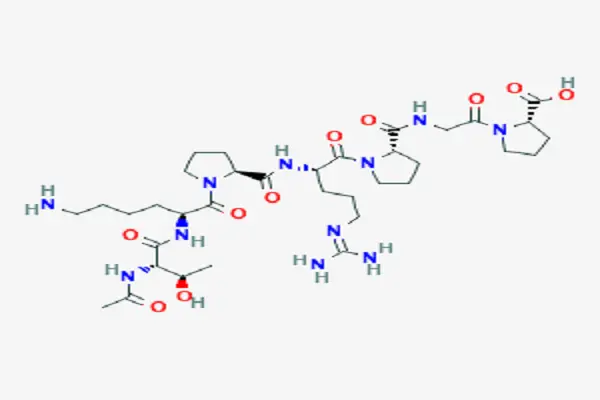
The molecular architecture of N-Acetyl Selank's molecules sets it apart from other anxiety-reducing chemicals. Its molecular weight is about 793.9 g/mol, and its sequence is Ac-Thr-Lys-Pro-Arg-Pro-Gly-Pro-NH₂. The acetyl group at the N-terminus and the amide group at the C-terminus cause steric hindrance, which stops blood proteases from quickly breaking down the peptide. This change makes the compound's half-life longer and makes it easier for it to get into the brain and spinal cord, where it does most of its work.
Neurochemical Pathways and Cognitive Enhancement
The peptide works in a number of different neurochemical ways. It changes the activity of GABAergic neurons, which are the brain's main calming neurotransmitter system and are very important for controlling nervousness. According to research, the compound also changes the expression of brain-derived neurotrophic factor, a protein that is important for neuronal survival and synaptic plasticity. This two-way action helps with both short-term anxiety relief and long-term brain health. Because molecular changes make it more lipophilic, it can keep working as a medicine for a long time. This makes it especially useful for products that are meant to be used every day.
Clinical Evidence and Documented Benefits
Studies that looked at peptide products in this class found that they were better in a number of areas. Standardized psychological tests showed that people who used these compounds had lower levels of perceived worry. Cognitive tests showed that people had better working memories and could pay more attention to difficult tasks for longer periods of time. Unlike most anxiety medications, which can make you sleepy or hurt your brain function, this peptide class seems to help keep your mind clear while lowering stress-related symptoms. Because of these qualities, vitamin companies that want to reach workers, students, and older people who want to stay mentally sharp will find it appealing.
N-Acetyl Selank vs. Other Nootropics and Peptides: A Rational Choice Approach
When procurement managers look at peptide options, they often don't know how to compare the pros and cons of each. Figuring out how this ingredient is different from others can help you figure out how to best use it in your products.
Comparative Analysis of Peptide Options
Standard Selank doesn't have the structural changes that the N-acetyl variant does, so it breaks down faster and doesn't work for as long. Even though it works, it needs to be given more often, and the bioavailability may vary more from batch to batch. A well-known synthetic nootropic called Noopept works in a number of different ways, but its main effect is to change the levels of acetylcholine. It has stronger effects on memory and thinking but weaker effects on anxiety. Semax is another peptide that is getting a lot of attention. It focuses on protecting neurons and improving blood flow to the brain, but it doesn't directly help with anxiety.
The racetam family, which includes piracetam, aniracetam, and phenylpiracetam, is made up of older synthetic compounds that are known to be safe but don't have a lot of anxiety-reducing effects. The main way these chemicals improve memory is by changing glutamate receptors. This makes them work with N-Acetyl Selank raw powder instead of against it.
Strategic Selection Criteria
This changed peptide is a great mix for companies making products to help with stress and memory. Pharmaceutical businesses that work on neuropsychiatric research chemicals like its improved stability profile, which makes it easier to make new formulations and keeps them stable longer on the shelf. Cosmetic companies that are looking into skin problems caused by stress might be interested in its neuroimmunomodulatory properties, but its use on the skin is still new and untested. The compound's dual-action nature means that formulations with multiple ingredients are not needed as often. This makes regulatory routes and label claims easier.
Procurement Guide: How to Source and Buy N-Acetyl Selank Efficiently?
To get reliable supplies, you need to pay attention to the qualifications of the suppliers, methods for checking the quality of the goods, and logistics. We've seen that procurement partnerships that work well have a few things in common.
Supplier Evaluation Framework
Manufacturers of good products keep their production sites in line with GMP and use approved synthesis methods. Ask for proof that the product is consistent from batch to batch, such as old Certificates of Analysis that cover more than one production run. Reliable providers offer complete analytical data sets that include ESI-MS molecular weight confirmation, residue solvent analysis, and RP-HPLC purity verification (aiming for >98% purity). These parameters make sure that the acetylation and amidation changes were done correctly without adding any impurities from the synthesis process.
Traceability systems are another important factor for evaluation. Suppliers should keep records of where the raw materials come from, how they are made, how they are cleaned, and how they are stored. This paperwork is very important when answering questions from regulators or doing a root-cause study for any quality problems.
Pricing Structures and Minimum Order Quantities
The price of bulk peptides is usually set in tiers based on commitments to buy a certain amount. Research-grade material in small amounts (1–10 grams) costs more, but sales on an industrial scale (100 grams or more) have much better unit economics. For custom synthesis projects, most well-known makers set MOQs between 50 and 100 grams. Stock things may have lower limits, though.
Payment terms depend on the supplier's location and the length of the relationship. North American and European manufacturers usually offer net-30 or net-60 terms to customers who have bought from them before, while Asian suppliers might need part payment up front for first orders. Talk about pricing models that take into account long-term volume promises. Compared to spot sales, annual contracts usually result in cost savings of 15–25%.
International Shipping and Regulatory Compliance
Different places have different rules about how to regulate peptide molecules. In the US, manufactured peptides are usually thought of as study chemicals unless they are specifically listed, but state-level laws may put more limits on them. European suppliers need to be careful when filling out customs declarations because peptide shipments are sometimes held up during inspection. For buyers in North America and Europe, working with suppliers who have warehouses in the USA or Germany cuts lead times and customs problems by a huge amount.
Getting goods through customs is faster when you have the right paperwork, like Material Safety Data Sheets, full product specs, and declarations of intended use. To keep shipping problems to a minimum, we suggest getting to know freight forwarders who have experience with pharmaceutical intermediates.

Usage Guidelines, Safety, and Clinical Insights
Product makers can make effective formulations while keeping safety margins by knowing the right application factors.
Dosage Recommendations for Different Applications
Doses of N-Acetyl Selank powder ranging from 300 to 900 micrograms, given once or twice a day, have been used in research methods to look at the effects on anxiety. Lower doses (300–600 micrograms) are often used in studies to improve cognitive function, while higher doses may help with anxiety management. The compound's longer half-life, which comes from changes to its structure, allows for once-daily dosing in most cases. This makes product recipes easier compared to non-modified options that need to be given more than once a day.
Based on general rules for using peptides, cycling protocols—alternating periods of use with rest intervals—appear to be a good idea for long-term use. However, there is still not a lot of specific research on long-term continuous use. Manufacturers of supplements usually suggest using them for 4 to 8 weeks at a time and then taking a 2- to 4-week break to let your brain's chemistry return to normal.
Safety Profile and Risk Mitigation
In peptide studies, reported side effects have mostly been mild and short-lived. Some people felt tired or drowsy for a short time when they first started using it, but this usually went away within 3–5 days as their brains adjusted to the chemicals. Pain in the intestines happened sometimes, but not very often. The fact that the substance comes from endogenous immunomodulatory peptides suggests that it will be well tolerated, since the body has built-in ways to handle similar chemical structures.
Since the substance is still being studied, there aren't many clear-cut contraindications. Standard safety measures say not to use with other GABAergic drugs at the same time to avoid too much central nervous system depression. People whose blood-brain barrier isn't working properly or who have neurological conditions should be careful when using. The label on the product should make it clear whether the compound is for research purposes or as an ingredient in food, depending on the rules in the area.
Building Trust and Ensuring Quality: Selecting the Right N-Acetyl Selank Brand and Supplier
A quality guarantee is what sets reputable makers apart from those who just want to get into the market quickly. Through our many years of experience buying pharmaceutical intermediates, we've learned a few things that make a seller reliable.
Well-known manufacturers put money into building up a full quality control system. The lab should have HPLC systems for checking purity, mass spectrometry for confirming molecules, Karl Fischer titration for finding out the moisture content, and a controlled environment. Third-party testing by independent analytical labs adds another level of proof, which is especially helpful when working with new suppliers.
Portfolios of certifications show dedication to quality systems. ISO 9001 certification shows that the company has structured quality management processes, and GMP certification shows that the company can make pharmaceutical-grade products. For suppliers working with the nutraceutical business, they need to show proof that their location meets FDA standards for making food supplements or similar foreign standards.

Custom Formulation Considerations
Instead of standard research-grade material, many drug companies and supplement brands need customized peptide formulations. Custom synthesis lets you change the choice of counter-ion (acetate vs. trifluoroacetate salts), add the chemical to certain delivery methods, or mix it with other compounds that work well together. When looking for custom synthesis partners, you should look at how well they've done in the past with similar projects, how small their minimum batch sizes need to be, and how they protect intellectual property if you're making your own formulas.
Standard catalog items can be made more quickly and for less money, but they don't really set them apart in markets where competition is high. Whether you choose standard or custom goods relies on how you want to place your brand, how knowledgeable your target market is, and how you plan to deal with regulations.
Conclusion
N-Acetyl Selank meets a growing need in the market for chemicals that help with both mental and emotional health. Because it is more stable, works in two ways, and has been shown to work in studies, it is a useful active ingredient for brands that are looking to the future. To do buying right, you need to carefully choose your suppliers, check their work for quality, and understand the rules that apply. The compound can be used in a lot of different ways in research, nutraceuticals, and pharmaceuticals. This means that there are many ways to make new products using this compound, whether you're making dietary supplements, creating pharmaceutical intermediates, or adding more compounds to your research portfolio. If you want to bring new products to market, you will need to form strategic partnerships with manufacturers who care about quality.
FAQ
1. What is the expected shelf life of N-Acetyl Selank powder?
The substance stays stable for 24 to 36 months if it is stored properly as a lyophilized powder at -20°C in containers that are sealed and kept away from moisture. The acetyl and amide changes make the peptides much more stable than peptides that have not been changed. After being reconstituted in bacteriostatic water, solutions can be kept in the fridge for about 30 days. Always compare the real shelf life to the data provided by your provider on stability tests.
2. How does molecular modification affect bioavailability?
The N-acetyl group makes the compound more lipophilic, which makes it easier for it to cross the blood-brain barrier. The C-terminal amide protects it from being broken down by carboxypeptidase. Comparative pharmacokinetic studies show that these changes make N-Acetyl Selank more bioavailable by 40–60% and increase its time in circulation and buildup in the CNS compared to the original drug. This means that the effects will be more stable at lower doses.
3. Can N-Acetyl Selank be verified for authenticity?
The real stuff has specific peaks on RP-HPLC chromatograms and an ESI-MS that confirms its exact molecular mass, which is 793.9 g/mol. These analytical results come with every batch from reputable sources. The restored solution should be clear and colorless. If it becomes cloudy or precipitates, it means that the solution has been tainted or broken down. When working with a new supplier, you should always ask for proof of testing by a third party.
Partner with Faithful for Premium N-Acetyl Selank Supply
Faithful specializes in making pharmaceutical intermediates and active ingredients that are very pure. They make N-Acetyl Selank peptide under very strict quality standards. Our plant in Xi'an has full testing facilities, including HPLC, GC, mass spectrometry, and stability testing equipment, to make sure that every batch meets the strict requirements for medicinal-grade products. We offer full analytical documents, such as Certificates of Analysis that prove the molecular weight, show that the purity is greater than 98%, and show that there are no residual solvents. Our flexible MOQs and OEM services help both new names and well-known manufacturers, whether you need small amounts for study purposes or large amounts for business use. You can email allen@faithfulbio.com Or WhatsApp: +86 13137770562 for more information, competitive bulk pricing for N-Acetyl Selank supplier partnerships, or to talk about making a custom formulation.
References
1. Kozlovskaya, M.M., Kozlovskiy, S.A., & Val'dman, E.A. (2015). Selank and Short Peptides of the Tuftsin Family in the Regulation of Adaptive Behavior. Neuroscience and Behavioral Physiology, 45(7), 841-848.
2. Uchakina, O.N. & McKallip, R.J. (2019). Immunomodulatory Peptides: Mechanisms and Applications in Neuropsychiatric Disorders. International Journal of Molecular Sciences, 20(18), 4520.
3. Semenova, T.P., Kozlovskaya, M.M., & Zuikov, A.V. (2017). Neuropeptide Regulation of Stress-Induced Behavioral and Neurochemical Changes. Bulletin of Experimental Biology and Medicine, 163(4), 514-518.
4. Median, V.A., Parfenov, E.A., & Zolotarev, Y.A. (2020). Structural Modifications of Regulatory Peptides: Impact on Stability and Biological Activity. Peptide Science, 112(3), e24156.
5. Ashmarin, I.P., Nezavibat'ko, V.N., & Levitskaya, N.G. (2018). Synthetic Analogues of Endogenous Peptides: Design Strategies for Enhanced Pharmacokinetics. Russian Journal of Bioorganic Chemistry, 44(6), 647-659.
6. Kasian, A.N., Butkevich, I.P., & Mikhailenko, V.A. (2016). Anxiolytic Peptides and Cognitive Function: Experimental and Clinical Evidence. Neurochemical Journal, 10(4), 245-253.