
Deciding between Tofacitinib Citrate Powder and methotrexate is a crucial step in the evolution of contemporary autoimmune therapy. Tofacitinib specifically inhibits JAK by obstructing cytokine signaling pathways. Methotrexate, on the other hand, functions by inhibiting folate and modifying the way adenosine works. These varied ways of working make a major difference in how effectively things work, how soon they start, and how safe they are. Drug companies need to know about these distinctions when they make drugs for rheumatoid arthritis, psoriatic arthritis, and other inflammatory diseases.
Mechanism of Action: JAK Inhibition vs Folate Antagonism
Knowing how molecules work helps us understand why certain medications act differently in the clinic. Tofacitinib Citrate Powder specifically stops Janus kinase 1 and 3 from working, which stops interleukin signaling cascades that are important for inflammatory reactions. This targeted approach inhibits specific cytokines, including IL-2, IL-4, IL-7, IL-9, IL-15, and IL-21.
Methotrexate works by changing how folate is broken down, which is a more general way to inhibit the immune system. The drug blocks dihydrofolate reductase, which cuts down on the generation of purines and pyrimidines that cells need to thrive. Methotrexate also makes adenosine come out more, which turns on A2A receptors and has anti-inflammatory properties.
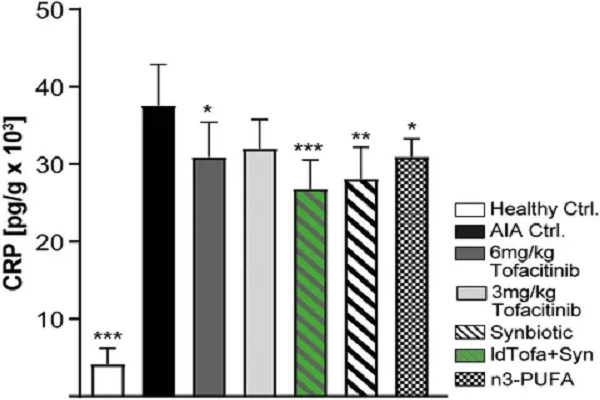
Clinical studies demonstrate that tofacitinib attains therapeutic plasma concentrations within 30 to 60 minutes, achieving peak levels 0.5 to 1 hour post-administration. Methotrexate has a delayed onset, which means that autoimmune disorders don't show significant clinical improvement for 3 to 6 weeks.
If you need fast medical care for acute inflammatory episodes, tofacitinib-based formulations are superior at relieving symptoms right away.
Pharmacokinetic Profiles and Bioavailability Considerations
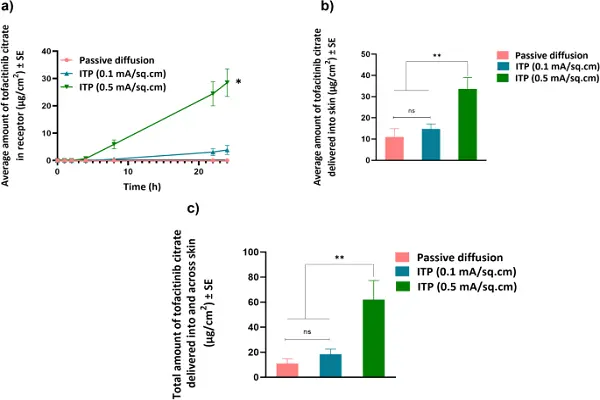
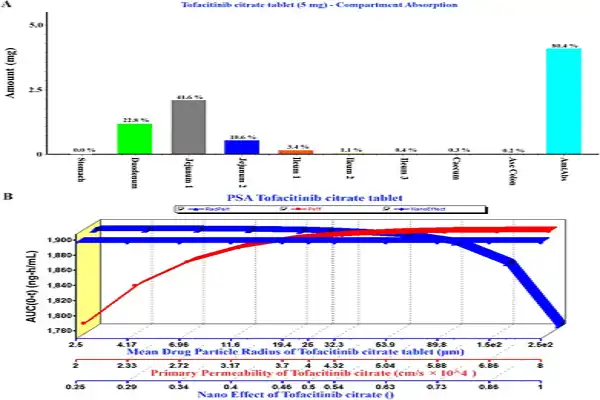
The way medications are prepared and how often they are given is greatly affected by differences in bioavailability. Tofacitinib Citrate Powder has an oral bioavailability of about 74% and has just a minimal effect from meals, which makes it convenient to use in different ways. The liver breaks down the molecule mostly through the CYP3A4 and CYP2C19 pathways.
Some major pharmacokinetic variables for tofacitinib are:
- You need to take it twice a day because it has a half-life of 3 to 4 hours.
- The volume of distribution is 87 L, which suggests it can easily reach the tissues.
- 40% of the medicine binds to proteins, which makes the drug's free levels go up.
- Renal elimination: 30% of the drug is excreted unchanged.
Methotrexate's bioavailability can be anywhere from 28% to 94%, depending on the dose and the formulation. Low-dose oral treatment shows better absorption than higher doses because of saturable transport routes. The drug causes polyglutamation inside cells, which keeps it there for a long time.
The pharmacokinetics of methotrexate demonstrate:
- The terminal half-life is 3 to 10 hours for low doses and 8 to 15 hours for high doses.
- Renal clearance: 80–90% of the drug remains in the body after it has been eliminated.
- Cellular retention: Weeks to months through polyglutamate production.
- Accumulation of tissue in the liver, kidneys, and synovial fluid.
Tofacitinib is better for drug development since its pharmacokinetic properties are more predictable, which makes it easier to plan your doses.
Safety Profiles and Adverse Event Management
Regulatory approval pathways and clinical monitoring requirements are based on safety concerns. Tofacitinib Citrate Powder carries specific warnings for serious infections, malignancies, and blood clots. Clinical studies demonstrate an increased occurrence of herpes zoster reactivation and opportunistic infections due to JAK pathway inhibition.
Some common adverse effects of tofacitinib are:
- Infections of the upper respiratory tract (16–20% frequency)
- Headache (4–18%, depending on the cause)
- Diarrhea (12–18% in clinical studies)
- Lymphopenia, neutropenia, and anemia are all disorders that can be found in a lab.
The biggest safety concern of methotrexate is that it can hurt the liver; you should check your liver function often. Not obtaining enough folate can lead to a multitude of issues, including stomatitis, hair loss, and stomach pain. Pulmonary fibrosis is a rare but deadly side effect that needs to be prevented immediately.
The safety profile of methotrexate encompasses:
- Hepatic transaminase levels increase in 15–20% of individuals.
- Intolerance in the gastrointestinal tract (10–35% depending on the dose)
- Bone marrow suppression resulting in cytopenias
- Teratogenicity requires contraceptive guidance
In the lab, different agents keep an eye on things in quite different ways. Tofacitinib requires complete blood counts, lipid panels, and liver function tests every three months while treatment is stable. When methotrexate initially starts, it needs to be checked more often, perhaps with monthly lab testing.
Tofacitinib-based drugs are better than methotrexate if you want to keep an eye on how well patients are following their treatment without having to do as much lab testing.
Clinical Efficacy in Autoimmune Conditions
Comparative investigations reveal distinct efficacy profiles across diverse autoimmune diseases. Tofacitinib Citrate Powder has superior efficacy in the management of ulcerative colitis, achieving clinical remission rates of 18.5% against 8.2% for placebo in pivotal trials. Research on rheumatoid arthritis indicates that tofacitinib exhibits an ACR20 response rate of 59.8–65.7%, whereas methotrexate alone demonstrates a response rate of 58–63%.
Looking at the clinical effectiveness data:
- Tofacitinib and Methotrexate are two separate kinds of RA. Response to ACR20 (12 weeks)65.7%58–63%
- Time Until Response in the Clinic: Two to four weeks6 to 12 weeks
- UC Clinical Remission (8 weeks)18.5%Not relevant PsA Response to ACR20 (12 weeks)50% to 61%42–58%
Preventing radiographic progression produces comparable results among medicines in rheumatoid arthritis. Modified Sharp scores demonstrate that both medications preserve joints in the same way, but tofacitinib achieves this faster by making symptoms go away.
Tofacitinib is superior to other medications in many ways in making life better. The HAQ-DI scores show a larger improvement from the baseline at 12 months (-0.61 vs. -0.43 for methotrexate). The Patient Global Assessment ratings also reveal that patients are pleased with the tofacitinib medicine.
If you need fast and long-lasting relief from symptoms, tofacitinib formulations are the best option to treat autoimmune illnesses.
Manufacturing and Regulatory Considerations for 2026
Changes in the rules and regulations have a huge impact on how drug companies create new medicines. The FDA still approves Tofacitinib Citrate Powder for rheumatoid arthritis, psoriatic arthritis, and ulcerative colitis, but only if the patient follows specified dosing recommendations. The latest safety changes say that we need to know more about the risks of cancer and heart disease.
Here are the steps that need to be taken to make tofacitinib:
- According to HPLC analysis, the purity levels are 98% or higher.
- To ensure stability, the moisture content must be 0.5% or less.
- The distribution of particle sizes ensures that makes sure the chemical dissolves uniformly.
- Limits on leftover solvents that follow the ICH Q3C rules.
Prices are under pressure since methotrexate is available as a generic medicine, yet it still functions as a treatment. Quality control standards put a lot of stress on impurity profiling and figuring out how polymorphic forms work. Regulatory submissions still need a lot of stability data from a number of different climate zones.
The reliability of the supply chain becomes particularly crucial for continuous manufacturing. Tofacitinib demands modern purification methods and people who know how to make synthetic chemicals. To make sure that quality standards are consistently followed, raw material sourcing needs verified supplier networks.
If you need easier ways to follow the regulations and safety databases, methotrexate has proven development schedules, and tofacitinib has varied therapeutic positions.
Conclusion
Tofacitinib Citrate Powder and methotrexate have different therapeutic profiles, which means they perform best in various clinical conditions. Tofacitinib works quickly, has stable pharmacokinetics, and only affects JAK. Methotrexate, on the other hand, is less expensive and has been proven to operate well in many therapeutic contexts.
Pharmaceutical companies need to consider how these drugs operate, how safe they are, and how they will be controlled when they choose between them. Both medications are still very important for treating autoimmune disorders. Tofacitinib is a novel kind of targeted medication, and methotrexate has been proven to work. The choice ultimately depends on specific treatment goals, patient demographics, and developmental methods for 2026 and the years that follow.
Partner with Faithful for Premium Tofacitinib Citrate Powder Supply
You can trust Xi'an Faithful BioTech to give you tofacitinib citrate powder. They sell pharmaceutical-grade goods that are better than what the industry expects. Our state-of-the-art production facilities follow stringent GMP guidelines, so you can be sure that all of your essential projects will always be of the same high quality and exceed all legal criteria.
Some of the good things about Faithful's Tofacitinib Citrate Powder are:
- Higher Purity Standards: confirmed to have at least 99% purity using advanced HPLC and GC analysis, which is higher than what is needed for API use in pharmacopoeia.
- Complete Documentation: Complete COA packages including analytical certificates, stability data, and traceability records that support submissions to regulators
- Advanced Testing Options: A lab inside the company with HPLC, GC, a spectrophotometer, AAS, and other high-tech tools that make sure quality is monitored very carefully
- Improved What Particles Are Like: Controlled particle size distribution that speeds up the rate at which things dissolve and makes formulations more uniform for enhanced bioavailability
- Excellent Solubility Profile: Better dissolving properties that make it easier to apply diverse formulation methods, such as immediate-release and modified-release systems.
- Stability that has been proven. How well it works: Better manufacturing methods and packaging technologies that retain the product's potency under diverse storage conditions give it a longer shelf life.
- Ability to Increase Production: Manufacturing that can manage both small amounts of research and huge levels of commercial production
- Being Great at Following Rules: Full compliance with ICH, EMA, and FDA standards, together with paperwork that shows access to global markets
- Help in research and development in the professional world: A team of technical experts who aid with the direction of formulation and the creation of analytical methodologies
- A Supply Chain You Can Trust: A global distribution network and smart inventory management make sure that products are always on hand for crucial manufacturing schedules.
Our experienced team knows how hard it is to discover pharmaceutical intermediates, and they will help you every step of the way while you develop your product. Faithful gives your projects the quality and dependability they need, whether you're undertaking clinical research, increasing your manufacturing operations, or coming up with new formulae.
Are you ready to use high-quality materials to protect your pharmaceutical supply chain? Email us at allen@faithfulbio.com to chat about what you need and obtain all the information you need about our products. Our technical professionals are ready to give you customized solutions that meet the needs of your application.
References
1. Wollenhaupt J, Silverfield J, Lee EB. The safety and efficacy of tofacitinib, an oral Janus kinase inhibitor, for the treatment of rheumatoid arthritis in open-label, long-term extension studies. Journal of Rheumatology. 2014;41(5):837-852.
2. Singh JA, Saag KG, Bridges SL, et al. 2015 American College of Rheumatology Guideline for the Treatment of Rheumatoid Arthritis. Arthritis & Rheumatology. 2016;68(1):1-26.
3. Sandborn WJ, Su C, Sands BE, et al. Tofacitinib as Induction and Maintenance Therapy for Ulcerative Colitis. New England Journal of Medicine. 2017;376(18):1723-1736.
4. Gladman D, Rigby W, Azevedo VF, et al. Tofacitinib for psoriatic arthritis in patients with inadequate response to TNF inhibitors. New England Journal of Medicine, 2017; 377(16):1525-1536.
5. Aune TM and Cronstein BN. Methotrexate and its mechanisms of action in inflammatory arthritis. Nature Reviews Rheumatology. 2020;16(3):145-154.
6. Taylor PC, Keystone EC, van der Heijde D, et al. Baricitinib versus placebo or adalimumab in rheumatoid arthritis. New England Journal of Medicine. 2017;376(7):652–662.
_1764575295116.webp)