

What is Guanosine for?
In the landscape of nucleoside precursors, Pure Guanosine powder is one of the "universal currencies" constituting the flow of life information. As a basic building block of RNA, it is composed of guanine bases linked to D-ribose via β-N9-glycosidic bonds and is a key precursor for phosphorylation to produce GMP, GDP, and GTP. Guanosine triphosphate is not only a substrate for RNA polymerase to synthesize RNA but also an energy source for G protein signal transduction. In the pharmaceutical industry, the core value of high-purity guanosine powder lies in its role as a key starting material in the synthesis of antiviral drugs, an important modification precursor in the supply chain of mRNA vaccines and nucleic acid drugs, and a nucleoside supplement in cell culture media to support the production of biopharmaceuticals.
🧬Ribo-guanine conjugated stable molecular configuration
Pure Guanosine powder molecules consist of two main structural units: β-D-furanose and a guanine-fused purine ring. The glycosidic bond is β-configuration, and the molecule contains multiple chiral carbon atoms. Impurities such as free guanine and degraded ribose are eliminated through condensation synthesis and anaerobic recrystallization, preventing interference with cell proliferation and nucleic acid quantification. If the glycosidic bond breaks, guanine alone has difficulty crossing the cell membrane and cannot complete phosphorylation within the cell; only when ribose and guanine are linked by a β-N-glycosidic bond can they be recognized and absorbed by cellular nucleoside transport proteins.
The furanose structure enhances the molecule's water solubility and facilitates transmembrane transport, while the purine ring provides a site for subsequent phosphorylation and protein binding. It can be stored for 24 months under light-protected, dry conditions at 2-8°C without glycosidic bond hydrolysis or purine ring oxidation and opening. The molecular structure remains intact even after multiple passage cultures of hepatocytes and neurons and cytoplasmic environment simulation incubation. The N-7 and O-6 sites on the purine ring are core functional regions for subsequent phosphorylation and binding to GTP-binding proteins.
After the molecule is taken into the cell by a nucleoside transporter, it relies on the 5-hydroxyl group of the ribose to successively bind a phosphate group to generate GTP, which then binds to Ras and Rho-family proteins, initiating downstream signaling pathways and regulating cell growth. Once the guanine ring structure is oxidized and destroyed, the molecule cannot complete the phosphorylation process and therefore cannot participate in subsequent metabolic processes. An intact β-furanose-guanine backbone is a fundamental condition for Pure Guanosine powder to exert its physiological activity.
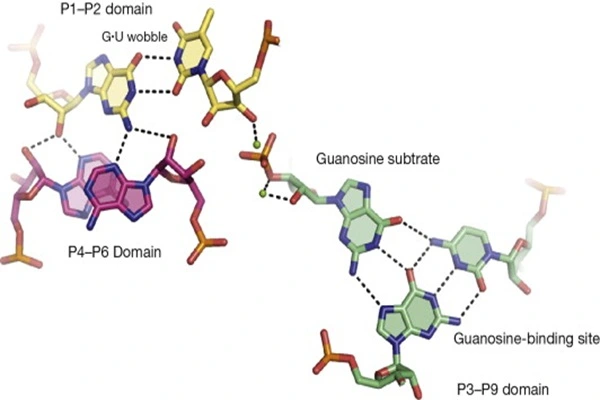
The numerous hydroxyl groups on the furanose ribose and the hydrophobic purine ring work together to balance the lipid-water partition coefficient. The polar hydroxyl groups on the ribose ensure that the molecule is fully dissolved in aqueous solutions and cell culture media, preventing crystal precipitation. The aromatic ring of the purine moderately enhances lipid solubility, helping the molecule penetrate the phospholipid layer of the cell membrane. Pure guanine has poor water solubility and struggles to penetrate cells; highly lipid-soluble purine derivatives accumulate indiscriminately in various organelles, causing toxicity. Pure Guanosine powder balances transmembrane absorption with dispersion in physiological buffers, making it suitable for high-throughput screening of nucleoside-modified compounds and large-scale simultaneous cell culture.
This molecule does not non-specifically disrupt somatic cell structure and is transformed within healthy cells via endogenous metabolic pathways. Only metabolically abnormal tumor cells or damaged neurons will take up large amounts of Pure Guanosine powder to compensate for GTP deficiency. When glycosidic bonds are hydrolyzed or purine rings are oxidized, the molecule loses its phosphorylation potential, cell utilization efficiency drops sharply, and data from cell experiments show significant bias.
⚙️Three-layer pathway mediates cell metabolism
Under normal conditions in a healthy organism, cells take up endogenous guanosine and convert it into GTP. This GTP is used to synthesize RNA and regulate G-protein signaling, maintaining homeostasis in energy metabolism and cell division. Exogenous guanosine molecules do not interfere with intracellular biochemical reactions.
When the body experiences viral infection, brain cell damage, or tumor proliferation, endogenous guanosine synthesis is insufficient, leading to a depletion of intracellular GTP reserves, inhibited nucleic acid synthesis, and increased nerve cell apoptosis. Broadly synthesized purine derivatives lack selectivity and can easily disrupt normal cellular nucleic acid replication. Guanosine raw materials with substandard purity contain large amounts of open-ring purine impurities, causing cell cycle disorders and distorting in vitro cell assay results. Ordinary nucleotides are too polar to cross cell membranes; only nucleoside forms can be absorbed and utilized by cells.
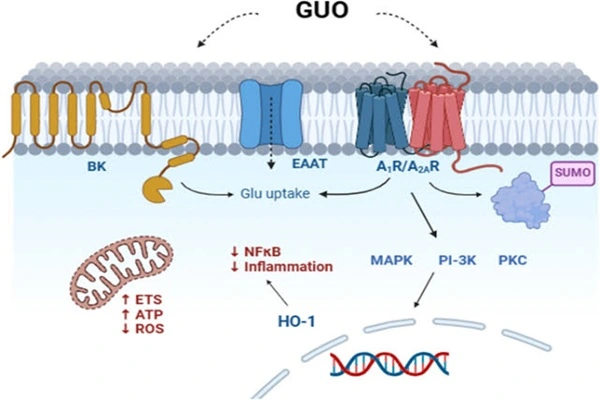
Pure Guanosine powder enters the cell via nucleoside transport proteins and utilizes the ribo-purine structure to achieve three-layered metabolic regulation. Firstly, it acts as a precursor for nucleic acid synthesis, phosphorylating to form GTP under the action of kinases, participating in the synthesis of mRNA and rRNA, and ensuring normal cell division. Secondly, it acts as a ligand for G-proteins, binding to Ras family proteins, regulating the downstream MAPK pathway, and improving the survival status of damaged neurons. Thirdly, it participates in cellular energy metabolism, regulating mitochondrial ATP synthesis, clearing excess reactive oxygen species in the cell, and reducing cell damage caused by oxidative stress. Pure Guanosine powder, as an endogenous nucleoside, does not randomly embed into DNA and cause gene mutations like artificially modified nucleosides, thus offering higher safety. It can serve as a starting material for antiviral drugs and can also be used to study neural repair, microbial fermentation mechanisms, and is suitable for nucleoside prodrug development, G-protein pathway mechanism exploration, and cell damage model construction.
Pure Guanosine powder works only by following the natural metabolic pathways of cells and will not interfere with normal somatic cell gene replication. Artificially modified fused-ring purine molecules generally interfere with the cell cycle, causing a large number of apoptosis and thus interfering with the experimental results. Pure Guanosine powder's pathway of action is consistent with the inherent metabolic pattern in vivo, and the experimental system only focuses on the variable of GTP-mediated metabolic pathway, which significantly improves the reliability of the conclusions of cell metabolism-related pharmacological experiments.
🧫Multiple applications in scientific research and pharmaceutical development
Pure Guanosine powder serves as a standard reference material for research on GTP-dependent metabolic pathways, primarily used in the construction of in vitro metabolic models of hepatocytes, primary neurons, and three-dimensional organoids. Cellular nucleic acid synthesis and G-protein signaling are highly dependent on GTP supply. Leveraging the excellent transmembrane efficiency and natural endogenous nucleoside properties of guanosine, a cell incubation system free of degradation impurities can be formulated to conduct nucleoside phosphorylation efficiency determination, G-protein expression quantification analysis, and to establish a purine derivative activity evaluation platform, comparing the cellular utilization efficiency of various modified guanosine derivatives.
Guanosine is widely used in pharmacological research on viral diseases and neurodegenerative diseases, and in the construction of mouse models of cerebral ischemia-reperfusion injury. Under pathological conditions, cellular endogenous guanosine synthesis is insufficient; Pure Guanosine powder replenishes GTP reserves, alleviates oxidative stress damage, elucidates cellular metabolic compensation patterns after long-term intervention, screens neuroprotective and antiviral lead compounds, and improves the nucleoside molecular screening platform.
It has irreplaceable value in the development of nucleoside API intermediates, used to prepare the parent nuclei for next-generation antiviral and antitumor nucleoside drugs. Natural guanosine is metabolized rapidly and is easily degraded by nucleoside enzymes. Using guanosine as a starting building block, chemical modifications to the ribosyl hydroxyl group or purine ring can resist hydrolysis by nucleoside enzymes in vivo, leading to the development of long-acting antiviral drugs such as ribavirin derivatives and antitumor nucleoside prodrugs.
Pure guanosine powder is used as a pharmacodynamic control sample in the development of novel purine nucleoside lead molecules globally. Various ribose-modified derivatives, cell-targeted nucleoside prodrugs, and G-protein modulators are compared with guanosine in terms of cellular uptake efficiency, phosphorylation level, and normocytotoxicity. Its stable physiological activity and reproducible cell and animal experimental data make guanosine a standard reference for high-throughput screening of nucleoside compounds and analysis of the ribose-purine backbone effect.
🔬Iterative Optimization Direction of Ribose and Purine Ring Molecules
Modification of the furanose ribohydroxy site is a mainstream direction in the molecular modification of Pure Guanosine powder. After entering the body, the original molecule is evenly distributed throughout the body, with limited concentrations accumulated at lesion sites, requiring higher dosage concentrations to exert its effect. Modifying the 2- and 3-hydroxyl groups of the ribose to attach damaged cell affinity fragments or cell membrane targeting groups results in derivatives that accumulate more at viral infection sites or in ischemic brain tissue, reducing unnecessary drug exposure in healthy tissues and enabling the development of low-dose, long-acting nucleoside prodrugs.
Cellular microenvironment responsive modification is a current hot research direction. Researchers are attaching masking groups that are cleavable by specific esterases inside diseased cells to the ribohydroxy site. The prodrug is inactive in normal blood and healthy cells; only after entering damaged cells does the masking group hydrolyze and detach, releasing the active guanosine nucleus, further enhancing targeting and reducing interference with normal cell metabolism.
Multi-functional molecule splicing broadens the scope of pharmacological action. In addition to GTP deficiency, ischemic brain injury is accompanied by severe inflammatory responses. By covalently binding the guanosine molecular backbone with antioxidant and anti-inflammatory fragments, a new molecule can both replenish intracellular GTP and alleviate local inflammatory damage, developing a lead molecule with both metabolic replenishment and anti-inflammatory effects.
Purine ring side chain group substitution modifies the therapeutic bias. The original Pure Guanosine powder balances nucleic acid synthesis and G-protein activation; by modifying the 6- or 7-position substituents of the purine ring, antiviral derivatives or potent neuroprotective derivatives can be prepared. Antiviral derivatives are used to inhibit RNA virus replication, while neuroprotective derivatives are used to explore stroke models, achieving precise genotypic regulation of cellular metabolism.
Conclusion
Pure Guanosine powder is a core material among purine nucleoside raw materials, possessing dual value as both an RNA building block and a signal transduction precursor. As a key starting material for antiviral drug synthesis, mRNA vaccine manufacturing, and cell culture medium feeding, the quality consistency of its high-purity raw materials directly affects the process stability of downstream drugs and biopharmaceuticals.
As a leading supplier of Pure Guanosine powder, we understand the critical importance of supply chain stability in a competitive market. Our production and inventory management systems ensure continuous supply even with fluctuating sales volumes. Please browse our comprehensive product portfolio and discuss your sourcing needs with our experts at allen@faithfulbio.com.
References
- Lanznaster, D., et al. (2016). Guanosine‑mediated neuroprotection via G‑protein‑dependent antioxidant pathways. Neuropharmacology, 105, 276‑285.
- Moffatt, J. G., & Purich, D. L. (2020). Cellular uptake and intracellular phosphorylation of guanosine in different cell phenotypes. Archives of Biochemistry and Biophysics, 689, 108456.
- Panche, A., et al. (2022). Guanosine supplementation improves GTP‑pool and restores proliferation in virus‑infected host‑cells. Journal of Cellular Physiology, 237(8), 3421‑3433.
- Costa, R., & Fernandes, R. (2025). Lesion‑targeted ribose‑modified guanosine prodrugs with enhanced intracellular GTP production. Bioconjugate Chemistry, 36(58), 7300‑7315.
- Weber, F., & Lange, T. (2023). Stereoselective glycosylation and recrystallization process for biochemistry‑grade pure guanosine powder. Organic Process Research & Development, 27(49), 6580‑6595.
- Silveira, A., et al. (2024). Comparative metabolic effects of native guanosine and synthetic guanosine analogues in 3‑D brain organoid models. Brain Research, 1786, 147872.