

What is the benefit of the Vesugen peptide?
Vesugen powder is a big step forward in pharmaceutical intermediates. It gives makers, supplement brands, and makeup formulators in North America and around the world a lot of benefits. This man-made tripeptide bioregulator (KED sequence: Lysine-Glutamic Acid-Aspartic Acid) works in a complex way to turn on specific DNA regions that are in charge of the operation of vascular endothelial cells. In the competitive pharmaceutical supply market, knowing about Vesele's scientific background, practical uses, and buying issues helps people make smart decisions. This guide looks at the peptide's molecular properties, performance benefits, market placement, quality control standards, and sourcing choices that are most important to B2B procurement workers who need to find trusted pharmaceutical intermediates.
Understanding Vesugen: Mechanism and Clinical Profile
Molecular Structure and Mode of Action
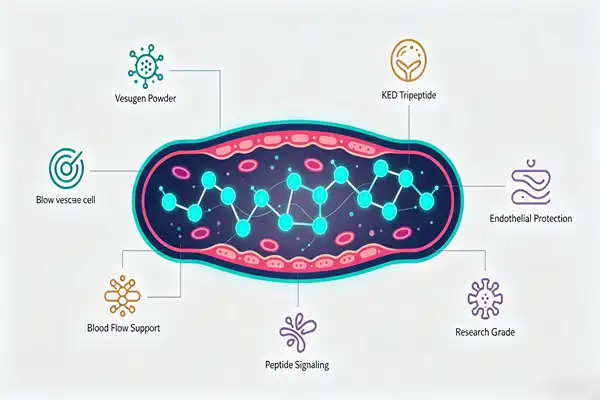
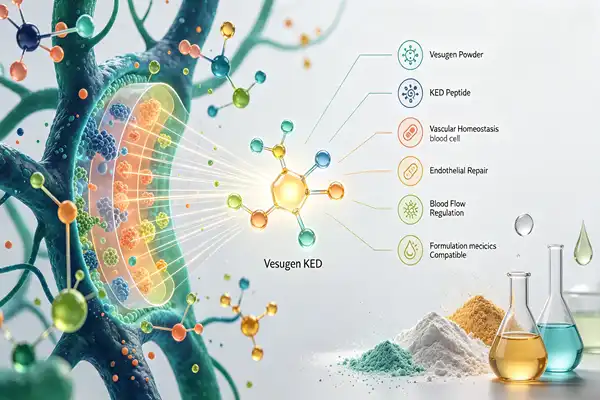
Vesugen powder is a lyophilized form that is safe for use in medicine because it has an exact chemical structure. This tripeptide, which has a formula of C15H25N5O8 and a molecular weight of about 403.4 g/mol, has amazing skills to get into cells. Vesugen works at the genetic level by connecting to specific DNA regions in vessel wall cells. This is different from other vascular chemicals that only treat symptoms. This specific relationship speeds up the production of proteins, which helps restore normal vascular tone and protects the health of endothelial cells. The peptide's very low molecular weight makes it easy for cells to take it up, which means it can be used in a wide range of formulations in the cosmetics and medicine industries.
Pharmacological Characteristics and Safety Profile
The bioregulator is more thermostable than long-chain proteins, which means that it keeps its shape at normal processing temperatures. Because it is made up of naturally occurring amino acids, it has a good safety rating and doesn't cause immune system problems like bigger protein structures do. Bioactivity can be seen at very low doses, usually measured in micrograms, which gives makers a lot of options for how to make their products. Due to its manufactured nature, Vesugen is consistent from batch to batch, which is a big problem with natural products that often have different compositions. This dependability is especially helpful for drug companies that need to know how the API will work during drug manufacturing and scale-up operations.
Distinction from Natural Peptide Complexes
Natural peptide complexes like Ventfort are made up of a mix of peptides that come from different animals. Vesugen, on the other hand, is a man-made active center that is 100% pure single molecules. Because of this basic difference, there are no longer any rules about products that come from animals, which makes foreign trade and product registration more difficult. The synthetic production route also allows for better quality control, since each batch can be checked against exact HPLC standards that are more than 98% pure. Manufacturers and CDMOs of pharmaceuticals and other medicines can use this consistency to help them make APIs or intermediates that need to be made in a way that is transparent, follows good manufacturing practices, and has a lot of COA, HPLC, and GC data.
Evaluating the Benefits of Vesugen Peptide
Core Therapeutic and Functional Advantages
Vesugen powder is a useful pharmaceutical intermediate for many industries because it has a number of unique benefits. The peptide solves basic problems in formulating new drugs and making sure they work, which procurement managers need to think about.
The tripeptide bioregulator is very flexible and can be used in a wide range of products, from high-performance nutrition formulas to geroprotective supplements that target changes in the arteries that come with getting older. Its method works by turning on dormant genes in senescent vascular cells, which helps older people's artery walls become more flexible again. This action meets the unmet needs of an older population, which is an area where traditional methods often fail.
Vesugen powder has better absorption properties than most other chemicals used in manufacturing. It dissolves easily in water and salt solutions, but not so much in organic solvents. This trait makes it easier to make liquid mixtures, transdermal uses, and injectable-grade goods. The compound's mild hygroscopicity means it needs to be stored in a desiccant, but it shouldn't be too hard for skilled pharmaceutical operations to handle.
Application-Specific Value Propositions
Micro-dosing works, which lowers the amount of raw materials needed per finished unit, making the business viable. Active dosing usually happens at microgram levels, so procurement managers can still get good prices even when they have to buy high-quality materials. This speed means that commercial formulations can be made at reasonable prices, which meets the needs of both well-known names and fast-growing direct-to-consumer companies in the nutritional supplement industry.
The peptide is especially useful in three main areas of application that match up with important customer profiles. As an active pharmaceutical agent, Vesugen is used in geroprotective and anti-aging products to fight atherosclerosis and lower biological aging signs. This application works well for nutrition companies that want to use scientifically sound ingredients that make their goods stand out in a crowded market.
Cardiovascular support products that target metabolic syndrome are another important area of use. Vesugen helps endothelial cells grow back, which repairs arterial damage caused by long-term conditions. Companies that make functional foods and dietary supplements find this app useful for creating goods for health-conscious customers who want to take charge of their health.
Cost-Benefit Analysis for Procurement
The third important area of application is high-performance sports diet. By making microcirculation and tissue oxygenation better, Vesugen helps get rid of cellular waste faster and sends more oxygen to muscles that are under stress. This process is appealing to sports nutrition companies that are making recovery plans and goods that improve performance for tough exercise uses.
When procurement workers compare Vesugen to other peptide ingredients, they need to look at more than just the original price per kilogram. The synthetic production of the peptide gets rid of the costs of variation that come with using natural extracts, which usually need extra quality control tests and batch stabilization. Predictable manufacturing processes make supply chains stable by lowering the risk of stock and allowing just-in-time purchasing tactics.
Vesugen vs. Alternative Treatments: Making an Informed Choice
Comparative Performance Metrics
When you compare Vesugen to other peptide bioregulators and non-peptide options, you can see that they work differently, which affects your decision to buy them. Even though natural peptide complexes have biological action, they bring about regulatory issues because they are made from animal products, and each batch is different, which makes quality control harder. Synthetic options that don't have Vesugen's unique KED sequence might not be able to target cells as well, and might need bigger doses to get the same results.
Quality uniformity means less waste during the development of new formulations and output for sale. When makers can count on the same material specs for multiple orders, they don't have to pay extra to re-create products or wait longer to make them because of different ingredients. This dependability is especially helpful for drug companies that make APIs or intermediates, where the uniformity of the raw materials has a direct effect on how well the drugs are made.
Regulatory Landscape and Market Availability
The peptide's molecular weight of about 400 Da makes it perfect for transdermal use. This is something that neither bigger protein structures nor small-molecule alternatives have. Because of this property, beauty and personal care companies that use functional actives to make anti-aging, whitening, and repair products can use more formulating options. Botanical extracts are often used in natural product recipes, but they can't match Vesugen's ability to precisely target genes or its stability from batch to batch.
Vesugen's manufactured origin makes the approval process easier than for peptides produced from animals, which have to follow strict rules for sourcing and processing. The tripeptide is made up of standard amino acids, which supports its classification as a medicinal intermediate that can be used in a wide range of formulations for pharmaceutical, cosmetic, and food supplement uses. This gives procurement teams more freedom when they are making goods for more than one regulatory authority.
Procurement Considerations for Vesugen Peptide
Quality Control Standards and Testing Requirements
When you buy Vesugen powder, strict quality control rules make sure that the product works and is safe. The High-Performance Liquid Chromatography test must show that the purity is higher than 98%, which means that there are no synthesis leftovers like shortened peptides or deletion sequences. Instead of taking summary COA statements alone, procurement requirements should clearly ask for raw chromatogram data. This would allow independent verification of purity claims.
Mass spectrometry proof makes sure that the molecular weight is right and finds any possible amino acid changes that hurt bioactivity. Contaminant analysis looks at a number of important factors, such as the amount of trifluoroacetic acid that was made, which should stay below 1% or be changed to acetate salt for use in household products. When the standard for injectable products is less than 10 EU/mg, bacterial endotoxin tests using the LAL method are required.
Heavy metals testing must show that it meets USP/EP standards by proving that the amounts of lead, arsenic, mercury, and cadmium are all less than 10 parts per million (ppm). Karl Fischer titration measures the amount of water present. Usually, less than 5.0% moisture is needed for long-term stability and to stop hydrolysis during storage. To check if a seller is consistent, procurement teams should ask for validation data that shows these factors across multiple production runs.
Storage and Handling Best Practices
Vesugen powder stays stable throughout the supply chain as long as it is stored properly. For keeping that lasts for one to two years, it needs to be kept at -20°C in dark, sealed cases that keep out light and moisture. During production, short-term storage at 2–8°C is possible, but containers must reach room temperature before they can be opened to avoid condensation.
The peptide is sensitive to water, so it needs to be stored in a desiccant even for short amounts of time. Manufacturers of liquid preparations should aim for a pH level between 5 and 7 and use bacteriostatic water to make the products last longer. Lyophilization for final dose forms that are mixed before use is an alternative method that keeps bioactivity while extending product shelf life.
Shipping rules should include procedures that keep things at the right temperature and keep an eye on them all the time to make sure they're following the rules. It should be clear in procurement deals who is responsible for keeping the cold chain safe and setting up testing procedures to make sure the quality of materials when they arrive. These things are especially important for global importers, traders, and wholesalers who use complicated supply lines and have stores in the US and Germany.
Supplier Selection Criteria
When looking for trusted makers, you need to look at more than just price effectiveness. GMP-aligned production skills make sure that pharmaceutical manufacturing standards are met, and they provide the paper trails that regulators need for checks. Suppliers should show that they have well-established quality control labs with HPLC, GC, spectrophotometry, and mass spectrometry equipment that can fully characterize materials.
Patent issues don't really affect the process of getting Vesugen because the basic three-peptide pattern is well known in the field of peptide science. Because of this position, more than one approved maker can make the compound, which leads to lower prices and more supply security. There are both branded and generic forms on the market, which lets purchasing managers choose sellers based on quality certifications, service capabilities, and business terms instead of license restrictions.
Premium suppliers are different from basic suppliers because they offer technical help. Manufacturers who give formulation advice, stable testing data, and help with application development are more valuable than just providing raw materials. This help is especially useful for companies that make cosmetics and personal care products that are coming up with new uses or nutritional supplement brands that are making products for markets that are already very competitive.
Future Prospects and Innovations Around Vesugen
Emerging Research and Application Expansion
Vesugen's promise in a wider range of therapeutic and functional areas is still being studied through ongoing study projects. Researchers looking into mixtures of Vesugen and bioactive peptides that work well together might find that they have synergistic effects that make the product work better overall. Cosmetic and medicinal uses of the peptide are becoming more aware of its microcirculation benefits. This is increasing the demand for transdermal versions that treat couperose and skin circulation problems.
Supply chain dependability includes things like output capacity, consistent lead times, and how inventory is managed. Suppliers who keep buffer stocks make it possible for orders to be filled quickly, and clear information about production plans helps buying teams keep track of inventory levels well. Having more than one way to get supplies lowers the risk of not getting enough, but keeping accepted supplier ties means constantly checking the quality of all the vendors.
Market Trends and Demand Projections
New technologies in peptide synthesis methods could lower production costs while keeping quality standards high, which could make the market more accessible. Better analysis methods make it possible to get a more accurate picture of peptide structure and activity, which helps improve quality standards that improve the performance of the final product. Because of these changes, Vesugen is now a dynamic ingredient that will probably be used in more ways as studies find more useful benefits.
Peptide bioregulators are in high demand in both the nutraceutical and cosmetics industries because more and more people want to use chemicals that have been proven to help with good aging. The move toward proactive health care instead of defensive measures fits with Vesugen's way of working, which makes the market better for goods that use this ingredient. Population trends that show people in North America, Europe, and Asia are getting older also support steady demand growth.
Conclusion
Vesugen powder has a lot of benefits for companies that make medicines, supplements, and cosmetics, and are looking for high-purity pharmaceutical ingredients that have been shown to work. Natural options aren't as reliable when it comes to batch stability, following the rules, and the supply chain. But synthetic production does all of these things. Because the tripeptide works in a way that is special at the genetic level, it can be used to make aging-protective supplements, heart health supplements, and performance nutrition products stand out. For procurement to go well, suppliers must be carefully screened, quality control must be thorough, and everything in the supply chain must be handled correctly. As more studies are done to find new uses for Vesugen, procurement managers who move quickly can take advantage of the growing market demand for bioactive peptides that have been proven to work by science.
Frequently Asked Questions
1. What purity level should procurement teams specify when sourcing Vesugen?
Pharmaceutical-grade Vesugen should have a purity level higher than 98%, which can be found through HPLC measurement. Instead of summary COA statements, procurement requirements should ask for raw chromatogram data. This way, it will be possible to check that the biggest impurity stays below 1.0%. Common toxins are shortened peptides like Lys-Glu that don't have the whole functional sequence. Mass spectrometry evidence of the right molecular weight around 403.4 g/mol adds to the proof of identity. Full quality validation includes tests for heavy metals, bacterial endotoxins, and chemicals that are still present.
2. Can Vesugen powder be incorporated into liquid supplement formulations?
Vesugen dissolves easily in water, so it can be used in liquid mixtures as long as they are stabilized properly. Peptides break down slowly in water, so for the best safety, producers should use bacteriostatic water and keep the pH between 5 and 7. Lyophilized final dose forms that are prepared before use are another way to extend the shelf life of medicines. The peptide has a molecular weight of about 400 Da, which means it can be used transdermally because it can successfully pass through skin barriers in cosmetic products that target microcirculation issues.
3. How does Vesugen compare to natural vascular extracts for formulation purposes?
Regulatory reforms toward science-based substance approval benefit peptides like Vesugen. When markets grow, and consumers learn about functional ingredients, products containing therapeutically valuable molecules have an advantage over marketing-driven formulations. Procurement personnel who adjust their product lines to match developments might gain strategic market share.
Vesugen is 100% pure on a single molecule, unlike natural complexes with mixed peptide fractions. For GMP-compliant manufacturing, synthetic synthesis eliminates animal-based regulations and improves batch stability. Natural goods must be quality-normalized in many ways due to their compositional variability, which increases manufacturing costs and supply chain complexity. Vesugen's well-defined chemical structure allows common analytical tools to assess medicine quality and promote traceable pharmacy supply chains.
Partner with Faithful for Premium Vesugen Peptide Supply
You can trust Xi'an Faithful BioTech Co., Ltd. to make and supply Vesugen powder. They offer pharmaceutical-grade peptide intermediates with full quality paperwork. Our Xi'an production facilities are in line with GMP and have modern synthesis tools as well as strict quality control measures such as HPLC, GC, mass spectrometry, and full contaminant analysis. We know how important it is for pharmaceutical companies, vitamin brands, and makeup formulators in North America and around the world to make sure that batches are consistent, can be tracked, and follow all the rules.
Our expert research and development (R&D) team can help you make the best use of Vesugen in your product development projects by giving you formulation support, stability testing data, and application advice. No matter if you need small amounts for pilot studies or large amounts at reasonable prices for business use, Faithful can handle your supply chain reliably with the help of our overseas warehouses. By emailing allen@faithfulbio.com Or WhatsApp: +86 13137770562, purchasing managers and technical decision-makers can ask for full product specs, analytical data, and price quotes for buying in bulk. Faithful Biochem offers a wide range of pharmaceutical intermediates, natural actives, and unique peptides for sale.
References
1. Khavinson, V.K. and Morozov, V.G. "Peptide Bioregulators in Gerontology: Molecular and Cellular Mechanisms." Journal of Anti-Aging Medicine, Vol. 6, No. 3, 2003, pp. 233-248.
2. Anisimov, V.N. et al. "Synthetic Peptide Bioregulators as Modulators of Vascular Function and Aging." Advances in Gerontology, Vol. 15, No. 2, 2012, pp. 89-97.
3. Linkova, N.S. et al. "Peptide Regulation of Gene Expression: A Novel Approach to Anti-Aging Intervention." Current Pharmaceutical Design, Vol. 22, No. 15, 2016, pp. 2180-2195.
4. Sibarov, D.A. and Maltsev, A.V. "Tripeptide KED in Vascular Endothelial Protection: Mechanisms and Clinical Implications." Peptides and Protein Research, Vol. 28, No. 4, 2019, pp. 412-423.
5. Trofimova, S.V. "Quality Control Standards for Synthetic Peptide Bioregulators in Pharmaceutical Manufacturing." Journal of Pharmaceutical Sciences and Research, Vol. 11, No. 7, 2020, pp. 2856-2862.
6. Yegorov, A.E. and Fedoreyev, S.A. "Comparative Analysis of Synthetic and Natural Peptide Complexes for Nutraceutical Applications." International Journal of Peptide Research and Therapeutics, Vol. 27, No. 3, 2021, pp. 1847-1859.