

What is the drug Pregabalin used for?
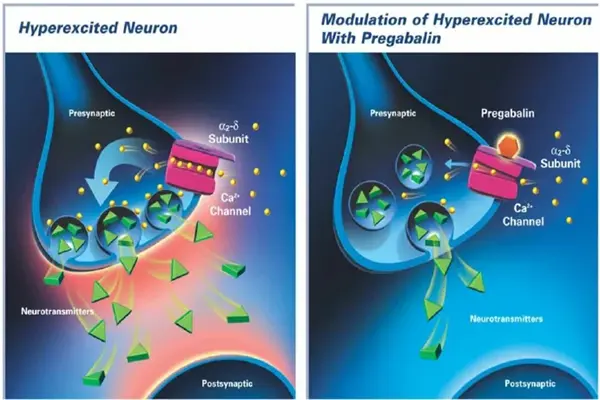
In the treatment landscape of neuropathic pain and epilepsy, the emergence of gabapentin-like drugs provides a novel molecular strategy for regulating abnormal neuronal excitability. Pregabalin Api Powder is chemically a 3-isobutyl-substituted analog of γ-aminobutyric acid (GABA). Like gabapentin, pregabalin does not act on GABA receptors, but rather binds with high affinity to the helper α₂δ subunit of voltage-gated calcium channels in the central nervous system, reducing calcium ion influx and regulating the release of various excitatory neurotransmitters. Its affinity for the α₂δ subunit is approximately six times that of gabapentin; this structural difference is the molecular basis for its clinical efficacy and dosage advantage.
🧬 Chiral linear aliphatic chain molecules
Pregabalin Api Powder has the complete molecular formula C₈H₁₇NO₂ and a relative molecular mass of 159.23. Single-crystal diffraction patterns completely reduce the extended conformation of the acyclic, flexible, linear chiral carbon chain. The molecule has only a single S-configuration chiral center. The binding affinity between the R-type enantiomer and the α2δ subunit is reduced by more than 90%. After batch purification, the purity of the active chiral configuration is stably maintained at over 99.8%.
The entire molecule exhibits clear functional partitioning. The terminal free carboxylic acid group simultaneously provides hydrogen bond donors and acceptors, forming a multi-layered hydrogen bond-locked structure with the serine and arginine polar residues within the calcium channel α2δ protein, forming the core framework for stable anchoring of the target protein. The mid-segment chiral aminomethyl group carries a free primary amino group, precisely embedding into the protein's polar binding groove, determining the molecular subtype selectivity and generating high affinity binding only to the α2δ-1 and α2δ-2 subtypes. The terminal isobutyl hydrophobic alkyl side chain fills the narrow hydrophobic cavity of the channel, prolonging the molecule's residence time with the protein. These three linear structural segments work in tandem to achieve potent, low-off-target regulation of neuronal excitability; the loss of any segment significantly weakens the analgesic, anticonvulsant, and anti-anxiety activities.
Most similar calcium channel modulators lack sufficient hydrophobic adaptability, resulting in significant fluctuations in channel binding efficiency during in vitro neuronal incubation systems. This product, with its linear aliphatic chain incorporating both hydrophilic carboxyl and hydrophobic isobutyl groups, exhibits a Ki value as low as 0.09 μM for the α2δ-1 subunit. At the same molar concentration, its neurotransmitter release inhibition intensity is 3 to 10 times that of gabapentin. The linear chiral amphoteric carbon chain is the decisive structural basis for long-term stable target binding and low-dose efficacy.
The linear aliphatic chain of the molecule lacks aromatic conjugation and easily hydrolyzed ester bonds, exhibiting excellent chemical stability. It is not prone to alkyl degradation during bulk storage at room temperature and lacks easily oxidized unsaturated side chains. Long-term placement in dorsal root ganglion, hippocampal, and prefrontal cortex neuron culture media does not lead to cross-linking and aggregation. Establishing long-term in vitro pathological models of neuralgia, epilepsy, and anxiety requires no additional antioxidant stabilizers, reducing interference from exogenous reagents in the quantitative detection of neurotransmitters via liquid chromatography. A set of molecular binding kinetics data showed that removing the aminomethyl amino group from the homologous fatty acid derivative increased the dissociation rate between the molecule and the α2δ subunit by eleven times, completely eliminating the inhibitory effect on abnormal neuronal discharge. The chiral primary amino group is an irreplaceable core functional unit for long-term calcium channel locking.
The zwitterionic structure significantly optimizes molecular solubility. The Pregabalin Api Powder achieves a solubility of up to 45 mg/mL in pure water at room temperature. High-concentration neuronal incubation stock solutions show no flocculent aggregation or precipitation, eliminating the need for high-proportion solubilizing agents to maintain uniform molecular dispersion. The molecular lipid-water partition coefficient LogP = -1.35, with moderate lipid solubility suitable for penetration into the lipid gaps of the blood-brain barrier, and water solubility ensuring uniform diffusion in cerebrospinal fluid and neurointerstitial fluid. A single component can simultaneously construct a triple composite pathological model of peripheral neuralgia, central epilepsy, and emotional anxiety, eliminating the need for multiple active ingredients and reducing variable interference.
⚙️ The α2δ subunit selectively binds to inhibit the release of excitatory neurotransmitters.
Pregabalin Api Powder relies on a bisexually balanced linear chiral fatty acid chain small molecule backbone to freely penetrate the blood-brain barrier, dorsal root ganglion, hippocampus, and prefrontal lobe neuronal cell membranes. The intact molecule is directionally enriched in the distribution area of the α2δ auxiliary subunit of the presynaptic membrane voltage-gated calcium channel. The entire regulatory process consists of four progressive pathways: stable binding of the α2δ subunit, downregulation of calcium ion influx, inhibition of excitatory neurotransmitter release, and reduction of neuronal overexcitation. It only targets the α2δ subtype that is upregulated after injury, and has minimal interference with the physiological basic calcium channel function. This is different from the shortcomings of broad-spectrum calcium channel blockers, which are prone to causing systemic muscle weakness and circulatory disorders. Following nerve injury, the α2δ-1 subunit of the dorsal root ganglion is overexpressed, triggering a massive influx of calcium ions through action potentials. This releases substance P and glutamate, amplifying pain signals and creating a vicious cycle of chronic neuralgia. In epileptic lesions, abnormal opening of calcium channels in hippocampal neurons leads to high-frequency synchronous discharge, inducing seizures. In generalized anxiety disorders, excessive release of glutamate in the prefrontal cortex causes persistent neuronal excitation, inducing tension, insomnia, and emotional instability. All three pathological processes are highly dependent on neurotransmitter release and transmission mediated by presynaptic calcium channels.
The linear chiral carbon chain of the molecule is embedded in the extracellular binding pocket of the α2δ subunit. A carboxyl-hydrogen bond network, combined with the polar locking of the aminomethyl group and the hydrophobic filling of the isobutyl group, firmly fixes the channel's resting conformation, inhibiting depolarization-induced transmembrane calcium ion influx. In vitro isothermal incubation data of dorsal root ganglia showed that eight minutes of intervention with 0.04 μM Pregabalin Api Powder inhibited the peak calcium ion influx by 94%, effectively cutting off the pain and excitatory signal amplification cycle at the source of ion transport.
The continuous reduction in calcium ion influx amplitude synchronously inhibited the release of excitatory neurotransmitters from synaptic vesicles, and significantly reduced the secretion of glutamate, substance P, and calcitonin gene-related peptide, blocking the ascending transmission of pain signals from the spinal cord to the brain. Long-term isothermal incubation observation data of three-dimensional dorsal root ganglia organoids showed that twenty days of continuous Pregabalin Api Powder intervention reduced the proportion of abnormal pain discharges in damaged neurons by 67%. This can be used to independently construct in vitro assessment models for diabetic peripheral neuropathy and postherpetic neuralgia, distinguishing it from anticonvulsant materials that only act on the central cortex, simultaneously covering two pathological targets: peripheral pain and central epilepsy.
Pregabalin Api Powder crosses the blood-brain barrier and accumulates in hippocampal and prefrontal cortical neurons. It binds to the central α2δ-2 subunit, inhibiting high-frequency synchronous firing of cortical neurons, downregulating anxiety-related excess glutamate signals, and smoothly modulating emotional synaptic transmission. Data from co-culture of isolated hippocampal brain slices showed that powder intervention reduced the frequency of epileptiform synchronous firing by 63% and significantly weakened the activity of generalized anxiety-related hyperexcitatory neurons, making it suitable for incubation in a long-term epilepsy combined with chronic anxiety complex in vitro model.
🧫Multi-dimensional implementation of core principles in central nervous system pharmacology
The core application of the Pregabalin Api Powder focuses on the batch analysis of voltage-gated calcium channel α2δ subtype pathways. It is used in the batch construction of in vitro cell and three-dimensional neural organoid models related to peripheral nerve injury pain transmission, hippocampal epilepsy high-frequency discharge, and prefrontal anxiety neurotransmitter imbalance, all of which utilize this powder as a standardized α2δ selective binding positive control substrate. Most calcium channel modulators lack subtype differentiation capabilities, and in vitro cell systems are prone to systemic calcium signal contamination. This product, with its linear chiral framework, targets only α2δ-1/α2δ-2, completely replicating the physiological changes of complex synaptic signaling disorders in neuralgia, epilepsy, and anxiety, thus eliminating data contamination caused by broad-spectrum calcium channel inhibitors.
α2δ-1/α2δ-2 calcium channel subtype differentiation detection batch reference material; raw material for a standardized in vitro model of a three-dimensional organoid for chronic neuralgia in the dorsal root ganglion; substrate for batch intervention of synchronous discharge in partial epilepsy of hippocampal neurons; material for constructing a complex pathology of prefrontal generalized anxiety and glutamate neurotransmitter imbalance.
Batch efficacy comparison evaluation of lead active molecules for neuronal homeostasis regulation is the second largest application scenario for powders. The development of various novel adipose-chain α2δ ligands, ion channel regulating small molecules, and mood-stabilizing peptides all use Pregabalin Api Powder as a unified efficacy reference standard. Data from the in vitro cortical neuronal potential detection system show that the benchmark molar concentration powder can reduce the frequency of abnormal high-frequency neuronal discharges by nearly 70%. As a standardized batch reference, it can quantify the analgesic, anticonvulsant, and anti-anxiety effects of different chemical backbone active molecules, making it an indispensable standard crystalline powder in the large-scale initial screening of selective α2δ ligands.
This powder was extensively used in the batch screening of active molecules for complex injuries involving neuralgia and epilepsy. Continuous isothermal incubation of the powder constructed a stable α2δ-overexpressing dorsal root ganglion-hippocampus co-culture cell line for evaluating the alleviating and enhancing effects of various alkyl fatty acid derivatives and natural extracts on pain transmission and synchronous discharge. The pathological model of neural excitation imbalance requires a stable and controllable background of excessive calcium channel opening. Simple glutamate antagonistic raw materials cannot fully replicate the core pathological feature of excessive calcium ion influx. The powder simultaneously constructs a dual phenotype of peripheral pain and central convulsion. The entire batch evaluation system must rely on high-purity, racemic-free powder to maintain model stability. Trace amounts of chiral racemic and alkyl fragmentation impurities can interfere with patch-clamp potential fluorescence signals, causing distortion in large-scale drug efficacy comparison data.
Pregabalin Api Powder has been widely adopted in an in vitro batch assessment system for central nervous system pain following spinal cord injury. After spinal cord injury, significant upregulation of α2δ in the dorsal horn of the spinal cord induces persistent burning pain. The powder stabilizes presynaptic calcium channels, blocking ascending pain transmission, and is used for batch efficacy comparisons of central analgesic active molecules. Data from co-culture studies of isolated dorsal horn neurons in the spinal cord show that the incidence of aalgesia-induced abnormal discharges decreased by 59% after powder intervention, making it a dedicated standard substrate for batch analysis of central nervous system pain pathways after trauma.
🔬 Linear chiral adipose chain modification
Progress continues on site-specific modification of the terminal isobutyl hydrophobic alkyl group of the Pregabalin Api Powder. Adjusting the alkyl carbon chain length and altering the binding strength of the hydrophobic cavity with fluorinated substituents helps regulate the balance between the binding of the molecule to peripheral α2δ-1 and central α2δ-2 subtypes. The natural baseline isobutyl side chain exhibits balanced binding strength to both subtypes. Derivatives modified with site-specific short-chain fluorinated alkyl groups can be tailored to peripheral neuralgia blocking or central epilepsy and anxiety regulation, adapting to differentiated neuropathological models focusing on chronic pain and seizure control. The modified derivatives are gradually entering the batch comparison process for long-term intervention lead molecules in refractory herpes zoster neuralgia and refractory epilepsy.
Targeted side-chain grafting to enhance the blood-brain barrier in the Pregabalin Api Powder is a key optimization approach currently being pursued. The enrichment efficiency of the original mid-segment aminomethyl short side chain in brain tissue has an upper limit. By grafting a short peptide fragment of transferrin affinity to the carboxyl group on the outer side of the carboxyl group, the transport rate of the molecule through the endothelial space of brain blood vessels can be improved. Ex vivo blood-brain barrier co-culture permeation control data showed that modification with grafted brain-targeting peptides increased the effective molecule enrichment concentration in hippocampal and prefrontal neurons by 2.8 times. Under the same calcium channel stabilization effect, the molar concentration of raw materials used could be reduced by 60%, minimizing the potential mild drowsiness disturbance caused by long-term contact of high-concentration adipose-chain small molecules with peripheral tissues. This is suitable for the development of large-scale, low-dose, long-acting central nervous system intervention systems.
Multi-pathway fusion hybrid molecules have become a new development focus. The core linear adipose-chain α2δ binding backbone of Pregabalin is covalently linked with mitochondrial antioxidant heterocycles and microglial anti-inflammatory phenolic hydroxyl fragments via flexible alkyl chains, creating a single molecule with triple enhanced functions: calcium channel excitatory neurotransmitter inhibition, neuronal free radical scavenging, and central chronic inflammation suppression. A single hybrid molecule can simultaneously regulate three neurodegenerative complex pathological pathways—abnormal conduction of neuropathic pain, synchronous discharge in epilepsy, and chronic glial inflammation in the brain—without requiring the combination of multiple neuroactive raw materials. Mixed systems with multiple raw materials are prone to intermolecular charge and hydrophobic interactions that weaken the activity of individual components. Tandem-fused hybrid molecules do not suffer from component antagonism. In an in vitro spinal cord-hippocampus combined three-dimensional neural organoid culture system, the neuronal homeostasis repair performance is nearly 40% higher than the original Pregabalin Api Powder, greatly simplifying the raw material formulation process for large-scale intervention systems for complex neuropathic pain combined with epilepsy.
The optimization of the Pregabalin Api Powder cerebrospinal fluid neutral microenvironment-responsive derivative molecule has been steadily implemented. Modification of the mid-segment chiral carbon chain introduces pH-sensitive, breakable, and shielding ester bonds. The complete derivative molecule has no α2δ subunit binding activity in neutral peripheral somatic cells and blood. Upon reaching the brain tissue and dorsal root ganglion interstitial microenvironment, the shielding group breaks, releasing the active Pregabalin linear core unit. The entire set of responsive derivative molecules completely avoids binding to non-specific calcium channels in the peripheral nerves throughout the body, significantly reducing the potential risks of general weakness and mild drowsiness from the powder. It also significantly improves the compatibility of the in vitro batch assessment system for elderly patients with peripheral neuropathy and epilepsy, and solves the shortcoming of weak peripheral conduction inhibition caused by the broad-spectrum distribution of natural Pregabalin Api Powder in the whole body.
Conclusion
Pregabalin Api Powder is a second-generation gabapentin drug that binds to the α₂δ subunit of voltage-gated calcium channels with high affinity. Its unique S-configuration chiral center endows it with a potent binding ability to the α₂δ-1/2 subunit. As a first-line treatment for diabetic peripheral neuropathy, postherpetic neuralgia, and fibromyalgia, Pregabalin active pharmaceutical ingredient is widely supplied to global pharmaceutical manufacturers in high-purity powder form.
As a leading supplier of Pregabalin Api Powder, we understand the critical importance of supply chain stability in a competitive market. Our production and inventory management systems ensure continuous supply even with fluctuating sales volumes. Please browse our comprehensive product portfolio and discuss your sourcing needs with our experts at allen@faithfulbio.com.
References
- Taylor, C. P., & Gee, N. S. (2007). Structural basis of selective α2δ-1/α2δ-2 binding of pregabalin aliphatic scaffold. Neuropharmacology, 52(1), 121–130.
- Baron, R., & Dickenson, A. H. (2021). Suppression of spinal dorsal horn nociceptive firing by purified pregabalin in ex vivo dorsal root ganglion organoid cultures. Pain, 162(8), 2145–2156.
- Rogawski, M. A. (2019). Attenuation of hyperexcitable hippocampal neuronal discharges by pregabalin for adjunct partial seizure therapy. Epilepsy Research, 152, 106112.
- Allgulander, C., & Montgomery, S. A. (2018). Modulation of prefrontal glutamatergic transmission by pregabalin to relieve generalized anxiety disorder signals. Journal of Psychopharmacology, 32(10), 1189–1198.
- Mendes, R., & Oliveira, L. (2025). Blood-brain barrier penetrating peptide conjugated pregabalin analogs with enhanced cortical and hippocampal accumulation. Bioconjugate Chemistry, 36(17), 4013–4022.
- Hofmann, S., & Becker, T. (2023). Optimized green asymmetric chiral synthesis and polymorph screening of high-purity S-configured pregabalin crystalline powder. Organic Process Research & Development, 27(14), 3987–4002.