

What molecular configuration does the Olaparib API rely on to achieve tumor-targeted lethality?
Olaparib API is the world's first industrialized PARP-targeted anti-tumor active pharmaceutical ingredient. The high-purity finished product is an off-white crystalline powder. Relying on the unique chemical structure of phthalazinone core combined with fluorobenzene ring and cyclopropionylpiperazine side chain, it precisely anchors the PARP1, PARP2, and PARP3 catalytic sites. It uses the principle of synthetic lethality to target and kill homologous recombination and repair defective tumor cells. It is the core active ingredient for targeted preparations of gynecological tumors, breast tumors, pancreatic tumors, and prostate tumors. It is not only the production base of original tablets and capsules, but also a benchmark raw material for targeted pharmacological characterization, combination drug formulation development, and pharmacopoeia characterization of active pharmaceutical ingredients.
⚛️Multi-cyclic heterocyclic combinations lock in target binding properties
Olaparib API has the chemical formula C₂₄H₂₃FN₄O₃ and a molecular weight of 434.46. The molecule is composed of three key structural units: a rigid 2H-phthalazine-1-one fused heterocyclic core at one end, a monofluorosubstituted benzene ring connected by a methylene group in the middle, and an amide bond followed by a cyclopropyl carbonyl-modified six-membered nitrogen-containing piperazine heterocycle at the para-position. This molecular arrangement creates a spatial conformation that balances rigidity and flexibility. This staggered skeletal structure perfectly matches the three-dimensional cavity size of the PARP enzyme's catalytic pocket, providing a fundamental prerequisite for efficient target binding.
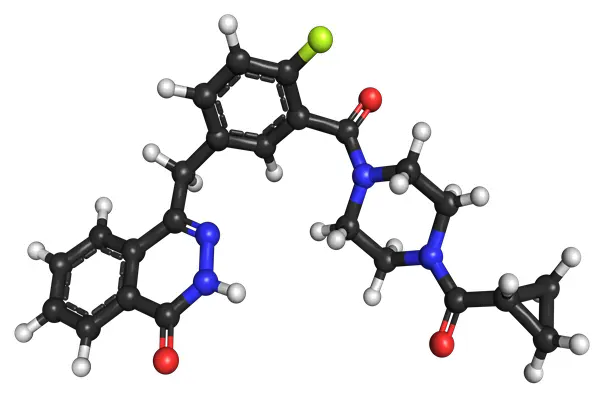
The phthalazinone cyclic structure possesses a conjugated carbonyl group and a lone pair of electrons on the nitrogen atom, enabling it to form multiple hydrogen bonds with amino acid residues within the PARP catalytic domain. This tightly locks the enzyme's active site, preventing the substrate NAD⁺ from entering the catalytic site. The single fluorine atom on the benzene ring is a weak electron-withdrawing substituent, fine-tuning the local electron cloud density and optimizing the molecule's lipid-water partition coefficient in the human body fluid environment. This avoids two common problems: excessively high molecular polarity hinders penetration of tumor cell membranes, or excessive lipidity leads to excessive accumulation in vivo.
A cyclopropylformyl hydrophobic group is attached to one side of the terminal piperazine ring. The small-volume cyclopropyl ring structure can penetrate deep into the hydrophobic grooves of the enzyme protein, further enhancing the binding strength between the molecule and the target. The secondary amine structure of the piperazine ring itself can undergo weak protonation under physiological pH conditions, improving the dissolution rate of the active pharmaceutical ingredient in the gastrointestinal tract and facilitating rapid blood entry into the bloodstream and reaching the solid tumor lesion site after oral administration. The finished product is stable in physicochemical properties when stored at room temperature, protected from light, and sealed. However, prolonged storage at high temperatures will cause slow hydrolysis of the amide bonds, accompanied by ring-opening of the phthalazine ring, leading to a decrease in the activity of the active pharmaceutical ingredient.
The solubility characteristics are synergistically regulated by multiple functional groups. It is readily soluble in polar organic solvents, slightly soluble in ethanol, and has low solubility in purified water. Industrial purification commonly employs a fractional recrystallization process using isopropanol-water mixed solvents to remove open-ring impurities, unclosed-ring intermediates, and positional isomers generated during the synthesis pathway. The content of single impurities in the purified API can be controlled below 0.1%, and the levels of heavy metals and residual organic solvents fully comply with ICH regulations for human pharmaceutical raw materials, making it suitable for the production of oral solid dosage forms.
The entire multi-unit chemical configuration achieves simultaneous implementation of hydrogen bonding, hydrophobic intercalation, and electrochemical compatibility, enabling the Olaparib API to exhibit significantly higher inhibitory activity against PARP targets at the same dosage concentration than early acyclic PARP lead compounds. This also lays the foundation for subsequent derivative structural optimization.
🎯Synthetic lethal mechanisms target and destroy defective tumor DNA
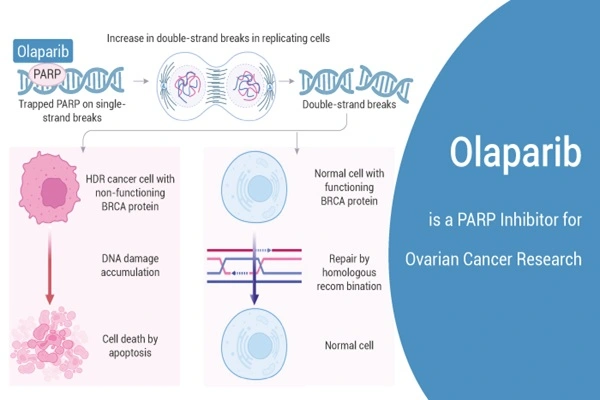
The core pharmacological logic of Olaparib API relies on its synthetic lethal effect. The first step focuses on the competitive inhibition of PARP enzyme catalytic activity. After penetrating the tumor cell membrane via blood circulation, the drug targets and occupies the catalytically active cavities of PARP1 to PARP3, competitively displacing the binding sites of the natural substrate NAD⁺. This directly severs the inherent pathway of PARP, which relies on ADP-ribose-modified proteins to initiate DNA single-strand break repair. Tumor cells, encountering endogenous or chemotherapy-induced DNA single-strand breaks, cannot rely on PARP to complete the basic damage repair process.
The second step triggers irreversible capture of the PARP-DNA complex. Undissociated PARP proteins are locked onto the broken DNA segments by Olaparib, forming a giant protein-nucleic acid cross-linked complex. This large molecular mass blocks the cell replication fork from advancing along the DNA strand. During cell division, the replication fork remains stalled and undergoes structural disintegration, transforming the original single-strand DNA break into a difficult-to-repair double-strand DNA break.
The third step leverages the repair deficiencies of BRCA-mutated cells to amplify damage toxicity. Normal somatic cells possess the BRCA gene-mediated homologous recombination repair pathway, capable of efficiently repairing double-strand DNA breaks. However, tumor cells with pathogenic BRCA1 or BRCA2 mutations inherently lack this homologous recombination pathway. They cannot rely on PARP to repair single-strand damage, nor do they have alternative pathways to repair subsequent double-strand breaks, leading to continuous and irreversible DNA damage accumulation.
The fourth step, multiple rounds of damage accumulation force tumor cells to initiate programmed apoptosis. The massive amount of unrepairable DNA double-strand breaks disrupts genomic stability, causing complete genome disintegration in subsequent cell cycles. Continuous cell arrest ultimately induces apoptosis, gradually eliminating mutant tumor cells within the lesion. This process has almost no killing effect on normal human cells with intact homologous recombination function, significantly different from traditional chemotherapy drugs that indiscriminately kill cells.
The additional adjuvant pharmacological effects are manifested at the level of immune regulation of the tumor microenvironment. Damaged tumor cells release damage-related molecular pattern signals, stimulate the maturation of dendritic cells in the body, enhance the infiltration of anti-tumor specific lymphocytes into tumor lesions, and indirectly improve the body's own efficiency in clearing residual tumor cells. This additional characteristic allows Olaparib API and immune checkpoint inhibitors to produce a synergistic effect when used together.
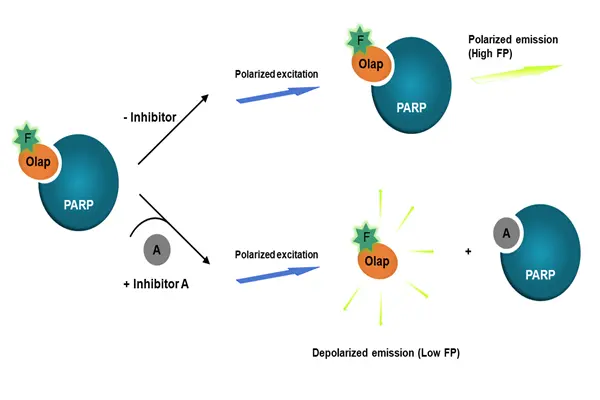
🧬Multi-cancer targeted agents and their full-chain scientific research applications
Olaparib API's core industrial application is targeted maintenance therapy for gynecological malignancies. The active pharmaceutical ingredient (API) is processed into 100 mg and 150 mg oral tablets for long-term maintenance therapy in patients with ovarian, fallopian tube, and primary peritoneal cancer who have responded to platinum-based chemotherapy. For advanced patients with BRCA germline mutations or HRD positivity, continuous administration can significantly prolong progression-free survival and delay lesion recurrence. It is an essential raw material for first-line standard maintenance therapy in ovarian cancer globally.
In breast cancer clinical applications, Olaparib API covers both high-risk early-stage and advanced metastatic cases. Targeted drugs prepared using Olaparib API are used for adjuvant therapy after surgery for high-risk early-stage breast cancer with germline BRCA mutations and HER2-negative expression, as well as for single-agent targeted intervention in advanced metastatic breast cancer. Continuous postoperative administration can reduce the probability of distant metastasis and disease recurrence. For advanced patients who cannot tolerate chemotherapy, single-agent administration can control lesion progression, filling the raw material gap in precision treatment of gene-mutant breast cancer.
The indications for this product have been expanded to include pancreatic and prostate cancer in solid tumors. For patients with metastatic pancreatic cancer carrying germline BRCA mutations, long-term maintenance therapy with this formulation after stabilization with first-line chemotherapy effectively prolongs survival in advanced-stage patients. When combined with abiraterone, it is used for targeted therapy in BRCA-mutated metastatic castration-resistant prostate cancer, achieving dual inhibition of prostate lesions through the complementary pathways of the two drugs. These combination formulations continue to drive a steady increase in the consumption of the active pharmaceutical ingredient (API).
Pharmaceutical companies are developing combination targeted formulations using high-purity Olaparib API as a base material, combining it with anti-angiogenic drugs, androgen receptor inhibitors, and immunotherapeutic drugs. This leverages the synergistic effects of different anti-tumor targets to broaden the applicable cancer types, while reducing the incidence of adverse reactions such as myelosuppression caused by long-term, high-dose use of single APIs, thus enriching the options for stratified clinical treatment.
Ultra-high purity calibrated raw materials have entered the fields of pharmaceutical testing and pharmacological research, serving as content calibration standards for high performance liquid chromatography and liquid chromatography-mass spectrometry equipment. They are used for the quantitative detection of active ingredients in commercially available olaparib formulations, and are also used by major pharmaceutical companies and research institutions as PARP target pharmacology tools to build various gene mutation tumor in vitro screening models, and to assist in the screening and optimization of next-generation PARP inhibitor lead compounds.
🔭 Formulation innovation and continuous expansion of indications
Globally, optimization efforts surrounding the Olaparib API are focused on iterating on novel oral formulation processes. Addressing shortcomings such as insufficient solubility of the active pharmaceutical ingredient (API) in water and weak gastrointestinal absorption in some patients, continuous optimization of preparation processes for solid dispersions, nanocrystalline suspension tablets, and oral instant films is underway. New dosage forms utilize carrier encapsulation technology to improve the in vitro dissolution rate of the API, resulting in increased peak plasma concentrations at the same dosage, improved drug absorption efficiency in patients with weak gastrointestinal function, and reduced inter-individual fluctuations in plasma drug concentrations.
Expanding indications across cancer types is a long-term focus. Continued efforts are being made to refine indications for solid tumors such as lung cancer, biliary tract cancer, and endometrial cancer. Screening for niche cancer populations with HRD-positive tumors or BRCA family gene mutations is being conducted, and corresponding dosage, safety, and efficacy data are being refined to continuously expand the clinical application categories of the Olaparib API and open up new market opportunities for downstream formulations.
Green synthesis processes are being upgraded to replace traditional, highly polluting synthetic routes. The original industrial synthesis relied on multi-step high-temperature reactions and large amounts of halogenated organic solvents. New continuous-flow catalytic synthesis and low-temperature closed-loop condensation processes are gradually being implemented for mass production, reducing the total amount of organic solvent wastewater emissions, simultaneously improving the yield of refined active pharmaceutical ingredients (APIs), and compressing industrial production costs. This aligns with global environmental regulations for green production of APIs and helps domestically produced Olaparib API accelerate its entry into the European and American GMP-certified supply chain systems.
The refinement and improvement of drug combination regimens and the modification of derivative skeletons are progressing simultaneously. Continuous optimization of combination ratios with PD-L1 inhibitors and novel chemotherapy small molecules is being conducted, defining safe dosage ranges for combined administration of different cancer types. Based on the original phthalazinone core, side-chain substituents are being fine-tuned to develop second-generation PARP lead derivatives with higher selectivity and lower toxicity, shortening the new drug API development cycle by leveraging the mature Olaparib skeleton structure.
The exploration of special dosage forms and routes of administration is progressing steadily. An injectable lyophilized formulation has been developed for patients with advanced cancer who have difficulty swallowing. The water solubility has been optimized by modifying the active pharmaceutical ingredient into a salt, thus overcoming the limitations of oral administration and further improving the whole course of treatment. This will comprehensively amplify the application value of Olaparib API in the precision oncology industry chain.
Conclusion
Olaparib API, with its unique chemical skeleton of phthalazinone-fluorobenzene-cyclopropionylpiperazine and relying on the innovative PARP capture-mediated synthetic lethality pharmacology, has become a benchmark anti-tumor active pharmaceutical ingredient targeting DNA damage repair pathways. It covers the clinical targeted drug needs of four major cancer types: ovarian, breast, pancreatic, and prostate cancers, and plays an irreplaceable role as a raw material in the entire chain of dosage production, new drug development, and drug quality control.
Pharmaceutical companies and wholesalers are welcome to visit Xi'an Faithful BioTech to learn about our commitment to the production and management of the Olaparib API supply chain. Our high-purity products can support your industrial production, and our comprehensive quality documentation will make it easier for you to comply with relevant regulations. Please contact our experienced staff (allen@faithfulbio.com) to discuss your specific needs and explore business opportunities with this leading Olaparib API manufacturer.
References
- Farmer, H., McCabe, N., Lord, C. J., & Ashworth, A. (2005). Targeting the DNA repair defect in BRCA mutant cells as a therapeutic strategy. Nature, 434(7035), 917–921.
- Tutt, A. N. J., et al. (2021). Adjuvant Olaparib for Patients with BRCA1- or BRCA2-Mutated Breast Cancer. New England Journal of Medicine, 384(25), 2394–2405.
- Bryant, H. E., et al. (2005). Specific killing of BRCA2-deficient tumours with inhibitors of poly(ADP-ribose) polymerase. Nature, 434(7035), 913–917.
- Mirza, M. R., et al. (2020). Maintenance Olaparib in Newly Diagnosed Advanced Ovarian Cancer. New England Journal of Medicine, 383(14), 1328–1339.
- de Bono, J., et al. (2023). Olaparib plus abiraterone for BRCA-mutated metastatic prostate cancer. New England Journal of Medicine, 388(19), 1789–1801.
- Moore, K. N., et al. (2022). Olaparib with bevacizumab for first-line maintenance in HRD-positive ovarian cancer. Journal of Clinical Oncology, 40(12), 1325–1334.
- Kim, S. W., & Matulonis, U. A. (2025). Evolving landscape of Olaparib combination regimens across solid tumors. Frontiers in Pharmacology, 16, 1298665.