

Arctic sea ice area continues to shrink
Recently, the World Meteorological Organization, NASA, and polar research institutions from multiple countries jointly released the latest polar monitoring data. The data clearly shows that the global Arctic sea ice area is experiencing a continuous and accelerated decline, a phenomenon that once again sounds the alarm for global climate change. Entering the spring and summer season of 2026, the Arctic is entering its traditional ice-melting period. Compared to observations of the same period in the past few decades, this year's Arctic sea ice coverage, ice thickness, and duration, among other key indicators, have all reached their lowest levels in nearly half a century. Whether it's the multi-year thick ice areas in the central Arctic Ocean or the seasonal ice floes near the edges of Eurasia and North America, varying degrees of accelerated melting are occurring. Satellite remote sensing images clearly record the continuous shrinking of the Arctic ice cap; the once continuous and stable ice surface is breaking into scattered ice floes, and large areas of open water are constantly expanding outwards, profoundly changing the polar ice and snow ecological pattern.
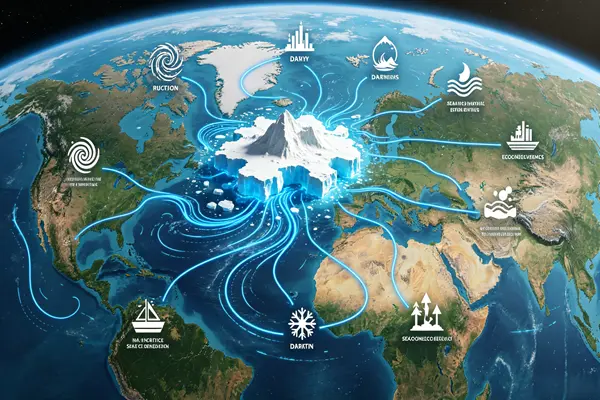
As a "cold source" and regulator of the global climate system, the Arctic's sea ice is not merely a natural phenomenon; it plays multiple crucial roles, including reflecting solar radiation, regulating atmospheric circulation, maintaining polar ecological balance, and stabilizing global sea levels. The continued shrinkage of sea ice is not merely an environmental problem confined to the Arctic; it will trigger a chain reaction and spread globally through various pathways involving the atmosphere, ocean currents, and ecosystems. Currently, the area of ice-free waters in the Arctic during summer is expanding year by year, the navigability of some shipping routes is increasing throughout the year, polar flora and fauna habitats are being destroyed, the probability of extreme weather events in mid-to-high latitude regions globally is rising simultaneously, and the slow rise in sea level is beginning to threaten the safety of low-lying coastal areas.
Comparison of actual sea ice melting data
From May to June 2026, during the initial stage of Arctic ice melt, historically, the rate of sea ice melting is relatively slow, and the overall ice structure remains relatively intact. However, monitoring data from this year's period has broken with convention. Data transmitted by NASA's polar observation satellites shows that as of early June, the total area of Arctic sea ice was approximately 11.2 million square kilometers, a reduction of over 28% compared to the average for the same period in the 1980s, and a reduction of over 16% compared to the same period ten years ago. Looking at a longer timeframe, since systematic satellite monitoring began in 1979, Arctic sea ice area has shown a near-constant decreasing trend, with the average sea ice area each decade lower than the previous one, and the rate of decline is accelerating. In the last two decades of the 20th century, the minimum sea ice area at the end of the Arctic melting period decreased by an average of 6% per decade, while in the second decade of the 21st century, this figure climbed to 12% per decade, indicating a significantly accelerated pace of melting.
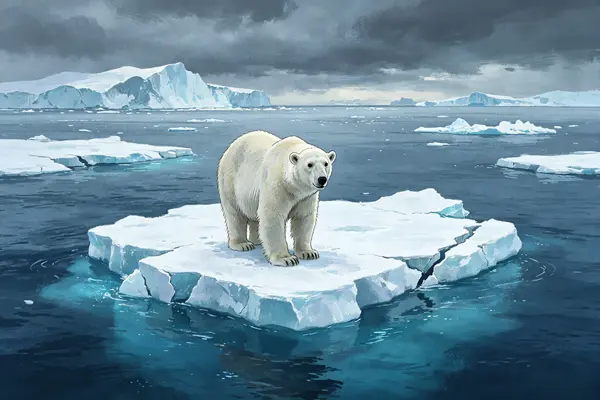
Focusing on the key indicator of ice thickness provides a more direct understanding of the weakening of the Arctic ice cap. In the 1990s, the average thickness of multi-year ice in the central Arctic Ocean reached 3.5 to 4 meters. This thick ice layer could withstand summer sunlight and ocean currents, maintaining stability year-round. Now, the average thickness of multi-year ice in this region has dropped to about 2 meters, with some core areas having a thickness of less than 1.5 meters. The internal structure of the ice has become looser, losing its former stability. Driven by wind and ocean currents, large chunks of thick ice are easily broken and drifted, fragmenting the once-contiguous ice sheet into groups of ice floes of varying sizes, creating large areas of open water between them. The changes are even more dramatic in the one-year ice areas along the coasts of northern Canada and northern Siberia, Russia. Coastal ice that used to last until late summer has largely melted away by early June this year, exposing the sea surface to direct contact with the atmosphere. Around the Svalbard and Franz Josef Land archipelagos, the once-solid ice belts that encircled the islands are now fragmented, with the islands almost entirely surrounded by seawater.
Regional comparisons of observational data reveal varying degrees of ice melt across different sea areas. The Beaufort Sea, located north of North America, is a major concentration of Arctic multi-year ice and traditionally considered one of the most ice-stable seas. This year, the sea ice retreat in this area has increased significantly, with the sea ice edge retreating more than 200 kilometers northward, resulting in large areas becoming ice-free ahead of schedule. The Kara Sea, Laptev Sea, and East Siberian Sea, located north of Eurasia, are inherently sensitive to sea ice melt due to the combined effects of continental climate and ocean currents. This year, the sea ice area in these areas has reached its lowest recorded level for the same period, and coastal permafrost has thawed due to seawater intrusion and rising temperatures. The Bering Sea, serving as a passage between the Arctic and North Pacific Oceans, has seen almost complete disappearance of its seasonal sea ice, with the duration of sea ice nearly two months shorter than the historical average. Data from multiple regions, when overlaid, paints a comprehensive picture of the deep and widespread decline of Arctic sea ice.
Besides area and thickness, the lifespan of sea ice has also undergone a radical transformation. Arctic sea ice follows a natural rhythm of freezing in winter and thawing in summer, normally reaching its minimum extent in early September each year. However, a review of data from the past fifteen years reveals that the minimum sea ice extent is occurring earlier, shifting from early September to mid-to-late August. This means that the effective lifespan of sea ice each year is continuously shortening. Simultaneously, the start of sea ice freezing in winter is also delayed. While the first ice used to appear in coastal waters in early October, it is now generally delayed until late October. This combination of increases and decreases is causing the annual ice cover period in the Arctic to continuously shrink, and the ice-dominated environmental characteristics to weaken further. Researchers have concluded through cross-analysis of historical ice samples and polar weather records that the current rate of warming in the Arctic is more than twice the global average rate of warming. The polar amplification effect is fully manifested on this icy continent, and the reduction of sea ice, in turn, exacerbates the warming, forming a closed-loop deterioration trend.
Global multidimensional derivative hazards
Although Arctic sea ice appears to be located at the northernmost point of the Earth, its melting brings negative impacts that gradually spread to every corner of the globe through atmospheric circulation, ocean currents, and the food chain. From polar ecosystems and global climate patterns to marine hydrological environments, and even human society's production and daily life, and coastal security, everything is impacted in a comprehensive way, with a series of explicit and implicit risks accumulating. The Arctic's native ecosystem is the first to be directly affected. The Arctic is a unique polar ecosystem on Earth, and the survival and reproduction of all plants and animals are highly dependent on the sea ice environment. The rapid shrinkage of sea ice directly disrupts the ecological balance that has lasted for tens of thousands of years, putting many species at risk of survival.
Polar bears are the most representative polar species. They rely on sea ice as hunting platforms, primarily hunting seals on ice floes for survival. The shrinking sea ice area, thinning ice layers, and ice fragmentation have drastically reduced the polar bears' living space. Now, large areas of the ocean lack stable ice surfaces, forcing polar bears to spend long periods swimming in the sea in search of ice floes, significantly increasing their energy expenditure, and leading to a year-on-year increase in drowning and death from exhaustion. Meanwhile, the retreat of sea ice alters the habitat of seals, causing seal populations to migrate and reducing food sources for polar bears, leading to widespread hunger and decreased cub survival rates. Besides polar bears, species such as Arctic foxes, Arctic reindeer, beluga whales, narwhals, and Arctic cod are also significantly affected.
Looking at the global climate arena, the continued melting of Arctic sea ice is profoundly altering atmospheric circulation patterns, exacerbating the frequency and intensity of extreme weather events worldwide. The pristine white sea ice possesses extremely high solar albedo, reflecting most sunlight back into space and effectively controlling polar and global temperatures. When sea ice melts and turns into dark seawater, the seawater absorbs a large amount of solar heat, causing near-surface temperatures to rise further—this is the albedo effect mentioned earlier. With reduced temperature differences, atmospheric circulation becomes unstable, and previously regularly moving weather systems stagnate or oscillate, directly causing frequent extreme weather events in mid- and high-latitude regions. The extreme heat waves, severe cold waves, persistent heavy rainfall, and severe droughts that have frequently occurred in Western Europe, North America, and the Eurasian hinterland in recent years are all closely related to the abnormal atmospheric circulation caused by the shrinking of Arctic sea ice.
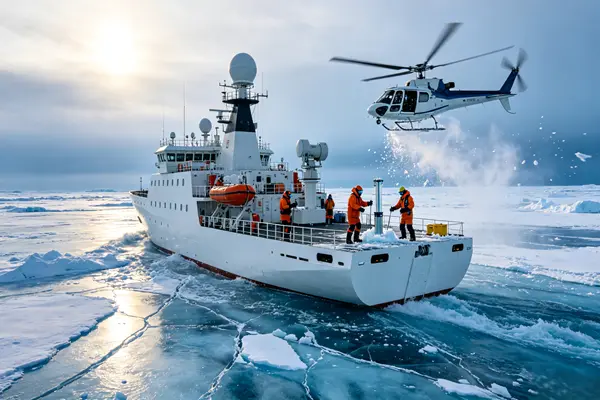
Human economic activities and industrial development are also affected by this chain reaction. The shrinking of Arctic sea ice has significantly improved navigation conditions in Arctic shipping routes, with the Northeast Passage and Northwest Passage becoming increasingly navigable throughout the year. More and more commercial ships are choosing Arctic routes to shorten transport distances. While the commercial development of Arctic shipping routes can reduce shipping costs, it also brings new safety hazards and pollution risks. The Arctic marine ecosystem is extremely fragile, with poor self-purification capacity. Oil pollution, exhaust fumes, and domestic waste emitted by ships, as well as potential fuel spills during navigation, can cause permanent damage to the polar marine environment.
Meanwhile, the Arctic is rich in natural resources such as oil, natural gas, and minerals. The retreat of sea ice has significantly reduced the difficulty of polar resource extraction, leading companies from many countries to plan for in-depth exploration and extraction activities in the Arctic. Large-scale development will further damage the polar ecosystem, creating a vicious cycle of "development – warming – ice melting – further development." Furthermore, droughts and floods caused by global climate anomalies directly affect agricultural harvests in various countries, reduce the stability of the international food supply chain, and exacerbate food price volatility. Extreme weather also damages infrastructure such as transportation and electricity, increasing operating costs across all industries, and creating greater uncertainty for global economic development.
International collaborative governance and protection measures
The series of crises triggered by the continued shrinking of Arctic sea ice means no country can remain unaffected. Faced with the increasingly severe polar environmental situation, the international community has gradually reached a consensus, cooperating on multiple dimensions including monitoring and early warning, emission reduction and temperature control, polar protection, and rule-making. Various international organizations, sovereign states, research institutions, and environmental organizations have taken action to build a multi-layered and multi-sectoral governance system, attempting to slow the rate of Arctic sea ice melt and reduce various derivative risks. Within the global governance framework, countries are first focusing on greenhouse gas emission reduction, the core root cause, which is also the most fundamental path to curb global warming and protect the Arctic ecosystem.
The United Nations, as the core platform for global environmental governance, continues to promote the implementation of global climate governance agreements. A series of international agreements, such as the United Nations Framework Convention on Climate Change, the Kyoto Protocol, and the Paris Agreement, take controlling greenhouse gas emissions and achieving carbon peaking and carbon neutrality as core objectives. Currently, the vast majority of countries worldwide have signed and committed to fulfilling their relevant obligations. Countries around the world, based on their own development status, have successively announced medium- and long-term carbon neutrality timelines, adjusted their national energy structures, gradually reduced the proportion of fossil fuels such as coal, oil, and natural gas, and vigorously developed clean energy sources such as solar, wind, hydro, hydrogen, and biomass energy.
Regarding the Arctic region itself, the regional cooperation mechanism centered on the Arctic Council plays a crucial role. The Arctic Council, composed of the eight Arctic states and several permanent participating and observer states, is specifically responsible for coordinating environmental protection, resource management, shipping regulations, and the protection of indigenous rights in the Arctic region. In recent years, the Arctic Council has prioritized sea ice protection, ecological restoration, and pollution control, and has issued several regional management guidelines. The Council has clearly delineated Arctic ecological protection zones, strictly restricting commercial development, shipping, and resource exploration activities within these zones to preserve complete habitats for polar flora and fauna. In response to the increasing number of vessels using the Arctic shipping routes, the Council, in conjunction with the International Maritime Organization, has developed stringent polar navigation rules that specify detailed regulations on ship emission standards, waste disposal, emergency leak prevention equipment, and navigation routes. The rules require all vessels using these routes to be equipped with specialized polar protection equipment to minimize the pollution of the marine environment caused by shipping activities.
At the level of emergency protection and regional management, countries have formulated specific contingency plans to address the secondary risks brought about by sea ice melting. Coastal countries have conducted risk assessments of sea level rise, upgraded protective engineering for low-lying coastal cities and islands, reinforced seawalls, built breakwaters, and planned coastal ecological protection forests to enhance their ability to withstand storm surges and seawater intrusion. High-latitude countries have strengthened the construction of extreme weather monitoring and early warning systems, relying on meteorological satellites and ground monitoring stations to achieve accurate predictions of weather systems and issue early warnings of cold waves, heavy rains, and droughts in advance, guiding agriculture, transportation, and people's livelihoods to prepare for disasters. For countries along the Arctic shipping routes, ship emergency rescue systems have been established, maritime rescue stations and oil spill cleanup equipment have been deployed, and professional polar rescue teams have been formed to carry out rescue and pollution cleanup work immediately in the event of ship malfunctions, fuel leaks, or personnel distress. Some countries close to the Arctic have also strictly controlled the pace of development of their domestic polar resources, suspending large-scale mining and oil and gas extraction projects to prevent human activities from further exacerbating polar environmental damage.
Conclusion
Harmonious coexistence between humanity and nature is the fundamental prerequisite for the sustainable development of the Earth. Humanity relies on natural resources to achieve civilizational progress and should also bear the responsibility of protecting the natural environment. The story of Arctic sea ice serves as a mirror reflecting the relationship between humanity and nature. On the path of future development, we must abandon short-sighted thinking that unilaterally pursues economic interests, adhere to the concept of green and low-carbon development, deepen transnational cooperation, build global consensus, and continuously promote climate governance and ecological protection. Only in this way can we safeguard this pristine white land of the Arctic and protect our shared home, Earth. It is believed that with the concerted efforts of all countries, Arctic ice and snow can be preserved for longer, the Earth's climate order can gradually return to stability, and countless lives can thrive peacefully on this blue planet.
Disclaimer: The information published on this website is sourced from the internet and does not represent the views of this website, nor does it guarantee the accuracy of its content. Please be aware of the distinction. Furthermore, the products provided by our company are for scientific research purposes only. We are not responsible for any consequences arising from improper use. If you are interested in our products, have any criticisms or suggestions regarding our articles, or are not completely satisfied with the products you received, please contact us by email: allen@faithfulbio.com; our team is dedicated to ensuring complete customer satisfaction.