

Heavy rains cause flooding on Australia's east coast
Since the beginning of summer 2026, Australia's east coast, which should have been experiencing its dry season, has been hit by unusually heavy and persistent rainfall. A rainband stretching thousands of kilometers from the tropical coast of northern Queensland to the Illawarra region in southern New South Wales has been persistently present, bringing record-breaking rainfall. As of June 8, cumulative rainfall in many areas had exceeded historical records for the same period. Major cities such as Sydney and Brisbane experienced severe flooding, with rivers overflowing and triggering widespread flooding. Towns were submerged, transportation was disrupted, power outages occurred, and casualties and property damage were devastating. This extreme rainfall, driven by the "East Coast Low System" and tropical moisture, has become the most widespread and destructive meteorological disaster in Australia in the past decade, severely impacting not only the lives of local residents and the regional economy but also raising deep global concerns about the increasing frequency of extreme weather events under climate change.
Record-breaking floods in multiple locations; flood situation across the board is critical.
The core cause of the recent severe rainfall disaster on Australia's east coast was the prolonged presence of an unusually long-term "east coast low-pressure system," coupled with the convergence of remnants of a tropical cyclone and cold upper-level air currents, forming a stable and persistent circulation of heavy precipitation. Unlike the short-duration downpours of previous years, this rainfall event was characterized by its long duration, wide coverage, and high intensity. It began in early May 2026 and had not completely dissipated by early June, with some areas experiencing rainfall for over 30 days, completely disrupting the local climate pattern of "dry summers and rainy winters."
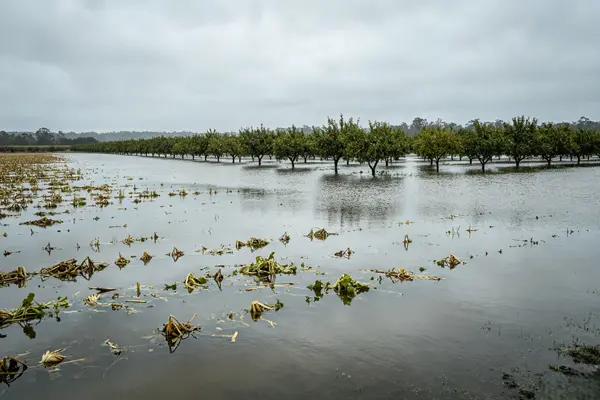
Queensland, as one of the hardest-hit regions, saw astonishing cumulative rainfall along its northern coast and southeast. The Upper Springbrook weather station near Brisbane recorded 43.74 inches (approximately 1111 mm) of rainfall in a single week in late May, equivalent to 80% of the local annual average rainfall, setting a new record for weekly rainfall in the region since meteorological records began. Tourist cities like the Gold Coast and Sunshine Coast experienced 24-hour rainfall exceeding 200 mm, with some areas receiving up to 260 mm. The torrential rain overwhelmed urban drainage systems, quickly turning streets into waterlogged landscapes. Inland rivers in Queensland also swelled, with the Burnett River exceeding the 7.4-meter warning level. Towns along the river, such as Bundaberg, were surrounded by floodwaters, and numerous homes and farmlands were inundated.
New South Wales followed suit, with heavy rainfall occurring seamlessly from the northern Hunt region to the southern coast. The Sydney metropolitan area and northern beaches were severely affected. Great Mackerel Beach received 260 mm of rainfall in 24 hours, and areas like Warriewood and Manly experienced severe urban flooding, with water depths exceeding 1.5 meters. Vehicles were submerged, shops were flooded, and residents were forced to evacuate. Rivers along the central and northern coast of New South Wales overflowed, low-lying areas were submerged, and some remote towns were completely cut off from roads, becoming "islands" with tens of thousands of residents at risk of being trapped. As of early June, over 100 public primary schools in New South Wales had closed due to flooding, thousands of homes were without power, and emergency services warned that approximately 50,000 people were threatened by the floods.
Eastern Victoria and northern Tasmania were also affected by the rainbands, experiencing continuous rainfall. The Gippsland region around Melbourne received a cumulative rainfall of 62 mm, with localized flooding causing road closures in rural areas. Although the damage was less severe than in Queensland and New South Wales, the continuous rainfall triggered the risk of small river floods and landslides, leading to geological hazard warnings in many areas and requiring the early evacuation of some mountain residents.
The extreme nature of this heavy rainfall was not only reflected in the cumulative rainfall and daily intensity but also in its repeated occurrence. Meteorological data shows that from May to early June, the east coast experienced five rounds of heavy rainfall, each no more than three days apart. The soil remained saturated for extended periods, preventing rainwater infiltration and causing direct surface runoff, thus exacerbating the risk of flooding. A senior meteorologist at the Australian Bureau of Meteorology pointed out that such persistent and widespread heavy rainfall is extremely rare in the century-long meteorological history of Australia's east coast and is a typical extreme weather event driven by climate change.
People's livelihoods have been severely impacted, and infrastructure has been paralyzed.
Continuous heavy rainfall and a chain reaction of flooding have brought comprehensive disaster to Australia's east coast, devastating people's lives, infrastructure, and agriculture. Affected areas are facing water and power outages, road closures, and unstable communications, completely disrupting residents' normal lives.
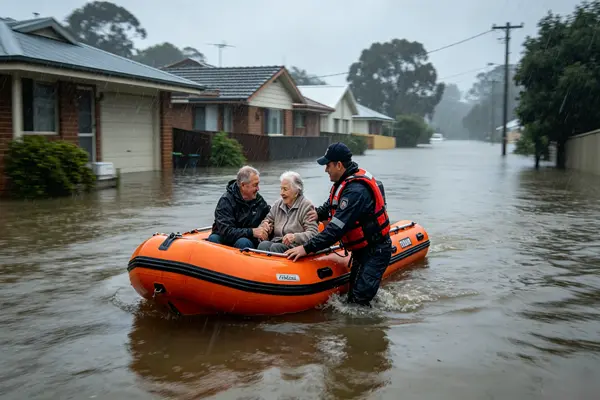
Personnel safety and livelihood security face severe challenges. As of June 8, the disaster had caused at least 3 deaths and 5 missing persons. All the victims were residents trapped by the floodwaters. One 63-year-old man died in his flooded home on the north-central coast of New South Wales, and two others were swept away by floodwaters while driving through flooded areas. Large numbers of residents were forced to evacuate their homes. In Queensland and New South Wales, the total number of evacuees exceeded 80,000, and temporary shelters were overcrowded. Within these shelters, food, drinking water, and warm clothing are scarce. In some remote shelters, transportation disruptions and delayed delivery of supplies have made it difficult to ensure residents' basic needs are met. Furthermore, the floods have contaminated drinking water sources, leading to water supply disruptions or substandard water quality in many areas. Residents are forced to rely on bottled water, further exacerbating anxieties about their livelihoods.
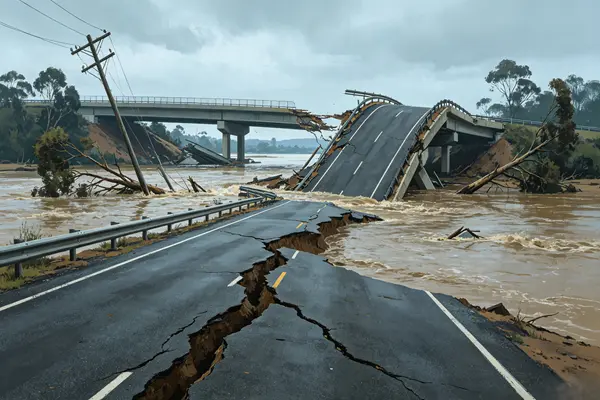
Infrastructure damage is severe, with transportation and power systems nearly paralyzed. On the road, many major roads along the east coast are disrupted by flooding, landslides, or fallen trees. Sections of the Pacific Highway between Sydney and Brisbane have been washed away, completely blocking traffic in both directions. Rural roads are even more severely damaged, with large amounts of gravel and silt accumulating on the surfaces, making short-term repairs difficult. In aviation, Sydney and Brisbane airports experienced widespread flight delays and cancellations due to flooding and strong wind warnings. In just one week in late May, Sydney Airport cancelled over 90 flights and delayed over 300, leaving many passengers stranded at the airport. Regarding rail, many intercity rail lines and urban metro lines in New South Wales and Queensland were shut down due to flooded tracks and power outages. Some Sydney Metro lines were suspended, leaving residents with no transportation and nowhere to go. The damage to the power system was particularly severe. Heavy rains and floods caused transmission lines to collapse and substations to flood, leaving over 290,000 households in Queensland and over 30,000 households in New South Wales without power. In some remote areas, the difficulty of repairs led to power outages lasting over 10 days. Regarding communications, the floods destroyed communication base stations and fiber optic cables, completely cutting off mobile phone signals in some severely affected towns, disrupting emergency rescue and information transmission.
Agriculture and the economy suffered devastating losses. Australia's east coast is the nation's agricultural heartland, producing citrus fruits, avocados, macadamia nuts, and vegetables. The floods inundated vast areas of farmland and destroyed orchards. In macadamia orchards around Bundaberg, Queensland, floodwaters submerged the roots of the trees, scattering approximately 10 tons of ripe nuts in the mud, with farmers estimating losses of tens of thousands of Australian dollars. Citrus orchards suffered root rot due to flooding, and next year's yield is expected to decline significantly. In the vegetable-growing regions of northern New South Wales, floods destroyed greenhouses and inundated fields, resulting in a total loss of the seasonal vegetable harvest. The Fruit and Vegetable Council of Australia warned of potential shortages and sharp price increases in supermarkets. Furthermore, the tourism industry on the east coast has been severely impacted. Popular destinations such as the Gold Coast and Byron Bay were closed due to the floods, beaches were covered in silt and debris, tourist facilities were damaged, and peak season tourism revenue was nearly wiped out. Preliminary estimates indicate that the disaster has caused direct economic losses exceeding AU$2 billion, with indirect losses from subsequent reconstruction and industrial recovery expected to be even higher.
Governments work together to combat disasters; global attention and aid are needed.
In response to this unprecedented disaster, the Australian federal and state governments activated their highest-level emergency response, deploying all personnel from the military, police, fire services, and emergency services to conduct large-scale rescue and resettlement operations. Meanwhile, the disaster drew global attention, with many countries and international organizations offering assistance to help Australia with disaster relief.
The federal government responded swiftly, coordinating national disaster relief resources. Australian Prime Minister Anthony Albanese immediately declared a "national emergency" on the east coast, activated the Federal Emergency Fund, and allocated A$500 million for disaster relief, resource allocation, and reconstruction. The federal government established an inter-agency disaster relief command center to coordinate with the Department of Defence, the Bureau of Meteorology, and the Federal Emergency Management Agency to unify the deployment of rescue forces and supplies. The Department of Defence dispatched over 2,000 military personnel to the disaster area, utilizing helicopters, inflatable boats, armored vehicles, and other equipment to participate in search and rescue operations, supply transport, and road repair. The Air Force deployed transport aircraft to airdrop emergency supplies such as food, drinking water, and medicine to remote affected areas. The Federal Bureau of Meteorology is monitoring the rainbands 24/7, issuing hourly rain and flood warnings through television, text messages, social media, and other channels to remind residents to prepare for protection and evacuation.
State governments and local emergency services are working on the front lines, conducting precise rescue operations. The Queensland and New South Wales governments simultaneously activated state-level emergency responses, with the Premiers personally overseeing rescue efforts in the disaster areas, coordinating fire, police, and medical resources across the state, and assigning specific areas to search for people, evacuate residents, and investigate potential hazards. The New South Wales Emergency Services (SES) is on standby, having received over 6,000 calls for help and completed 25 flood rescues by early June, rescuing over 300 people. Local governments have urgently set up temporary shelters, equipped with beds, blankets, food, drinking water, and medical equipment, and deployed medical personnel to provide basic medical services. Volunteers are also involved in shelter management, supplies distribution, and psychological counseling to alleviate residents' anxiety. In addition, local authorities accelerated road and power restoration efforts, prioritizing the restoration of power to key areas such as hospitals, resettlement sites, and government offices, to ensure emergency relief and basic living needs.
The international community has paid close attention, with many extending a helping hand. As a member of the Commonwealth and an important country in the Asia-Pacific region, Australia has drawn widespread global attention to this disaster. The United Nations Office for the Coordination of Humanitarian Affairs (OCHA) closely monitored the situation and provided Australia with US$10 million in emergency aid for the purchase of relief supplies and support for resettlement site construction. Simultaneously, it dispatched a team of disaster assessment experts to the disaster area to assist Australia in disaster assessment and post-disaster planning. China, New Zealand, Japan, the United States, and other countries expressed their condolences and pledged to provide assistance to the best of their ability. The Chinese government donated a batch of relief supplies to Australia, including tents, warm clothing, emergency lighting equipment, and medicines, to assist in the resettlement of residents and emergency relief efforts. New Zealand dispatched a professional rescue team with advanced equipment to New South Wales to participate in landslide rescue and search and rescue operations for missing persons. International organizations such as the International Committee of the Red Cross and the World Food Programme also actively mobilized resources to the disaster area to assist in humanitarian relief efforts, demonstrating the spirit of global mutual assistance. Despite the orderly progress of rescue efforts, many uncertainties remain regarding the disaster situation. Meteorological authorities warn that another round of rainfall may arrive on the east coast in mid-June, potentially causing renewed flooding in some previously relieved areas, placing immense pressure on disaster relief efforts. Meanwhile, the task of post-disaster reconstruction is arduous, requiring long-term investment in infrastructure repair, agricultural recovery, and resettlement of affected residents. The Australian government has stated that it will continue to increase its disaster relief and reconstruction efforts, making every effort to help affected residents return to their homes and resume their lives and livelihoods.
Conclusion
In the face of disaster, the Australian government and people have demonstrated resilience and unity. A cross-regional and border-boundary disaster relief operation is underway, with federal and local governments working together, the military and police uniting with the public, and domestic and international cooperation. Rescue efforts continue, and reconstruction has begun. Although the road ahead is fraught with challenges, with the combined efforts of all parties, the affected areas will gradually emerge from their predicament and regain their former vitality.
Meanwhile, this disaster also provides profound insights for global efforts to address climate change: extreme weather knows no borders, and the risks posed by climate change require a collective effort from all humanity. Only through strengthened international cooperation, joint promotion of low-carbon development and ecological protection, and enhanced monitoring, early warning, and emergency response capabilities for extreme weather can we minimize disaster risks and protect our shared home. The disaster on Australia's east coast will eventually pass, but the lessons and reflections it leaves behind deserve to be remembered and acted upon by every country and every individual in the world.
Disclaimer: The information published on this website is sourced from the internet and does not represent the views of this website, nor does it guarantee the accuracy of its content. Please be aware of the distinction. Furthermore, the products provided by our company are for scientific research purposes only. We are not responsible for any consequences arising from improper use. If you are interested in our products, have any criticisms or suggestions regarding our articles, or are not completely satisfied with the products you received, please contact us by email: allen@faithfulbio.com; our team is dedicated to ensuring complete customer satisfaction.