

Up to half of the world's grasslands are degraded or at risk of degradation.
A major global ecological warning has been issued: Currently, up to half of the world's grassland and pasture ecosystems have experienced varying degrees of degradation, and the remaining grasslands also face extremely high risks of degradation. The Earth's grassland ecosystem is facing an unprecedented "quiet decline crisis." Data shows that grasslands and pastures cover 54% of the Earth's land area, making them one of the most widely distributed and fundamental natural ecosystems globally. They not only bear one-third of the world's terrestrial carbon storage and sustain the survival and reproduction of millions of species, but also directly support the livelihoods of approximately 2 billion people worldwide and one-sixth of the world's food supply. They are a core ecological barrier concerning global climate security, biosecurity, food security, and people's livelihoods.
Global grasslands are entering a high-risk degradation cycle.
Based on the UN Global Land Monitoring Network, satellite remote sensing systems, and field research data from multiple countries, the latest ecological assessment clearly presents the full picture of global grassland degradation: no grassland on any continent has been spared. From the Eurasian steppe, African savanna, and North American temperate grasslands to the South American pampas and Australian natural pastures, large-scale degradation has occurred. Nearly half of these grasslands have already exhibited permanent degradation characteristics, and the remaining grassland ecosystems have seen a significant decline in stability, potentially entering a rapid degradation phase at any time. Global grasslands as a whole have entered a high-risk ecological cycle. This widespread, global grassland degradation is not an isolated phenomenon in a localized area, but a global and systemic ecological decline, characterized by its wide scope, rapid development, deep damage, and high difficulty in restoration.
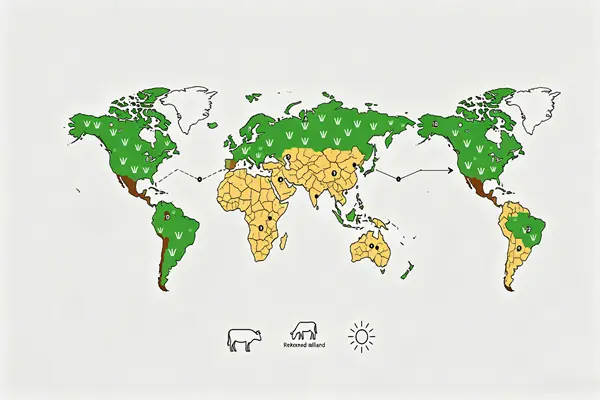
From a regional degradation perspective, the grassland degradation problems on each continent have different focuses, but the overall situation is far from optimistic. The Eurasian Steppe, the world's largest grassland belt, spans the heart of Eurasia, covering Mongolia, Russia, several Central Asian countries, and northern China. Affected by overgrazing, unregulated land reclamation, and frequent droughts, large areas of temperate grassland vegetation have become sparse, high-quality forage grasses have disappeared, weeds and poisonous plants have proliferated, and the topsoil has become bare. Some areas have gradually evolved into sandy land and desert. The Southern African Savannah, a core representative of tropical grasslands, supports the vast majority of Africa's wildlife and livestock industry. In recent years, affected by extreme droughts, over-cultivation, and population expansion, the rate of grassland desertification has accelerated year by year. The once contiguous grasslands have been fragmented into patches, and ecological connectivity has been completely severed.
In terms of the manifestations of degradation, global grassland degradation exhibits a stratified and progressive deterioration trend, from mild vegetation decline to severe desertification, with each layer intensifying and proving difficult to reverse. Mild degradation manifests as a decrease in high-quality forage varieties, a slight decline in vegetation cover, and reduced grassland productivity. While these effects are difficult to detect quickly with the naked eye, they continuously deplete the grassland's ecological foundation. Moderate degradation is characterized by sparse vegetation, increased exposed land area, decreased soil fertility, and weakened water conservation capacity, significantly reducing the grassland's carrying capacity and making it unable to support its original livestock and ecological functions. Severe degradation directly leads to soil desertification, water and soil erosion, and land salinization. Native vegetation completely disappears, the ecosystem structure collapses, and grasslands gradually evolve into deserts and bare land, essentially losing their self-repair capabilities. UN monitoring data shows that approximately 20% of global grasslands are currently in a state of moderate degradation, 15% have entered the severe degradation stage, and the remaining 15% appear stable, but their ecological resilience has significantly decreased, making them highly susceptible to rapid degradation under extreme weather conditions and human activity.
Delving into the core causes of this global grassland crisis, climate change and irrational human land use are the two dominant factors. Their combined effect creates a vicious cycle, accelerating grassland ecological collapse. On the one hand, the frequent occurrence of extreme weather events caused by global warming has completely disrupted the original ecological rhythms of grasslands. Grasslands are mostly distributed in arid and semi-arid vulnerable areas, with scarce water resources and weak ecological resilience, making them extremely sensitive to changes in temperature and precipitation. In recent years, global warming has led to a continuous rise in the average annual temperature in grassland areas, the normalization of seasonal droughts, an increase in extreme high-temperature weather, and a severe imbalance in the spatial and temporal distribution of precipitation. There is little rain throughout the year, and concentrated torrential rains during the rainy season. The continuous drought prevents pastures from growing normally, while the concentrated torrential rains wash away the surface soil, exacerbating soil erosion. Under this double blow, grassland vegetation is unable to recover naturally.
Ecology, climate, and people's livelihoods have been hit by multiple shocks.
Grasslands, as a crucial cornerstone of Earth's terrestrial ecosystems, play multiple core roles, including carbon sequestration and storage, water conservation, soil and water conservation, biodiversity maintenance, regional climate regulation, and support for the livestock industry. They are key hubs in Earth's ecological, climate, and livelihood chains. The degradation of half of the world's grasslands is not simply a matter of vegetation reduction, but a systemic ecological crisis with far-reaching consequences. Its negative impacts continue to spread, triggering a series of chain reactions, including biodiversity loss, global climate deterioration, food security pressures, and hindered livelihood development, threatening Earth's ecological security and sustainable human development in all aspects.
Grassland degradation directly leads to a significant loss of global biodiversity, disrupting the ecological balance formed over millions of years. Grasslands are vital habitats and breeding grounds for global wildlife, plants, and microorganisms. Over 40% of the world's terrestrial plant and animal species rely on grassland ecosystems for survival, including a large number of rare, endangered, and endemic species. Contiguous and intact grasslands provide natural habitats for wildlife to forage, inhabit, migrate, and reproduce, maintaining complete food chains and ecological cycles. With the large-scale degradation, fragmentation, and desertification of grasslands, the living space for flora and fauna continues to shrink. Native plant species are dying out, and insects and small herbivores are losing their food sources and habitats, leading to a sharp decline in their numbers. This, in turn, causes carnivores such as wolves, foxes, and birds of prey to migrate and die due to food shortages.
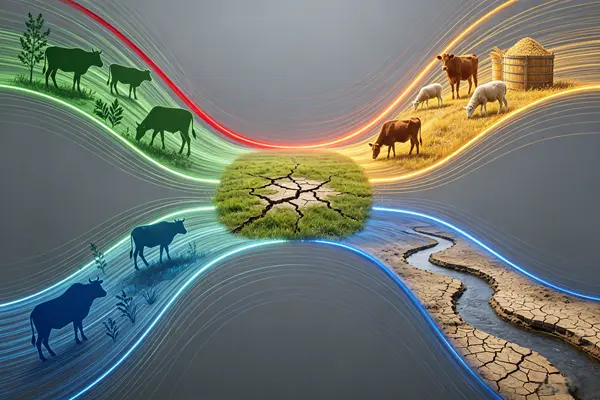
Grassland degradation exacerbates global warming, creating a vicious cycle of "degradation—warming—re-degradation." What is little known is that vast grasslands are the Earth's second-largest carbon sink after forests, storing one-third of the world's terrestrial soil carbon. The organic carbon storage in grassland soils far exceeds that of surface vegetation, making them a core carrier for stabilizing the global carbon cycle and offsetting greenhouse gases. Healthy grassland vegetation can continuously sequester carbon, and the soil firmly holds large amounts of organic carbon, effectively suppressing the atmospheric greenhouse effect. However, after grassland degradation, the death of surface vegetation and the destruction of soil structure release the massive amounts of carbon previously sequestered into the atmosphere, transforming grasslands from "carbon sequestration and storage reservoirs" into "carbon emission sources," significantly exacerbating the greenhouse effect. Meanwhile, degraded grasslands expose bare surfaces, increasing the area of exposed sand and soil, altering surface albedo, and enhancing regional heat absorption capacity, further pushing up local temperatures and exacerbating extreme weather events such as droughts and heat waves. These extreme weather events, in turn, damage grassland vegetation, creating a vicious ecological cycle that is difficult to break and continues to contribute to global warming.
Grassland degradation seriously threatens global food security and industrial stability, impacting the very foundation of global livelihoods. Grasslands are the core carrier of global livestock development, supporting one-sixth of the world's food supply. Beef, mutton, dairy products, and fur are all produced using grassland resources, serving as a vital food and economic source for billions of people worldwide. Grassland degradation directly leads to decreased grassland productivity, reduced production of high-quality forage, and a significant reduction in livestock carrying capacity. This results in feed shortages, decreased survival rates, and reduced slaughter volumes, directly causing a contraction in global livestock product production capacity and price fluctuations, affecting the stability of the global agricultural product supply chain. For regions such as Mongolia, Central Asian countries, African grassland nations, and Australian pastoral areas, where livestock farming is a pillar industry, grassland degradation directly leads to industrial shrinkage, economic decline, and regional economic difficulties.
Grassland degradation directly impacts the livelihoods of billions of people, triggering regional social crises. Globally, approximately 2 billion people rely directly on grasslands for their survival and development, including a large number of herders, pastoral residents, and agricultural workers; grasslands are their homes and sources of income. Grassland ecological decline, pasture degradation, and reduced livestock production directly lead to a reduction in the scale of herders' livestock farming and a significant drop in income, leaving many traditional herders facing unemployment and difficulties in increasing their income. In some severely degraded areas, grasslands are completely destroyed, water sources are depleted, and land is desertified, leaving people without a means of livelihood and forcing them into ecological migration, triggering social problems such as population displacement, community decay, and unbalanced regional development.
Furthermore, grassland degradation significantly weakens the Earth's water conservation and soil and water retention capacity, exacerbating the global water resource crisis and the risk of geological disasters. Healthy grassland vegetation has a well-developed root system that can firmly anchor the soil, intercept rainfall, conserve groundwater, effectively reduce soil erosion, and resist flash floods and mudslides. Degraded grasslands have sparse vegetation and loose, exposed soil, which completely fails to retain water and soil. Rainfall cannot be retained during the rainy season, and it quickly forms surface runoff, causing flash floods, soil erosion, and soil loss. During the dry season, the soil loses water rapidly, which exacerbates land drought and desertification, leading to the drying up of regional rivers and lakes and a drop in groundwater levels. This further exacerbates the global water shortage problem, making arid regions even drier and the ecological environment continue to deteriorate.
Multiple measures to promote grassland restoration and long-term protection
Faced with the severe ecological crisis of half of the world's grasslands being degraded, the international community has deeply recognized the urgency and importance of grassland protection. International organizations such as the United Nations Convention to Combat Desertification, the World Meteorological Organization, and the Secretariat of the Convention on Biological Diversity are taking the lead in coordination, with countries around the world actively responding. They are abandoning extensive development models, adhering to the principles of ecological priority and green development, and exerting efforts from multiple dimensions, including source control, ecological restoration, institutional construction, technological empowerment, and global cooperation, to build a comprehensive, multi-level, and normalized grassland protection and governance system. This aims to resolutely curb grassland degradation, promote the ecological restoration of degraded grasslands, and safeguard the Earth's grassland ecological barrier.
Strict control of human-caused damage at its source, implementation of rigid protection systems, and consolidation of the bottom line for grassland ecological security are crucial. To fundamentally curb grassland degradation, countries around the world have enacted strict grassland protection laws and regulations, delineated grassland ecological protection red lines, included natural grasslands in key ecological protection areas, and strictly prohibited destructive activities such as disorderly reclamation, illegal construction, overgrazing, and illegal mining. Many countries have comprehensively implemented scientific grazing systems such as grazing bans, grazing rest periods, and rotational grazing. Based on the ecological carrying capacity of grasslands, they accurately assess the carrying capacity of pastures, strictly control livestock density, and prevent overexploitation of grasslands. Severely degraded grasslands are subject to year-round grazing bans to allow vegetation to naturally regenerate. Moderately and mildly degraded grasslands are subject to seasonal grazing rest periods and zoned rotational grazing to ensure normal forage growth and reproduction, gradually restoring grassland ecological vitality.
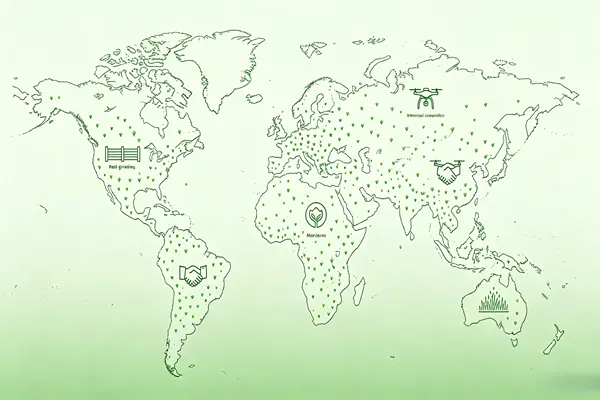
Systematic ecological restoration projects are being implemented to precisely manage degraded grasslands and reshape grassland ecosystems. For grasslands with different degrees of degradation, countries are carrying out differentiated and precise restoration and management work according to local conditions, constructing a restoration model of "categorized policies and comprehensive management." For mildly degraded grasslands, measures such as reseeding with high-quality forage, artificial tending, and water and fertilizer maintenance are adopted to improve vegetation coverage and species richness, and optimize grassland community structure. For moderately degraded grasslands, measures such as fencing, artificial grass planting, and soil and water conservation are combined to restore soil structure and vegetation ecological functions. For severely degraded and desertified grasslands, comprehensive management projects such as windbreak and sand fixation, vegetation reconstruction, and water system dredging are implemented to gradually curb desertification and rebuild grassland ecology.
Strengthening technological support and building a smart monitoring system enables refined management. Globally, countries are leveraging cutting-edge technologies such as satellite remote sensing, big data, the Internet of Things, and drone patrols to build a global dynamic monitoring network for grassland ecology. This network enables 24-hour routine monitoring of grassland vegetation coverage, soil conditions, hydrological changes, biological activity, and the degree of degradation, accurately grasping dynamic changes in grassland ecology and promptly detecting, warning, and addressing potential grassland degradation risks. Research institutions continue to delve into the research and development of grassland ecological restoration technologies, cultivate high-quality native forage varieties that are drought-resistant, tolerant of poor soil, and highly adaptable, and optimize restoration technologies such as artificial grass planting, soil improvement, and ecological water replenishment to improve the efficiency and quality of degraded grassland restoration.
Conclusion
Civilization thrives when its ecosystem thrives, and declines when its ecosystem declines. Faced with the severe global grassland ecological situation, humanity must fundamentally transform its development philosophy, abandoning extensive and predatory development models, adhering to the principles of ecological priority and green development, continuously deepening global cooperation in ecological governance, persistently promoting grassland protection and restoration, precisely controlling human-caused damage, and scientifically addressing climate impacts. Only then can we gradually reverse the trend of grassland degradation and restore grassland ecological vitality. In the future, only by consistently upholding the development concept of harmonious coexistence between humanity and nature, pooling global governance efforts, and protecting every grassland and every inch of land can we build a solid ecological barrier for the Earth, safeguard the green foundation for human survival and development, ensure the perpetual vitality of vast grasslands, and protect global ecological balance and sustainable human development.
Disclaimer: The information published on this website is sourced from the internet and does not represent the views of this website, nor does it guarantee the accuracy of its content. Please be aware of the distinction. Furthermore, the products provided by our company are for scientific research purposes only. We are not responsible for any consequences arising from improper use. If you are interested in our products, have any criticisms or suggestions regarding our articles, or are not completely satisfied with the products you received, please contact us by email: allen@faithfulbio.com; our team is dedicated to ensuring complete customer satisfaction.