

Car rams into pedestrians in Berlin, Germany, injuring multiple people.
On the evening of July 25th, at approximately 10 PM local time in Berlin, a horrific incident occurred near Tiergarten Park in the city center. A white van suddenly drove onto a pedestrian walkway and rammed into a crowd of people participating in a large gathering. After hitting multiple pedestrians, the vehicle crashed into roadside trees and came to a stop. The driver then abandoned the vehicle and fled the scene. According to a subsequent official report from the Berlin police, the incident resulted in one death and 29 injuries, with several of the injured in critical condition. The incident occurred near the Christoph Straße Memorial Day parade site, where the area was densely populated at the time, and the sudden attack caused panic among the crowd. Berlin's fire and emergency services immediately arrived at the scene to set up a temporary treatment point and triage and treat the injured; police simultaneously closed off surrounding roads and launched the highest-level manhunt operation in the city.
The sudden attack shook the city center: emergency response teams quickly launched rescue and containment efforts.
At the time of the tragedy, hundreds of thousands of people were participating in the annual Christoph Straße Day parade around Tiergarten Park in Berlin. The streets were packed with citizens strolling and celebrating, creating an extremely dense crowd. Witnesses recalled that the white van showed no signs of slowing down, driving straight from the main road into the pedestrian area and crashing into the crowd. A series of violent impacts followed, and many people fell to the ground instantly, the scene filled with cries for help and screams. After the impact, the front of the vehicle was severely damaged and became wedged against roadside trees. The driver did not stop to check on the injured, quickly pushed open the door, and disappeared into the night.
After confirming the attack, the event organizers immediately called for an emergency halt to all celebrations via loudspeaker and guided the orderly evacuation of the crowd to prevent further injuries from stampedes. The Berlin Fire Department simultaneously activated its emergency response plan for mass casualties, with dozens of ambulances and more than 40 emergency medical personnel rushing to the scene and setting up temporary medical tents along the roadside. Medical personnel provided on-site emergency treatment, including stopping bleeding and administering fluids, and transferred the injured according to the severity of their injuries, with critically injured patients prioritized for surgery at major hospitals in central Berlin. Volunteers spontaneously assisted in maintaining order, comforting frightened witnesses, and providing basic assistance to the injured.
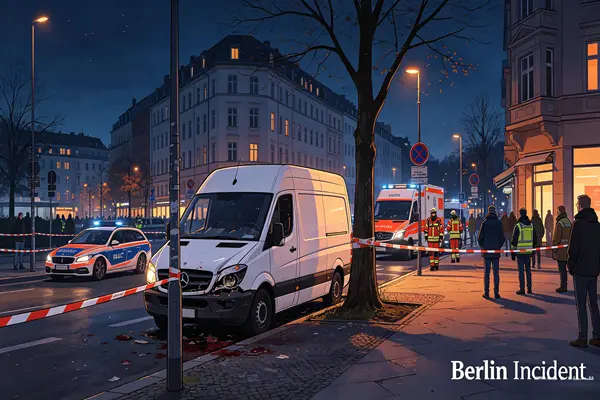
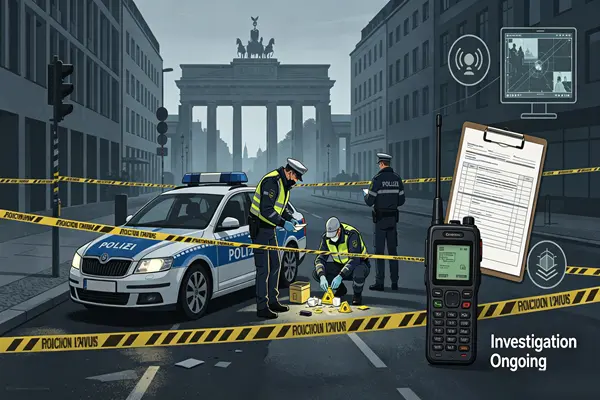
Berlin police quickly established a large-scale cordon, comprehensively controlling all entrances and exits to Tiergarten Park to cut off the suspect's nearest escape route. Police helicopters equipped with thermal imaging devices were deployed to conduct aerial patrols of the park's woodlands and streets; ground special police and patrol officers conducted thorough searches, focusing on bushes, underpasses, parking lots, and other concealed locations. Simultaneously, traffic checkpoints throughout Berlin were upgraded, with increased checks on vehicles leaving the city to prevent the suspect from leaving the capital. That evening, the city's public transportation system simultaneously strengthened security at stations, closely monitoring the movements of suspicious individuals, and implementing multiple measures to minimize the suspect's space for maneuver.
A psychological support team arrived at the scene shortly after the rescue efforts. Many eyewitnesses experienced fear, anxiety, and other stress after witnessing the violent attack. Professional psychological counselors were stationed at the temporary treatment area to provide psychological support to the injured and witnesses. The day after the incident, many citizens spontaneously came to the cordon to place flowers and candles to mourn the victims, and a temporary memorial site was formed by the public. Community mutual aid forces continued to provide support to the affected population.
The investigation continues: the suspect's background has been revealed, and the case has been characterized as extreme violence.
Hours after the large-scale manhunt began, Berlin police issued a public notice for assistance, identifying 21-year-old male suspect Abdul B. as the prime suspect. They released his physical characteristics and warned the public that he might be carrying a sharp weapon and posed a significant danger; urging people not to approach him and to contact the police immediately if they spotted him. The citywide manhunt continued until the evening of July 26, when law enforcement officers located the suspect in an industrial park in Berlin's Spandau district. The report stated that the suspect, wielding a sharp weapon, charged at officers on duty, and police used force to kill him. He was taken to the hospital but pronounced dead.
As the investigation deepened, more information about the suspect was released. The man was a Lebanese citizen of German descent and had a prior record of violent crimes. He had just been released from a juvenile detention center in May of this year. Intelligence indicated that the suspect frequently browsed extremist content, publicly expressed support for the extremist group "Islamic State," and possessed extremist ideological tendencies. Police conducted forensic examination of the vehicle involved in the incident and simultaneously searched the suspect's apartment, collecting more physical evidence to fully reconstruct the motive and preparation process for the crime.
German Interior Minister Dobrinth stated at a press conference that the existing evidence corroborates each other, suggesting the vehicle ramming incident was likely a terrorist attack. According to German judicial procedures, major cases involving extremism and threats to public safety are transferred to the Federal Prosecutor General's Office, transcending the scope of ordinary local criminal investigations, and mobilizing national counter-terrorism intelligence resources for cross-referencing leads. Investigators are focusing on verifying whether the suspect has accomplices, whether he was incited by foreign extremist forces, reviewing recent travel and online communication records, and assessing the risk of further attacks.
Vehicle ramming into crowds has become a common method of extreme violence in Europe in recent years, with low barriers to entry and a wide range of harm. Police analysis suggests that the suspect's choice of a large-scale demonstration as a target indicates a clear intent to target public gatherings and create social panic. Unlike ordinary criminal cases, extremist-driven violence is difficult to predict entirely through routine security patrols; therefore, identifying radicalized individuals in advance has become a key issue for German counter-terrorism agencies.
The alarm bells are ringing again: Public safety at large events in Europe is undergoing a comprehensive review.
This attack in Berlin is not the first serious incident in Germany involving a vehicle ramming into a crowd. Similar violent attacks have occurred at the Magdeburg Christmas Market and the Berlin Christmas Market. These successive tragedies have forced Germany and Europe as a whole to re-examine the security vulnerabilities of large gatherings, exposing many long-standing shortcomings to the public.
Insufficient physical protective facilities are the most obvious hidden danger. Many historical city centers and parks across Europe generally lack regularly installed crash barriers and guardrails to maintain aesthetic appeal. During major events, the deployment of temporary protective facilities is often delayed, failing to quickly stop vehicles from entering crowds in emergencies. The pedestrian walkways around Tiergarten Park, where the incident occurred, were wide, and access control was lax, allowing the vehicle to easily enter the crowd. Many cities only temporarily increase protective measures during major holidays, with low daily security standards and significant gaps in risk prevention.
Blind spots exist in the early warning and control mechanisms for extremist individuals. Germany has a large monitoring list of key individuals, but the radicalization process of some individuals is covert, making it difficult to take coercive measures before illegal actions are taken. Although the suspect had a prior record of extremist tendencies, he was not consistently and rigorously monitored. This incident has reignited public debate, highlighting the challenge of striking a balance between protecting civil liberties and preventing extreme violence in Germany, testing the limits of relevant legislation and law enforcement. Meanwhile, the spread of extremist content online continues to accelerate, increasing the difficulty of regulation, and online incitement can easily escalate into offline violence.
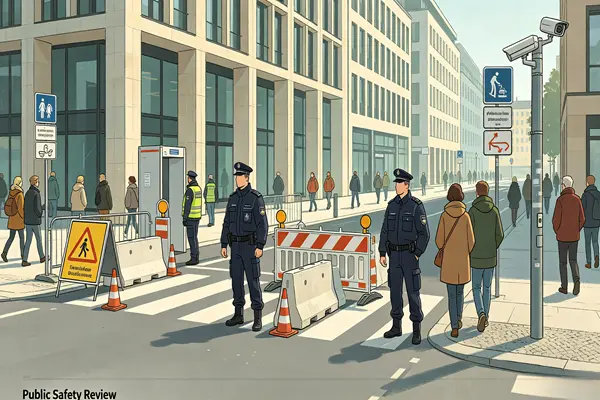
Security plans for large-scale events also urgently need optimization. The Christoph Straße Memorial Day march is one of the largest public events in Europe. While a large police force was deployed, security was primarily focused on entrance and exit checks, lacking mobile patrols to dynamically manage vehicles on surrounding roads. Security experts from various countries have proposed new approaches: large gatherings should not only focus on pedestrian checks but also establish dynamic vehicle screening mechanisms to intercept and investigate vehicles that linger slowly or behave abnormally.
Following the incident, several German cities immediately upgraded their security standards for large-scale events. Municipal departments accelerated the installation of permanent crash barriers in pedestrian streets and squares; police increased mobile patrols around gatherings; and some cities adjusted march routes to avoid vehicular traffic. Several European countries are simultaneously strengthening intelligence sharing, sharing leads on extremist individuals, and coordinating cross-border efforts to prevent vehicle-ramming attacks.
Conclusion
The horrific car attack in downtown Berlin, in which a vehicle rammed into pedestrians, plunged the celebrating city into grief, and the tragic loss of many innocent lives is deeply regrettable. As clues about the suspect's identity and extremist tendencies gradually emerge, the incident has escalated to the level of extreme violence, once again sounding the alarm for public safety in European cities. Large gatherings and open pedestrian streets are symbols of urban vitality, but open spaces also harbor unpredictable risks. The threat posed by vehicle-ramming attacks cannot be completely eliminated by a single method.
In the short term, major German cities have urgently strengthened security measures, adding anti-collision facilities and raising event alert levels, forming a direct protective barrier. However, to achieve long-term safety and stability, deeper issues must be addressed: improving the dynamic monitoring system for extremist individuals, optimizing security planning for urban public spaces, strengthening cross-regional counter-terrorism intelligence cooperation mechanisms, and simultaneously promoting ideological guidance at the community level to curb the breeding and spread of extremism.
Disclaimer: The information published on this website is sourced from the internet and does not represent the views of this website, nor does it guarantee the accuracy of its content. Please be aware of the distinction. Furthermore, the products provided by our company are for scientific research purposes only. We are not responsible for any consequences arising from improper use. If you are interested in our products, have any criticisms or suggestions regarding our articles, or are not completely satisfied with the products you received, please contact us by email: allen@faithfulbio.com Or WhatsApp: +86 13137770562; our team is dedicated to ensuring complete customer satisfaction.