

Uganda has cleared all Ebola cases.
On April 26, local time in Kampala, Uganda, the Ugandan Ministry of Health, in conjunction with the World Health Organization's Uganda office, issued an official announcement declaring that the country had achieved zero cases in this round of the Sudan-type Ebola outbreak. This marked the end of a 42-day monitoring period without any new confirmed or suspected cases, officially marking the complete conclusion of this public health emergency. The outbreak was first confirmed in the capital, Kampala, on January 30. The source of infection was a healthcare worker traveling across regions. The virus spread rapidly through dense urban populations and cross-border trade routes, affecting seven cities and districts, including Kampala, Mbale, and Jinja, with a total of 14 cases reported. Of these, 12 were laboratory-confirmed and 2 were clinically suspected. Ultimately, 4 people died, and 10 infected individuals received standardized treatment and recovered successfully. The overall case fatality rate was controlled at 28.6%, far lower than the average fatality rate of Ebola outbreaks in Africa. In the early stages of the outbreak, Kampala, as the economic and transportation hub of Uganda, saw a huge daily flow of people across borders, commuting, and visiting markets. Traditional funeral customs and family care practices made it easy for the virus to spread from person to person. Coupled with the shortage of medical testing equipment in rural areas and the weak public awareness of epidemic prevention, there was a potential risk of large-scale community spread.
Localized, tiered prevention and control measures have been implemented across the entire region, with close contact tracing effectively cutting off community transmission chains.
The rapid elimination of cases in this outbreak is fundamentally based on Uganda's localized and standardized emergency response procedures, honed through multiple Ebola epidemics. From the moment the first case was detected, the entire country immediately activated its highest-level public health response. Relying on three core measures—zoning control, closed-loop isolation, and full-chain contact tracing—the human-to-human transmission of the virus was cut off at its source, preventing the spread of the epidemic to rural areas.
On the day the first case was confirmed, the Murago National Referral Hospital immediately activated an independent Ebola isolation ward. Strictly managed according to the zoning of clean, potentially contaminated, and contaminated areas, separate channels were established for medical staff and patient waste. All medical personnel entering the isolation unit were required to wear full protective gear, including suits, goggles, double gloves, and waterproof boots. The entire donning and doffing process was supervised by designated personnel to eliminate occupational exposure risks for medical staff. An independent laboratory is set up within the hospital, receiving samples from all over the country 24 hours a day to shorten the waiting time for suspected cases. Preliminary screening results can be provided within two hours for typical symptoms such as fever, vomiting, diarrhea, and unexplained bleeding. Positive cases are immediately transferred to isolation wards in a closed loop and are not allowed to remain in regular outpatient clinics or community clinics.
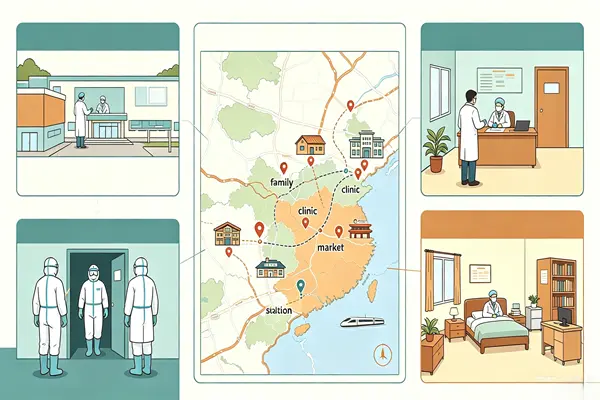
Careless contact tracing is the most crucial link in preventing community transmission. The epidemiological investigation team focuses on each confirmed patient, tracing their entire activity trajectory in the 21 days prior to the onset of illness. They systematically investigate cohabiting family members, clinic caregivers, vendors at markets, cross-border freight travelers, and relatives and friends who participated in funeral ceremonies. Anyone with records of bodily fluid contact or close contact in enclosed spaces is included in a centralized health monitoring list. Throughout this outbreak, a total of 534 close contacts were identified and placed under quarantine at designated observation points. Their temperatures were measured twice daily, and their health status was recorded. Any suspected symptoms were immediately detected through nucleic acid testing. The quarantine period strictly adhered to the WHO's 21-day incubation period, with single-room management throughout, prohibiting unauthorized outings and visits from family and friends.
Urban and rural grassroots monitoring networks were simultaneously deployed to build a comprehensive early warning network. Uganda added community fever screening points in 70 districts nationwide. Village health stations, market entrances, long-distance bus stations, and border crossings were all equipped with temperature screening equipment and disinfection supplies. All visitors were required to register their travel history and symptoms, and those exhibiting symptoms were immediately referred for further investigation. Traditional healers and rural midwives were incorporated into grassroots epidemic prevention teams, receiving regular Ebola identification training. Upon receiving patients with unexplained fever or bleeding, they immediately reported to the health department to prevent patients from being transferred to multiple small clinics and causing multi-point transmission.
Multilateral international cooperation and cross-border joint defense have built a strong barrier against external threats.
Uganda shares a long border with the eastern Democratic Republic of Congo (DRC), and trade and family exchanges between the two countries are frequent. Simultaneously, the DRC experienced a sustained Ebola outbreak, posing a high risk of cross-border virus transmission. Single-country control measures are insufficient to isolate external sources of infection. The WHO, UN agencies, the Africa Centres for Disease Control and Prevention (Africa CDC), and several neighboring countries formed a joint epidemic prevention task force, providing comprehensive assistance in funding, supplies, technology, and personnel. This established a cross-border collaborative prevention and control system, employing both internal and external efforts to provide crucial external support for achieving zero cases in this round.
The WHO immediately activated its Africa Emergency Response Plan, dispatching an international team of experts in virology, epidemiology, and infection control to Uganda to participate in case detection, contact tracing, and guidance on standardized management of isolation wards. Simultaneously, large quantities of epidemic prevention supplies, including medical protective clothing, face shields, virus test kits, disinfectants, negative pressure transport stretchers, and mobile nucleic acid laboratory equipment, were allocated to fill the supply gaps in grassroots medical institutions. Addressing the lack of a universal vaccine for the Sudanese Ebola strain, global pharmaceutical companies were coordinated to allocate candidate vaccines, prioritizing preventative vaccination for frontline medical staff and border control personnel to reduce the probability of infection among high-exposure groups.
UNICEF and the International Organization for Migration focused on providing assistance to vulnerable areas at border crossings and in rural areas. Joint quarantine stations were established at all land borders between Uganda and the Democratic Republic of Congo, conducting 24-hour continuous temperature screening, travel tracing, and comprehensive vehicle disinfection for inbound travelers. Freight trucks and civilian ferries underwent surface disinfection before passage, and individuals exhibiting suspected symptoms were immediately isolated and transferred for further investigation. Non-essential cross-border channels were temporarily closed, retaining only border crossings for material transport and official epidemic prevention travel, significantly reducing the channels for cross-border virus movement. Multilingual outreach teams were organized to go into border villages, conducting public awareness campaigns in the local languages, distributing handwashing and disinfection supplies, and teaching residents basic protective measures.
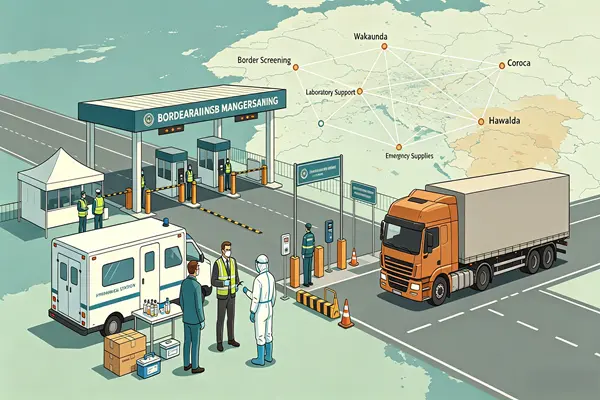
The Africa Centres for Disease Control and Prevention (Africa CDC) spearheaded the establishment of a real-time cross-border epidemic sharing platform in East Africa, coordinating with eleven African countries, including Uganda, the Democratic Republic of Congo, Rwanda, and South Sudan, to establish a synchronized case reporting mechanism. Once a suspected Ebola case is detected at any border crossing, the information is simultaneously sent to the health departments of neighboring countries within one hour, allowing for early activation of local early warning and prevention measures. Multiple countries jointly held online exchange meetings to share practical solutions for border control, close contact tracing, and rural public health education, standardized virus testing sample submission criteria, and allocated idle laboratory resources within the region to alleviate the pressure of insufficient testing equipment in individual countries.
Comprehensively improve Africa's long-term public health protection system
A 42-day monitoring period with no new cases and the discharge of all recovered patients marks the end of this Ebola outbreak. However, Ugandan health authorities have made it clear that the highly virulent virus will not completely disappear. Fruit bats, as the natural host of Ebola, inhabit the African rainforest year-round. Cross-border population movement, local customs, and climate change could trigger a new wave of outbreaks at any time. Following this initial zero-case period, a long-term public health upgrade plan will be launched nationwide, addressing shortcomings in four key areas: monitoring and early warning, medical infrastructure, regional joint prevention, and public health literacy, to build a normalized and sustainable virus protection network.
Upgrading the nationwide monitoring and early warning system is the primary task. Uganda plans to permanently establish virus screening sites at all rural health stations, border crossings, and long-distance transportation hubs, equipped with routine nucleic acid testing equipment, eliminating reliance on temporary allocation of supplies after an outbreak. A unified national digital epidemic monitoring platform will be established, allowing grassroots medical staff and border control personnel to upload suspected case data in real time. The system will automatically generate risk heat maps, enabling health authorities to predict high-risk areas and pre-position epidemic prevention resources. Regular sampling and monitoring of animals carrying viruses are conducted in rainforests and border areas where wildlife is active. This monitors the virus-carrying dynamics of local fruit bats and non-human primates, allowing for the early issuance of risk warnings for outdoor activities and guiding the public to avoid contact with sick or dead wild animals, thus cutting off the source of human-to-animal transmission.
Grassroots medical infrastructure has been comprehensively expanded and upgraded, narrowing the gap in medical resources between urban and rural areas. The government has allocated special funds to build standardized small isolation wards in remote rural areas of central and western China, equipped with independent waste treatment, ventilation, and disinfection systems. This changes the previous situation where rural areas lacked isolation and treatment facilities, forcing patients to be transported long distances to hospitals in the capital. Outdated testing equipment has been replaced in batches, and mobile nucleic acid laboratories have been equipped for each regional referral hospital, enabling rapid on-site sample testing. Regular infection control training for grassroots medical staff continues, with two rounds of practical drills annually for Ebola, Marburg, and hemorrhagic fever viruses, improving the early identification capabilities of general outpatient doctors and preventing the missed diagnosis of mild cases that could lead to community spread.

The long-term cross-border joint prevention and control cooperation mechanism in East Africa has been deepened, breaking down the barriers of border-based epidemic prevention. Uganda will sign long-term public health cooperation agreements with neighboring countries such as the Democratic Republic of Congo and Rwanda, permanently maintaining joint border quarantine stations and establishing a year-round, uninterrupted channel for sharing case information, moving away from temporary cooperation channels only after an outbreak. A multinational joint stockpile of epidemic prevention materials will be established, with designated areas for storing protective clothing, testing reagents, and disinfection equipment, enabling rapid cross-border allocation of supplies should an outbreak occur in any country. Regular multinational joint epidemic prevention drills will be conducted, simulating the entire process of handling imported cases, tracing close contacts, and disinfecting epidemic areas, refining multinational inter-departmental collaborative response procedures, and shortening response time to sudden outbreaks.
Conclusion
Looking across the entire African continent, it is difficult for any single country to independently withstand the impact of highly contagious viruses across borders. Collaborative support from countries worldwide, international health organizations, and regional multilateral institutions is indispensable. The cross-border allocation of funds, materials, technology, and human resources; the regional sharing of standardized prevention and control procedures; and the long-term implementation of joint border early warning mechanisms can significantly reduce the risk of infectious disease transmission across the continent. Uganda's recent achievement of zero new cases fully demonstrates that as long as countries set aside regional barriers, unify epidemic prevention standards, address shortcomings in primary healthcare, and continuously conduct public health education, even in the face of highly lethal and virulent viruses, they can quickly stop transmission and protect the lives of their people. May this victory become a new starting point for upgrading Africa's public health system, with countries continuing to deepen regional cooperation, improve long-term monitoring and protection networks, and gradually eliminate the survival threats posed by highly contagious diseases such as Ebola, allowing the people of sub-Saharan Africa to remain free from the shadow of viruses for a long time to come.
Disclaimer: The information published on this website is sourced from the internet and does not represent the views of this website, nor does it guarantee the accuracy of its content. Please be aware of the distinction. Furthermore, the products provided by our company are for scientific research purposes only. We are not responsible for any consequences arising from improper use. If you are interested in our products, have any criticisms or suggestions regarding our articles, or are not completely satisfied with the products you received, please contact us by email: allen@faithfulbio.com Or WhatsApp: +86 13137770562; our team is dedicated to ensuring complete customer satisfaction.