

Global mental health education campaign fully launched
The latest statistics from the World Health Organization show that over one billion people worldwide are suffering from various mental health problems. Anxiety, depression, emotional distress, and behavioral disorders among adolescents are among the most common psychological issues on the rise in modern society. In the post-pandemic era, the global prevalence of anxiety and depression has increased by more than 25%, making mental health a core issue concerning public health security, social stability, and people's well-being. For a long time, multiple problems, including the stigma surrounding mental illness, insufficient public self-identification abilities, weak awareness of seeking help, gaps in grassroots science education coverage, and uneven distribution of resources across different regions, have severely hampered the effective implementation of mental health intervention systems.
🌍Multi-point and comprehensive implementation, forming a three-dimensional dissemination matrix for global science popularization
Guided by the World Health Organization's Integrated Mental Health Action Plan 2013-2030, tiered and categorized mental health education projects were launched simultaneously across six continents. Developed countries leveraged their robust public health systems to create standardized educational models, while developing countries developed localized education programs tailored to their specific cultures, population structures, and social customs. A two-pronged approach, combining online digital dissemination with immersive offline experiences, reached diverse groups including youth, working professionals, the elderly, rural residents, refugees, and vulnerable populations, enabling mental health knowledge to transcend geographical, class, and cultural barriers and achieve widespread reach and dissemination.
International authoritative organizations spearheaded the establishment of a globally unified top-level design for mental health education, defining clear implementation standards and core directions for national actions. October 10th, World Mental Health Day, has become a core event for global public health education. The World Health Organization (WHO) sets an annual theme each year, coordinating with its 194 member states to conduct thematic lectures, advocacy activities, and policy interpretations. The unified global theme for 2025 is "Mental Health Services for All," deeply integrating public health education with the development of accessible service systems. This guides countries to move beyond superficial knowledge dissemination and simultaneously improve follow-up mechanisms for diagnosis, counseling, and support.
The WHO has launched a Step-by-Step Self-Help Toolkit for Mental Health Intervention, making it freely available to all countries worldwide. This simplified self-help guide focuses on two prevalent mental health issues: depression and generalized anxiety disorder. It uses easy-to-understand steps to guide the public in self-management of their emotions. Thailand has integrated the toolkit into its national digital mental health platform, India has adapted it for local use through social media and distributed it to rural communities, and Mauritania in Africa has used it to build community listening stations, providing basic mental health education and emotional support services to people in conflict zones. This standardized content has been successfully implemented across different cultural regions, significantly lowering the technical barriers to professional public health education in underdeveloped areas.
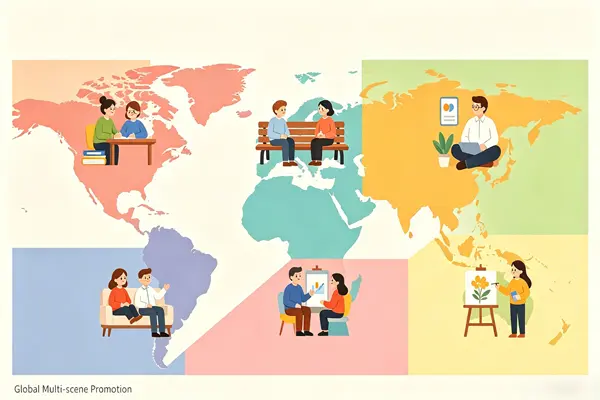
Developed countries in Europe and America have constructed a comprehensive, closed-loop science popularization system, achieving seamless coverage across all social strata. Many European countries have implemented a "peer support" model for science popularization. France, for example, has established over 200 support positions for individuals with firsthand experience in mental health recovery within a national mental health collaboration framework. These individuals share real-life cases in communities and businesses, using an empathetic perspective to dispel public fear and misunderstanding of mental illness. This experiential approach to science popularization is more effective at breaking down societal stigma than purely theoretical lectures. Nordic countries, leveraging their high-welfare public health systems, have integrated mental health science popularization into the entire process of newborn family follow-ups, elderly health checkups, and annual workplace health screenings. Employers mandate that companies establish internal mental health science popularization salons and provide free short-term counseling services. They also conduct specialized lectures on burnout identification, boundary establishment, and workplace friction reduction for employees in high-pressure industries, mitigating psychological crises caused by occupational burnout at their source.
⚠️Multiple real-world constraints have hindered the global advancement of science popularization, creating deep-seated developmental bottlenecks.
Despite the widespread and expanding global efforts in promoting mental health awareness, and a significant increase in public attention to mental well-being, this large-scale campaign still faces numerous structural challenges that are difficult to resolve in the short term, from the perspective of overall effectiveness and long-term sustainability. Five core contradictions are intertwined: extreme imbalance in regional resource allocation; difficulty in completely reversing deep-seated societal stigma; insufficient localization and homogenization of popular science content; an emphasis on publicity over closed-loop services; and a significant gap in the long-term supply of funding and talent. These contradictions continue to hinder the effective transformation of popular science efforts, keeping the vigorous nationwide education campaign at a superficial level and failing to truly become a protective barrier for public mental health.
The severe regional imbalance in the distribution of global popular science resources, with the gap between developed and underdeveloped regions widening, is the most prominent structural weakness. High-income economies in Europe, America, and East Asia possess ample fiscal budgets, well-developed professional mental health teams, and mature digital communication channels, enabling them to conduct in-depth popular science outreach on a regular basis, tailored to specific population groups and scenarios. They can even invest in producing professional documentaries, immersive offline experience centers, and long-term follow-up public welfare projects. In contrast, in most African countries, landlocked Central Asia, low-lying island nations in the Pacific, and remote rural areas of Latin America, fiscal budgets prioritize essential public health needs such as infectious disease control, basic maternal and child healthcare, and safe drinking water, leaving negligible funding for mental health education.
Data from the WHO's 2024 Mental Health Atlas shows that nearly 70% of global mental health professionals are concentrated in high-income countries, while low-income countries have fewer than one full-time mental health professional per 100,000 people. Grassroots education relies heavily on temporary, non-professional volunteers, significantly compromising the professionalism of the content. Furthermore, mature digital education platforms, cloud resource libraries, and intelligent assessment systems in developed countries struggle to reach underdeveloped areas with weak infrastructure. Some remote villages lack sufficient electricity and internet coverage, rendering online education completely inaccessible, forcing reliance on rudimentary oral communication methods. This severely reduces the efficiency and reach of dissemination, resulting in a highly uneven and polarized global landscape for science education.
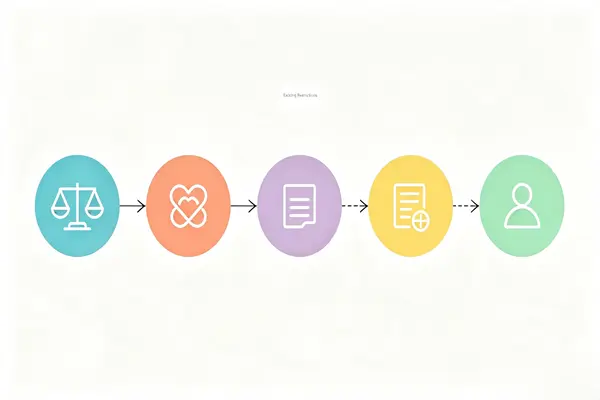
Deep-rooted stigma and social prejudice stemming from traditional culture significantly weaken the actual effectiveness of science education. The ultimate goal of mental health education, besides popularizing basic emotion regulation knowledge, is to guide people experiencing psychological distress to proactively confront their problems and bravely seek professional help. However, long-standing social stereotypes are the biggest obstacle. In many areas with a strong traditional cultural atmosphere, the public still equates depression, anxiety, and other psychological problems with "fragile thinking," "affected personality," or "mental instability." When family members discover that a relative is experiencing emotional abnormalities, they generally choose to conceal it, refuse medical consultation, and even use incorrect methods of intervention, thus exacerbating the psychological burden.
In the workplace, employees worry that proactively disclosing their mental state will affect their promotion or be labeled as unstable. Even if they learn through education that they have emotional exhaustion issues, they choose to bear it alone. Adolescents fear being isolated by classmates or labeled as problem students by teachers, so they deliberately suppress negative emotions, missing the optimal window for early intervention. In some areas with a strong religious atmosphere, people are accustomed to attributing emotional problems to metaphysical factors and find it difficult to accept modern psychological explanations, making it difficult for public education to change ingrained perceptions. Insufficient overall social tolerance means that a vast amount of popular science knowledge remains at a superficial level of public awareness, failing to translate into proactive requests for help and scientific intervention, thus greatly diminishing the value of popular science.
🤝Building a long-term system to solidify the foundation for the sustainable development of global mental health science popularization
The comprehensive rollout of global mental health education is merely the starting point for comprehensive mental health governance. To overcome multiple challenges, including regional imbalances, cognitive biases, inadequate content, service gaps, and resource shortages, it is essential to adhere to five core pathways: global multilateral collaboration, tiered and precise education, dispelling social stigma, improving closed-loop services, and providing diversified funding and talent support. This will allow for the establishment of a modern mental health education governance system that is top-down in its coordination, bottom-up in its implementation, effective in short-term education, and stable in the long term, truly achieving the WHO's ultimate goal of "mental health services for all."
- First, deepen global multilateral cooperation mechanisms, allocate education resources equitably, and narrow regional development gaps. Relying on the WHO's global mental health governance platform, establish a global mental health education resource sharing big data center. Developed countries should provide low-income countries with free access to standardized education courseware, training tutorials, digital mini-program source code, and grassroots training programs, reducing the cost of independent research and development in underdeveloped regions. The government is promoting a system of paired technical assistance between developed and developing countries. Psychology research teams from Europe and the United States regularly conduct specialized training programs for grassroots medical personnel and community volunteers in Africa, Latin America, and South Asia, exporting a mature, lightweight "task-diversion" science popularization model. This model leverages a small number of specialist physicians to mobilize a vast amount of grassroots resources for large-scale public education.
- Secondly, the government is deeply committed to developing localized, tiered science popularization content, innovating diverse dissemination methods, and improving the accuracy and accessibility of science popularization. It is segmenting the target audience according to age groups, occupational settings, regional cultures, and ethnic characteristics to create a customized educational content system. For teenagers aged 6 to 18, the curriculum incorporates topics such as coping with school bullying, managing academic pressure, addressing the psychological aspects of internet addiction, and managing emotional fluctuations during adolescence. It utilizes engaging formats like picture books, animations, psychological dramas, and group sandplay therapy to integrate these topics into primary and secondary school curricula. For young and middle-aged professionals, the curriculum focuses on addressing issues such as burnout, anxiety, relationship conflicts, and sleep disorders, and collaborates with companies to host employee mental health support salons. For the elderly, the curriculum emphasizes issues like loneliness and depression, cognitive decline, and psychological distress associated with chronic diseases, using appropriate formats such as dialect presentations, large-print brochures, and neighborhood tea parties. For vulnerable groups such as refugees, disaster victims, and people with disabilities, the curriculum includes specialized content on trauma recovery and rebuilding a sense of security.
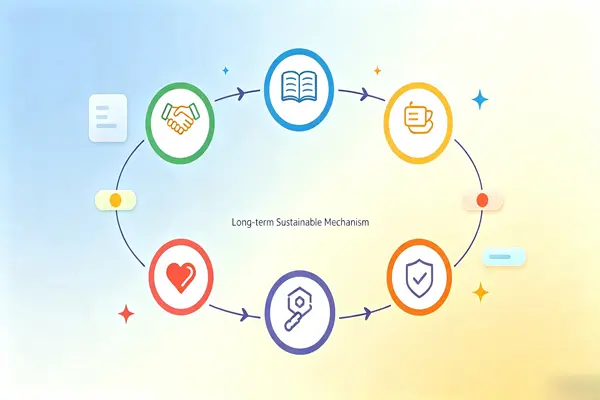
- Third, multiple measures are taken to dispel societal stigma and prejudice, creating an inclusive and friendly social atmosphere for all. Integrate anti-discrimination against mental illness into the core of routine science popularization. Through public sharing by recovery survivors, screenings of public service documentaries, and positive media coverage, correct the public's misconception that "mental illness is equivalent to mental disorder," and clearly convey the scientific concept that mental health issues are as common as colds and fevers, and can be screened, intervened, and cured. At the workplace level, promote the enactment of anti-psychological discrimination labor protection laws in various countries, prohibiting employers from using past mental health records as a criterion for recruitment, promotion, and dismissal, and encourage companies to create an inclusive and open workplace environment. Within schools, conduct peer support education to guide students to understand and care for peers experiencing emotional distress, and eliminate isolation and verbal mockery on campus. At the community and family level, rely on grid workers and women's federations to conduct science popularization on family psychological communication, teaching parents to scientifically view their children's emotional fluctuations and abandon the blame-and-suppressive education model.
- Fourth, establish a closed-loop system encompassing science popularization, screening, intervention, and rehabilitation, transforming science popularization into substantial health services. Completely abandon the singular, short-term publicity model and establish a comprehensive, integrated mental health service network, using science popularization and education as the primary entry point. Free, simplified psychological screening points will be added in community health service centers, township hospitals, and school clinics. After learning about and identifying abnormal symptoms through science popularization, the public can complete scale assessments nearby. Primary healthcare workers will conduct initial triage and diagnosis. Mild emotional problems can be addressed through self-regulation using community science popularization self-help tools, while moderate to severe mental disorders will be directly referred to higher-level mental health institutions, establishing a seamless green referral channel. The coverage of medical insurance reimbursement for mental health services will be expanded to reduce the economic burden of psychological counseling and medication for the general public, making professional intervention services affordable even for low-income groups.
- Fifth, diversified funding channels will be broadened, and the development of a professional talent pool will be improved to ensure the long-term, stable operation of science popularization. A three-pronged funding pool has been established, consisting of government funding as the main source, supplemented by charitable donations, and appropriately supported by market mechanisms. Governments at all levels will include mental health science popularization funds in their annual fixed fiscal budgets to ensure basic expenses for grassroots outreach, venue maintenance, and personnel training. Pharmaceutical companies and large social organizations will be guided to establish long-term special funds for psychological public welfare, and to name community science popularization stations and school psychological classrooms. Market-oriented products such as lightweight psychological science popularization cultural and creative products, paid mindfulness meditation courses, and corporate EAP workplace psychological services will be developed in compliance with regulations, and a portion of the revenue will be returned to support public welfare science popularization projects, thus solving the problem of sustainable funding relying solely on government appropriations.
Conclusion
The Global Mental Health Education Campaign, under the coordination and guidance of the World Health Organization, has been rolled out worldwide. It represents a significant collective action by humanity to confront the mental health crisis of modern society and to upgrade public health systems. From the implementation of differentiated education projects tailored to local conditions on each continent, to the use of digital technology to break down geographical barriers, from the establishment of comprehensive educational networks covering schools, communities, and workplaces, to global collaboration in promoting cognitive transformation, this large-scale wave of education has effectively enhanced the basic understanding of hundreds of millions of people regarding emotion management, early identification of mental illness, and scientific help-seeking. It has continuously dispelled long-standing social prejudices that stigmatize mental illness, laying a solid foundation of public awareness for the development of global mental health.
Disclaimer: The information published on this website is sourced from the internet and does not represent the views of this website, nor does it guarantee the accuracy of its content. Please be aware of the distinction. Furthermore, the products provided by our company are for scientific research purposes only. We are not responsible for any consequences arising from improper use. If you are interested in our products, have any criticisms or suggestions regarding our articles, or are not completely satisfied with the products you received, please contact us by email: allen@faithfulbio.com Or WhatsApp: +86 13137770562; our team is dedicated to ensuring complete customer satisfaction.