

Salt-tolerant rice varieties are being tested on a large scale.
Land is the foundation of food production. The constraints on the total amount of arable land resources and the increasing salinization of soil have long been prominent challenges to global food security. According to relevant UN agricultural statistics, the total area of saline-alkali land globally exceeds one billion hectares, widely distributed in coastal mudflats, inland arid irrigated areas, and degraded agricultural areas. Excessive salt and alkalinity in the soil impairs the ability of crop roots to absorb nutrients, making it difficult for most traditional food crops to survive, leaving large tracts of land idle or with low yields. At the same time, continuous population growth, urbanization occupying high-quality arable land, and climate change causing the continued spread of secondary soil salinization are further compressing the space of suitable arable land. Expanding reserve arable land resources and enhancing land productivity potential have become core directions for agricultural research in various countries. Salt-tolerant rice, commonly known as seawater rice, relies on germplasm resource innovation and improved breeding technology to complete its growth and development and stably produce food in moderately saline-alkali environments, opening up a new path for revitalizing saline-alkali land resources. Recently, several high-quality salt-tolerant rice varieties, selected and evaluated over many years, have been launched for large-scale trials in multiple saline-alkali areas both domestically and internationally. These trials cover various saline-alkali types, including coastal mudflats and inland soda-alkali land, and are accompanied by integrated planting programs encompassing improved tillage, water and fertilizer management, and soil improvement. This large-scale trial is no longer limited to small-scale experimental fields but extends to large-scale demonstration planting. The aim is to verify the stable yield capacity of new varieties under different climates and salinity levels, improve standardized cultivation and management systems, and assess the economic and ecological benefits of industrialization. This report will provide an in-depth analysis of three aspects: breakthroughs in the breeding and trial layout of salt-tolerant rice varieties, the technical and practical challenges faced in large-scale trials, and the long-term value of industrialization for global food security and ecological governance. It will interpret how salt-tolerant rice can transform barren land into fertile fields and explore a sustainable development path for the comprehensive utilization of saline-alkali land.
Germplasm innovation lays a solid foundation, and large-scale trial planting is carried out in multiple regions
Traditional rice is highly sensitive to soil salinity. When the salinity of the topsoil exceeds 0.3%, conventional rice varieties experience difficulties in emergence, weakened growth, a significant drop in grain filling rate, and even crop failure. In the past, the mainstream approach to utilizing saline-alkali land focused on engineering soil improvement, relying on large-scale irrigation to leach salt and the application of soil conditioners to neutralize alkalinity. This approach involved massive engineering projects, huge water consumption, and lengthy treatment cycles, and also easily led to derivative problems such as regional water scarcity and secondary salinization of downstream soils, making it difficult to replicate and promote on a large scale. Developing crop varieties with natural salt and alkali tolerance, allowing the crops themselves to adapt to saline-alkali environments, has become an important technical route for low-cost development of saline-alkali land resources. Salt-tolerant rice breeding has thus become a key area of global agricultural biotechnology research.
The salt-tolerant rice varieties currently being tested on a large scale have undergone more than ten years of germplasm resource collection, hybridization, salt tolerance screening, and multi-generation purification breeding. The research team traveled across the globe to saline-alkali soil regions, collecting wild salt-tolerant rice varieties and local specialty rice germplasm resources. They constructed a database of salt-tolerant rice germplasm resources, identified key functional genes regulating salt tolerance, alkali tolerance, drought resistance, and high yield, and combined traditional hybridization breeding with molecular marker-assisted breeding techniques to selectively screen superior lines, continuously balancing three core indicators: salt tolerance, rice quality, and yield per acre. In the early experimental phase, new varieties underwent small-plot evaluations in experimental fields with different salinity gradients, recording hundreds of data points including emergence rate, tillering, lodging resistance, pest and disease resistance, rice taste and nutrition, and yield per unit area. Lines with low yield, poor rice quality, and poor environmental adaptability were eliminated, ultimately selecting several superior varieties adapted to different salinity levels. Some varieties are adapted to the saline-alkali soils of the eastern coastal areas, tolerating the high chloride ion content of the coastal saline-alkali environment; others are specifically designed for the soda saline-alkali soils of Northeast China and Inner Mongolia, tolerating the special soil environment of high pH and carbonate enrichment, achieving variety classification and adaptation to local conditions.
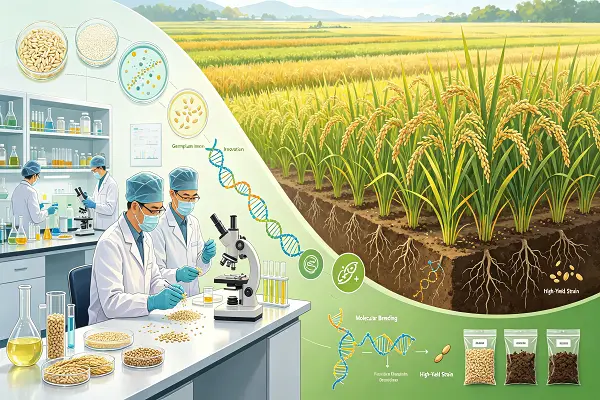
This large-scale trial planting adopts a multi-point simultaneous layout model. Domestic trial planting areas cover the coastal mudflats around the Bohai Sea, secondary saline-alkali farmland in the Huang-Huai-Hai Plain, soda saline-alkali land in the Songnen Plain of Northeast China, and saline-alkali degraded land in the irrigated areas of Northwest China. Overseas cooperative pilot projects are simultaneously implemented in the coastal saline-alkali beaches of Southeast Asia and the arid saline-alkali farmland of Central Asia, forming a demonstration planting network across climate zones and soil types. Unlike the small-scale experimental fields of a few acres or tens of acres in previous years, this demonstration plot is mainly a contiguous area of thousands or tens of thousands of acres, completely replicating the large-scale agricultural production model. Large agricultural machinery is used to complete land preparation, sowing, plant protection, and harvesting operations. Supporting the development of special slow-release fertilizers, water-saving irrigation solutions, and green pest and disease control technologies, an integrated supporting system of "good seeds + good methods + good land" is constructed. The project implementation entities include agricultural research institutes, state-owned farms, leading agricultural industrialization enterprises, and planting cooperatives, with multiple parties collaborating on a multi-faceted basis: Research teams are stationed throughout the process to monitor rice growth data, dynamically record changes in soil salinity and pH, and collect complete growth cycle samples; planting entities are responsible for standardized field management to verify the suitability of new varieties under farmers' conventional farming practices; and agricultural authorities coordinate land transfer, water conservancy infrastructure, and policy support to ensure the orderly progress of the trial planting.
During large-scale trial planting, researchers established a long-term dynamic monitoring mechanism, setting up soil monitoring points in various demonstration areas, regularly collecting soil and irrigation water samples, tracking dynamic changes in salinity and alkali throughout the rice growing season, and simultaneously recording meteorological data to analyze the impact of extreme weather events such as high temperatures, heavy rains, and droughts on the growth of salt-tolerant rice. At harvest time, a unified yield measurement is conducted, comparing the land output of the same plot without rice cultivation, and comparing the input-output differences of planting ordinary rice using traditional improved methods. The consumption of agricultural inputs, labor costs, and water resources is calculated to form a complete technical and economic evaluation report. In addition to yield calculations, the testing also examines the heavy metal content, nutritional indicators, and taste quality of the rice to alleviate market concerns about the safety and taste of rice produced in saline-alkali areas. Preliminary monitoring data shows that these new varieties can mature and be harvested stably in saline-alkali land with a salt content of 0.3% to 0.6%. With the implementation of simple soil improvement measures, there is room for further yield increases, and some superior varieties have produced rice that meets the standards for high-quality edible rice.
Large-scale deployment faces numerous challenges, and multiple practical problems urgently need to be solved
The successful large-scale trial planting of new salt-tolerant rice varieties marks a significant breakthrough in breeding technology. However, success in experimental fields does not equate to widespread industrialization. During the process of promoting contiguous demonstration planting, a series of practical problems have gradually emerged, including limited varietal adaptability, pressure on soil and water infrastructure, high planting costs, an incomplete industrial chain, and insufficient market awareness. These issues hinder the spread of salt-tolerant rice from demonstration fields to farmland across the country. To achieve sustainable industrial development, these bottlenecks must be addressed and resolved.
The limited environmental adaptability of varieties is a primary technical constraint. Each salt-tolerant rice variety has an upper limit to its tolerance range for salinity and pH levels, meaning it cannot be planted unconditionally in all saline-alkali lands. If the soil has excessively high salinity, or problems such as heavy metal contamination, shallow soil, or abnormal groundwater levels, even using salt-tolerant varieties will not guarantee stable and high yields. Furthermore, the causes of salinity vary greatly across regions. Coastal tidal flats are predominantly chloride-type salinity, while inland saline-alkali lands are mostly soda-type. Their physicochemical properties are drastically different, making it difficult for the same variety to adapt to both types of soil simultaneously. Climate differences also present challenges. The hot and humid environment in the south easily induces pests and diseases, while the short frost-free period in the north places strict requirements on the early maturity of rice. Currently, the number of superior salt-tolerant varieties cultivated is still limited, and there is insufficient reserve of highly tolerant and high-yielding varieties for severely saline-alkali land. The speed of germplasm innovation cannot yet meet the diverse needs of the vast saline-alkali land. Furthermore, after long-term, multi-generational planting, whether the salt tolerance trait of varieties can be stably inherited, and whether yields will fluctuate significantly under different years of climate variations, still require continuous verification through long-term, multi-location trial data.
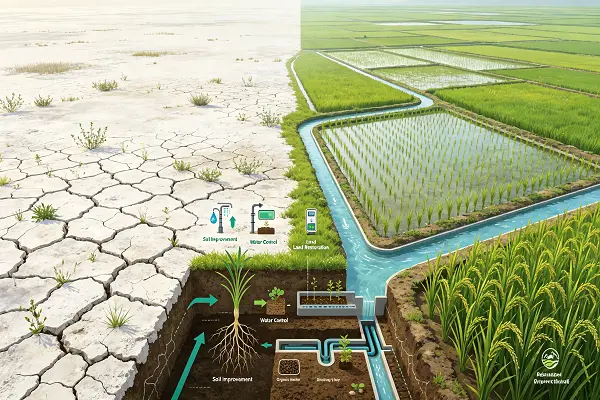
Water resource supply pressure is an unavoidable constraint on large-scale promotion. Rice is inherently a water-intensive crop. Planting rice in saline-alkali land requires reasonable leaching water to regulate soil salinity. Many saline-alkali lands are concentrated in arid and semi-arid regions where local water resources are already scarce. Large-scale planting of salt-tolerant rice will exacerbate regional water conflicts. Blindly expanding the planting area without scientific water resource planning may lead to excessive groundwater extraction and trigger new ecological problems. Developing water-saving irrigation models that combine drip irrigation, mulching for salt control, and integrated water and fertilizer technology to reduce water consumption in planting and balance grain production with regional water resource carrying capacity is a direction that needs continuous technological research and development. In addition, there are significant shortcomings in supporting farmland infrastructure. Large areas of saline-alkali abandoned land lack complete irrigation and drainage ditches, sluice gates, and drainage systems, preventing irrigation water from draining smoothly and easily causing salt backflow and accumulation. Simply relying on improved varieties cannot compensate for the negative impact of inadequate infrastructure, and the initial investment in farmland improvement is high.
The overall planting cost is high, affecting farmers' willingness to cultivate the land independently. Compared to planting ordinary rice on conventional farmland, cultivating saline-alkali land requires land leveling, soil conditioning, and repair of water conservancy facilities in the early stages, and the costs of specialized fertilizers and plant protection materials are higher. Although salt-tolerant rice seeds do not require high soil improvement investment, the overall production cost is still higher than that of conventional rice. Currently, a large-scale improved variety breeding system for salt-tolerant rice has not yet been established, the supply of high-quality seedlings is limited, and the purchase price of improved varieties is high. Ordinary farmers face significant risks in making their own investments. If rice purchase prices are not guaranteed, farmers will lack the incentive to plant. Currently, most pilot projects rely on research grants and government subsidies for operation. Once these subsidies are phased out, how to maintain the operation of the planting industry through market-oriented models and build a stable procurement, processing, and sales chain will become a key challenge for the industry's sustainable development.
Coordinate scientific research, industry, and ecosystem development to explore comprehensive utilization of saline-alkali land
The large-scale trial planting of salt-tolerant rice is not merely a demonstration and promotion of a single crop variety, but a crucial component of a systematic project for the comprehensive development of saline-alkali land resources, expansion of arable land, food security, and ecological restoration of degraded land globally. To fully realize the value of this technology, the focus cannot be solely on increasing grain yields; it requires the coordinated efforts of germplasm research and development, industrial cultivation, ecological protection, and policy support to build a long-term sustainable development model, scientifically and orderly promote the comprehensive utilization of saline-alkali land, and safeguard the bottom line of food security.
Continuous strengthening of germplasm resource innovation is essential to enrich the matrix of salt-tolerant crop varieties. Agricultural research institutions in various countries should strengthen transnational germplasm resource sharing cooperation, establish a platform for sharing germplasm resources of stress-tolerant crops, and, under the premise of protecting intellectual property rights, share gene sequencing data and breeding materials, jointly conduct research on salt-alkali tolerance mechanisms, and shorten the breeding cycle. Continuous exploration of superior salt- and alkali-tolerant genes is necessary, along with the application of modern bio-breeding techniques to cultivate a variety of superior varieties adapted to different saline-alkali types and climatic regions, covering early, mid, and late maturing growth cycles, and taking into account multiple advantages such as high yield, high quality, multiple resistances, and water conservation. In addition to salt-tolerant rice, we will simultaneously promote the breeding and research of salt-tolerant wheat, corn, soybeans, forage crops, and specialty cash crops to form a diversified salt-tolerant crop system. This will avoid the ecological risks associated with large-scale monoculture and provide growers with diverse choices. We will establish standardized breeding bases for improved varieties, improve the supervision mechanism for the promotion of improved varieties, crack down on counterfeit and substandard seeds, and ensure a stable and affordable supply of high-quality seedlings.
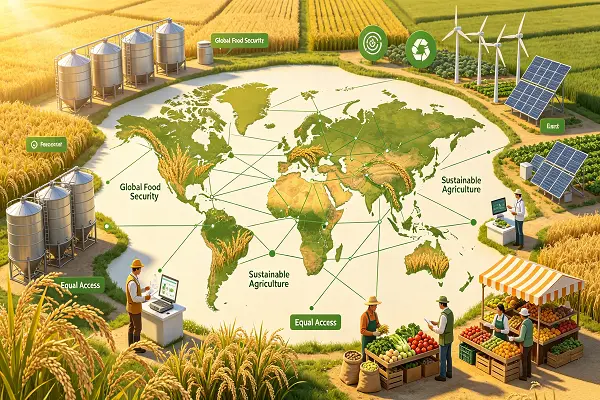
We will establish a scientific planning and management system, adhering to the principles of ecological priority and developing saline-alkali land according to local conditions. All regions need to conduct a comprehensive survey of saline-alkali land, mapping soil salinity, soil structure, groundwater conditions, and heavy metal background values. We will delineate areas suitable for cultivation, ecological restoration, and prohibited development, and formulate medium- and long-term development plans to prevent the indiscriminate reclamation of severely saline-alkali land and ecologically sensitive tidal flats. We will strictly assess the regional water resource carrying capacity, determining land use and crop types based on water availability, improving irrigation and drainage systems, promoting water-saving and salt-controlling green planting technologies, and constructing a farming model that conserves freshwater resources and controls soil salinity. Establish long-term ecological monitoring stations to track changes in soil salinity, groundwater quality, and biodiversity, assess the ecological impact of long-term planting, and dynamically adjust the scale of development to avoid ecological degradation caused by over-development. For ecologically fragile areas, prioritize the use of salt-tolerant vegetation for ecological restoration, and avoid forcibly developing them into arable land, thus balancing the boundaries between food production and ecological protection.
To improve industrial support and policy guarantees, and promote market-oriented sustainable operation, the government will introduce supporting policies, establish a special fund for the comprehensive utilization of saline-alkali land, and support the research and development of improved varieties, the construction of demonstration bases, and the transformation of farmland infrastructure. Agricultural insurance products will be improved, and insurance for salt-tolerant rice will be developed to share the operational risks of natural disasters and reduced yields for farmers. An order-based agriculture model will be established, encouraging planting cooperatives and processing enterprises to sign long-term purchase agreements to stabilize farmers' income. Leading enterprises will be guided to extend the industrial chain, create a distinctive public brand for salt-tolerant rice, establish a product traceability system, disclose planting environment and testing reports to eliminate consumer concerns, and develop diversified products such as high-end edible rice, feed processing, and comprehensive utilization of rice bran to increase the added value of agricultural products. The development of integrated agricultural, cultural, and tourism projects will be encouraged, and agricultural science popularization and research sites will be built based on saline-alkali land rice demonstration bases to expand industrial revenue channels. At the same time, the grassroots agricultural technology extension system will be improved, technical training will be organized, and expert service teams will be formed to go down to the fields to provide full-cycle technical guidance to planting entities and popularize mature cultivation techniques at the grassroots level.
Conclusion
The large-scale trial planting of several superior salt-tolerant rice varieties marks a significant milestone in the application of modern agricultural biotechnology to land resource development, carrying the expectation of revitalizing hundreds of millions of hectares of saline-alkali reserve land and solidifying the foundation of global food security. Years of breeding efforts have yielded superior germplasm, and large-scale demonstration fields have verified the feasibility of implementing these improved varieties, transforming previously unusable saline-alkali wastelands into potential food-producing areas while simultaneously improving and restoring degraded soils, balancing economic benefits with ecological value.
Food security is the foundation of people's livelihood, and arable land protection is its cornerstone. The promotion of salt-tolerant rice is not a replacement for existing high-quality arable land protection efforts, but rather a supplementary pathway to expand new spaces for arable land resources. With continued investment in scientific research, improved supporting policies, and the gradual formation of a mature market-oriented industrial system, more saline-alkali wastelands will be transformed into stable-yield farmland in the future. It is hoped that with the joint efforts of all parties, salt-tolerant rice technology can be implemented in a standardized and orderly manner, releasing the potential of the land, helping countries to improve their food self-sufficiency, contributing agricultural science and technology to addressing global climate change and ensuring world food security, and allowing barren saline-alkali land to continuously nurture golden rice waves.
Disclaimer: The information published on this website is sourced from the internet and does not represent the views of this website, nor does it guarantee the accuracy of its content. Please be aware of the distinction. Furthermore, the products provided by our company are for scientific research purposes only. We are not responsible for any consequences arising from improper use. If you are interested in our products, have any criticisms or suggestions regarding our articles, or are not completely satisfied with the products you received, please contact us by email: allen@faithfulbio.com Or WhatsApp: +86 13137770562; our team is dedicated to ensuring complete customer satisfaction.